Inward vs Outward Opening Windows: UK Buyer's Guide
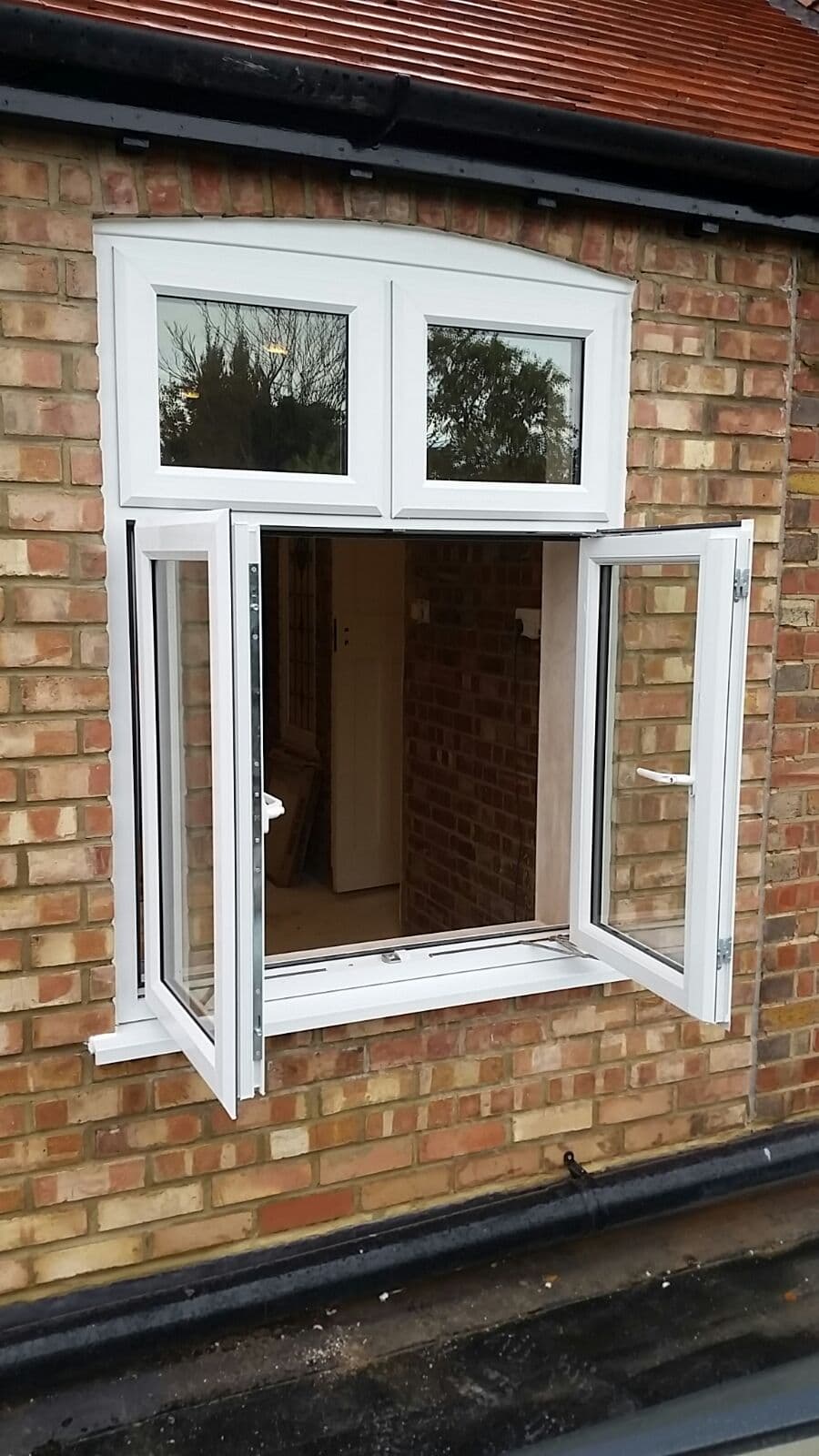
The direction a window opens is one of the first decisions in any replacement project, and one of the least discussed. Most British homes grew up with outward-opening casements, so it is easy to assume that is the only option. Casements swing out, turn-only and tilt and turn windows swing in, and sliding sashes do not swing at all. Each suits a different room, floor level and style of house. This guide sets out how each type opens, where it earns its place, and how we make the choice on the Cortizo, Schuco and Rehau windows we fabricate in our Uxbridge workshop.
Quick Decision Frame
Choose outward opening if the room is furnished right up to the window, there is a deep sill, a fitted blind or a kitchen tap in the way, or the house is traditional in character. An outward casement keeps the interior completely clear and reads as the classic British window.
Choose inward opening if the window is on an upper floor and you want to clean the outside glass from indoors, an outward sash would swing over a path, balcony or boundary, or you want a secure ventilation position you can leave open. Turn-only and tilt and turn windows cover these briefs.
Choose a sliding sash if the house is Victorian, Edwardian or Georgian and the original windows were sashes. Nothing else reproduces those proportions, and a sash opens without projecting into the room or over the street.
How Each Window Type Opens
| Window type | Opening direction | How it opens | Best suited to | |---|---|---|---| | Side-hung casement | Outward | Sash hinged at the side, swings out on friction hinges | Most rooms in most British homes | | Top-hung casement | Outward | Sash hinged at the top, the bottom edge swings out | Ventilation lights, bathrooms, high-level vents | | Turn-only | Inward | Sash hinged at the side, swings into the room like a door | Full opening for access, cleaning or escape | | Tilt and turn | Inward | Top of the sash tilts in, or the whole sash turns in | Upper floors, flats, contemporary homes | | Vertical sliding sash | Neither | Sashes slide up and down within the frame | Period properties and conservation settings |
Outward Opening Windows: The British Casement
The outward-opening casement is the default window in the UK for good reasons. With the sash swinging outside, nothing moves into the room. Curtains hang where you want them, blinds can sit close to the glass, and a deep windowsill can hold whatever you like. Above a kitchen sink, a casement opens without fouling the tap.
It also suits the look of most British houses. From a 1930s semi to an Edwardian terrace, the outward casement is the window the street expects. Where a conservation officer is involved, a flush outward casement is usually the most sympathetic modern choice, and our guide to flush casement vs standard casement windows explains the difference in detail.
The limitations all sit outside the house. An open sash projects beyond the wall, so over a footpath, a narrow side passage, a balcony or a shared boundary it can obstruct people or catch someone walking past. Above the ground floor, cleaning the outside of the glass means a ladder, a window cleaner or an extended pole, because you cannot comfortably reach round an outward sash from inside.
On the systems we fabricate, the outward casement is the workhorse. Rehau TOTAL70 is our outward-opening uPVC casement in single, double and triple-light layouts. In aluminium, the Schuco AWS 70.HI is Schuco's standard residential casement, with a sightline of 105mm in its outward-opening form.
Inward Opening Windows: Turn-Only and Tilt and Turn
Inward-opening windows are standard across much of continental Europe. There are two main types, and the difference between them is a single function.
What are turn-only windows?
A turn-only window is a side-hung sash that opens into the room like a small door, without a tilt position. Turn the handle and the whole sash swings inward on its hinges, giving a full, clear opening. It is the simplest form of inward-opening window, and in a pair of inward-opening sashes it is common for one to be tilt and turn and the other turn-only.
The trade-off is ventilation. A turn-only sash is either shut or swung open into the room, so there is no secure half-way position to leave open overnight. Day-to-day airflow then comes from the full opening or from another sash in the same room.
Tilt and turn windows
A tilt and turn window adds a second mode to the same handle. Turn the handle one way and the top of the sash leans into the room, leaving a narrow ventilation gap at the top while the sash stays secured at its base. Turn it further and the sash swings fully inward, exactly like a turn-only window. Our tilt and turn windows guide covers the mechanism, benefits and drawbacks in depth.
In aluminium, the Schuco AWS 70 Tilt-and-Turn opens inward, and our Schuco AWS 70 windows review explains how it sits alongside the AWS 70.HI and AWS 70 SC Slimline casements. The Cortizo Cor 70 Hidden Sash is available in tilt and turn as well as casement form, with a visible section of 66mm and a whole-window U-value from 1.0 W/m²K.
What inward opening asks of the room
An inward sash sweeps an arc into the room roughly as wide as the sash itself. Anything inside that arc has to move or be designed around: a mixer tap, a deep display sill, a fitted blind or a bedside table. Curtains need to draw fully clear of the frame. The simplest test is to picture a small door the width of the sash opening into the room and see what it would hit.
Can Tilt and Turn Windows Open Outwards?
They cannot. The tilt and turn mechanism is built around inward opening: the tilt position leans the top of the sash into the room, and the turn position swings it inward on side hinges. If you want the sash outside the room, the practical alternatives are all outward casements:
- A top-hung casement for ventilation. The bottom edge opens out on a stay or friction hinge, giving a controllable vent with the open sash sheltering the gap beneath it.
- A side-hung casement for the full opening. Paired with a top-hung vent in the same frame, it gives you both functions across two sashes, which is how most British casement windows are laid out.
- Easy-clean hinges for cleaning from inside. On many side-hung casements, easy-clean friction hinges open with a gap on the hinge side so you can reach the outside of the glass from indoors. We confirm the hinge options for your chosen system at survey.
What an outward window cannot give you is the tilt position itself, where the room ventilates through a narrow gap at the top of an inward-leaning sash. If that is the feature you want, the sash has to open inward.
Sash Windows vs Tilt and Turn Windows
A vertical sliding sash does not swing either way. The sashes slide within the frame, so an open window takes up no space inside and projects nothing outside, with a completely different character from a tilt and turn.
Appearance. The sash is the defining window of Georgian, Victorian and Edwardian houses. Tilt and turn belongs on modern and contemporary homes, where its large single panes suit the architecture.
Ventilation. A sash can be opened a little at the top and a little at the bottom at the same time, letting warm air out high and drawing cooler air in low. The tilt position gives steady, secure ventilation from one sash.
Size of opening. The turn position of a tilt and turn opens the whole sash. A sliding sash opens roughly half the frame at most, because one sash slides over the other.
Planning. In a conservation area or on a period street, replacing sashes with sashes is usually the straightforward route. Our comparison of uPVC sash vs timber sash windows covers the material choice.
For uPVC sliding sash windows on these period elevations, we supply and install Victorian Sliders.
One System, Either Direction
Choosing a direction does not always mean choosing a different product. The Schuco AWS 70.HI is made in outward and inward-opening forms, with a sightline of 105mm opening outward and 117mm opening inward. The Cortizo Cor 70 Hidden Sash is available as a casement or a tilt and turn. That flexibility matters on a whole-house project, because the best direction often differs between floors. A sensible specification on many houses is outward casements downstairs, where rooms are furnished up to the windows, and tilt and turn upstairs, where cleaning from inside is the priority. Keeping both within one system family keeps the colour, profile and hardware finish consistent across every elevation.
What Does Not Change With Direction
Energy performance. In England, replacement windows must achieve a U-value of 1.4 W/m²K or a Window Energy Rating of band B under Approved Document L, whichever way they open. Our guide to what a U-value is explains how to compare figures fairly.
Security. An inward or outward window can be specified to PAS 24:2022 where the system and hardware combination has been tested to it. Security comes from the tested specification, the glass and the quality of the installation rather than from the opening direction. Our guide to Secured by Design and PAS 24 sets out what the standards cover.
Means of escape. Some upper-floor rooms may need a window suitable for escape. A side-hung casement or the turn position of an inward-opening window can both provide a full opening, and we check escape requirements room by room at survey.
How We Specify the Opening Direction
At survey we take each window in turn and ask four questions. What is in front of it inside? What is beneath or beside it outside? How will the outside glass be cleaned? Does the room need an escape window? The answers usually make the choice obvious.
We then fabricate the Cortizo, Schuco or Rehau windows to that specification in our own Uxbridge workshop and install them with our own team, and we supply and install Victorian Sliders sash windows to the same standard. Vitrum Solutions is FENSA registered, and every installation carries a 10-year CPA insurance-backed guarantee. To decide which way your new windows should open, book a free survey and we will walk through every opening with you on site.
Frequently Asked Questions
Can you get tilt and turn windows that open outwards?
The tilt and turn mechanism only works inward, because both the tilt and the turn positions bring the sash into the room. If you want the sash to open outside, choose an outward casement instead: a top-hung sash gives a controllable vent, and a side-hung sash gives the full opening. Easy-clean hinges on a side-hung casement can also make the outside glass reachable from indoors.
What is the difference between turn-only and tilt and turn windows?
Both open inward on side hinges. A tilt and turn window adds a second handle position that leans the top of the sash into the room, ventilating through a narrow gap at the top while the sash stays secured at its base. A turn-only window has just the one action, a full inward swing, so it has no secure part-open position. In a pair of inward-opening sashes, one is often tilt and turn and the other turn-only.
Are inward opening windows allowed in the UK?
They are, and we fabricate inward-opening windows such as the Schuco AWS 70 Tilt-and-Turn for homes across our area. For a replacement window in England, the thermal standard under Approved Document L is a U-value of 1.4 W/m²K or a Window Energy Rating of band B, whichever way the sash opens. Where a room may need an escape window, we check the opening at survey. On a listed building or in a conservation area, check with the local planning authority before changing the style of window.
Which is more secure, an inward or an outward opening window?
Opening direction on its own does not decide security. Windows in either direction can be fitted with multi-point locking and specified to PAS 24:2022 where the system has been tested to it. What makes the difference in practice is the tested hardware, the glass specification and a correct installation. The tilt position of a tilt and turn window is a useful extra, because it ventilates through a narrow gap at the top rather than leaving a sash swung wide open.
Can I mix inward and outward opening windows on the same house?
Mixing directions is common and often the best answer. Outward casements tend to suit furnished ground-floor rooms, while inward-opening tilt and turn windows suit upper floors where cleaning from inside matters. Specifying both from one system family, such as the Schuco AWS 70.HI and AWS 70 Tilt-and-Turn, or the Cortizo Cor 70 Hidden Sash, keeps the colour, profile and hardware consistent so the house still reads as one coherent set of windows.
Need advice on your next project?
Talk it through with the team, or leave your details for a free no-obligation written quote.
FENSA registered · 10-year CPA insurance-backed guarantee · Cortizo, Schuco & Rehau approved · Origin Approved Partner