Flush Casement vs Standard Casement Windows: Which Is Right?
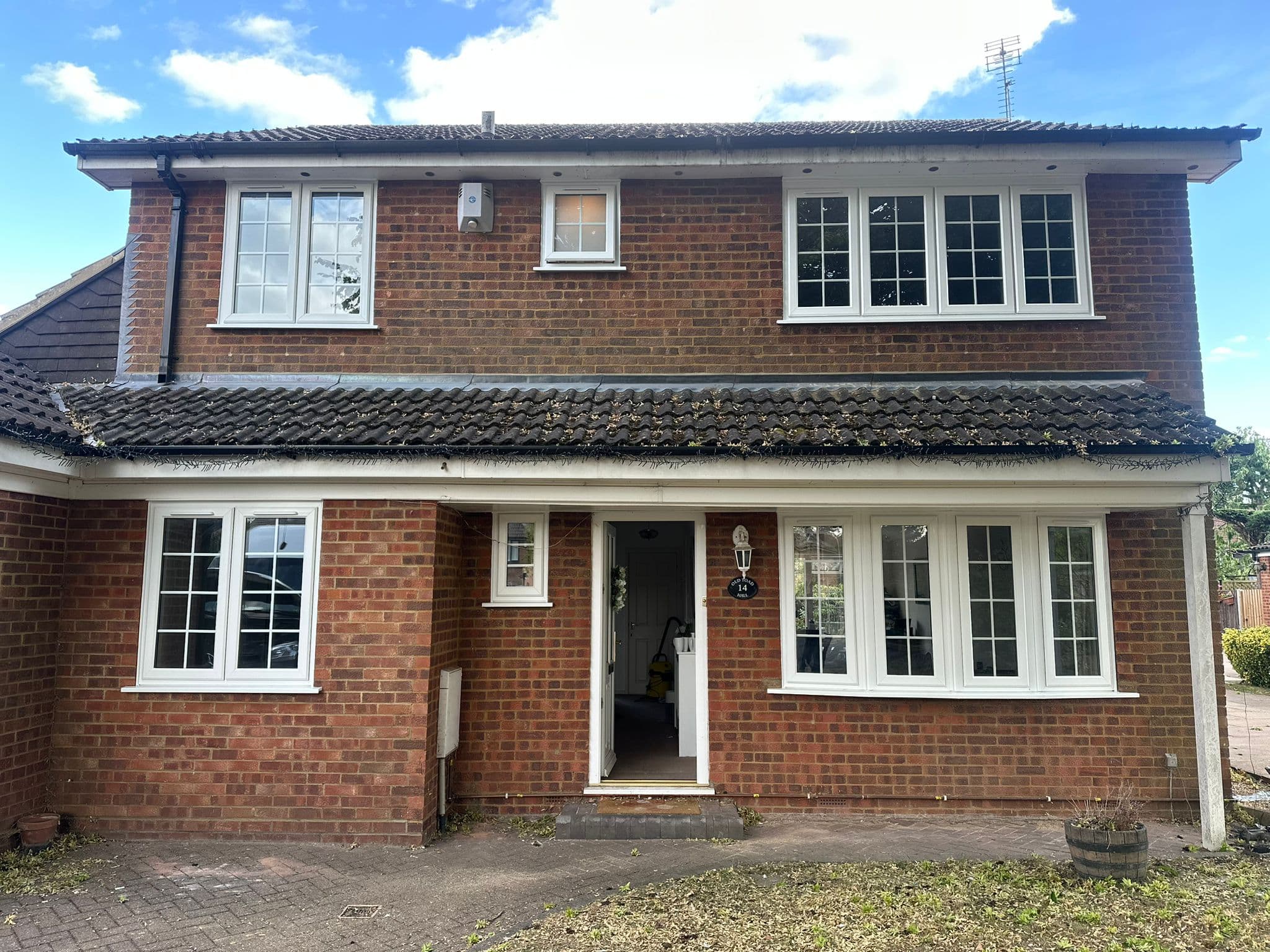
Casement windows are the most common window type in UK homes — hinged at the side, opening outward. What many homeowners don't realise is that within "casement" there are two distinct sub-types: standard and flush. The visual difference is subtle but it changes how the window reads on the property and affects price by 10-25%.
This guide explains the difference clearly, shows where each works best, and helps you decide which is right for your replacement project.
The Visual Difference
On a standard casement window, the opening sash (the part that hinges open) sits proud of the frame — meaning when you look at the window from outside, the sash is slightly raised above the surrounding frame. This creates a visible lip or shadow line between the sash and the frame.
On a flush casement window, the opening sash sits flush with the frame — when closed, the exterior face of the sash and the frame are on the same plane. No lip, no shadow line, no visible offset.
If you look at a traditional timber casement window from the 1920s or 30s, it's almost always a flush casement — timber windows were historically hand-built with the sash fitting flush into a rebated frame. Standard casements became widespread in uPVC manufacturing in the 1980s-90s because they're simpler (and cheaper) to produce in volume.
How This Affects Appearance
Standard casement reads as modern and utilitarian. The visible lip emphasises the sash as a separate element. On a 1990s-2010s new-build or refurb, standard casement windows look at home. On a period property, they read as a compromise — you can tell they're replacement windows even from across the street.
Flush casement reads as traditional and architectural. The plane-matched sash creates the look of a timber casement — the window appears integrated with the facade rather than stuck on. On a period property (1900s-1970s), flush casement is the sympathetic choice. On a contemporary property, flush casement reads as premium-spec.
For most UK homeowners, flush casement is the aesthetically correct choice for period properties and the premium-signalling choice for modern properties.
Material Options
Flush casement windows are available in:
uPVC flush casement
- Rehau Rio (premium) — the industry-leading uPVC flush casement, specifically engineered to replicate timber proportions
- Liniar FlushSash (mid-market) — reasonable quality at a lower price point
- Eurocell Modus Flush (budget-premium) — widely available, acceptable on non-critical projects
- Deceuninck Heritage Flush (mid-premium) — good flush appearance, less common
Rehau Rio is the current benchmark. It matches timber flush proportions more accurately than any other uPVC system on the UK market — see our Rehau Rio Flush Casement Windows review.
Aluminium flush casement
- Cortizo Cor 70 Hidden Sash — Cortizo's slim flush casement system with concealed sash
- Schuco AWS 70.HI — Schuco's casement system, available with flush sashes
- Smart Heritage — specifically designed for flush casement conversion work
Aluminium flush casements are less common than uPVC flush (timber-look uPVC is typically the preferred heritage replacement) but work well on contemporary properties where a metal framework is desired.
Timber flush casement
The original form. Specify timber for listed buildings, Grade II properties, and strict conservation areas. Price premium of 40-60% vs uPVC.
Performance Differences
Thermal and acoustic performance of flush vs standard casement is essentially identical. The sash-to-frame seal is the same, glass specification is the same, multi-point locking is the same. Any quality premium-brand window in either configuration achieves current Building Regulations and exceeds them with the right glass spec.
One minor technical difference: flush casement windows often use slightly different gasket arrangements to maintain the flush exterior appearance. In practice this has no measurable impact on performance for residential use.
Cost Difference
At the same brand and specification, flush casement typically costs 10-25% more than standard casement:
uPVC flush vs standard (Rehau)
- Standard Rehau TOTAL70 casement: £350 – £550 per window installed
- Rehau Rio flush casement: £420 – £650 per window installed
Premium of approximately £70 – £100 per window for the flush variant.
Aluminium flush vs standard (Cortizo)
- Standard Cortizo aluminium casement: £650 – £950 per window installed
- Cortizo Cor 70 Hidden Sash: £750 – £1,100 per window installed
Premium of approximately £100 – £150 per window.
For a full-house replacement (8-12 windows), the flush casement premium adds £800 – £1,800 to the project. Worth it on period properties; marginal on modern properties where appearance is less critical.
Which Is Right for Your Property?
Choose flush casement if:
- Your property is pre-1970s and you want sympathetic replacement
- You're in a conservation area without Article 4 restrictions (flush is usually accepted where timber isn't mandated)
- The original windows were flush timber and you want to maintain appearance
- You're investing for the long term and want the premium aesthetic
- Resale value matters — flush casement visibly signals premium spec
- You have astragal or Georgian bar detail — the bars integrate better with flush sashes
Choose standard casement if:
- Your property is 1980s or later and has always had standard casement windows
- You're in a new-build development where standard casement is consistent with neighbours
- Budget is constrained and the £70-£150 per window premium is meaningful to the total
- The existing windows are already standard casement and visual consistency matters
Mix-and-match considerations
On properties that have been extended or altered, it's reasonable to specify flush casement for the front elevation (visible from street) and standard for the rear. Saves money while keeping the "front of house" spec at premium level.
Hardware Choices on Flush Casement
Flush casement windows typically use concealed hinges — the hinges sit within the frame rebate rather than being mounted on the sash face. This preserves the flush appearance and is part of what distinguishes flush from standard windows.
Handle styles on flush casement: - Traditional monkey-tail handle — period-accurate on heritage replacements - Espagnolette lever — more modern look, works on transitional and contemporary flush installations - Chrome or brass finish — both common, brass reads more period, chrome more contemporary
Other Heritage Considerations
Glazing bars
If your original window has glazing bars (Georgian, Victorian, Edwardian patterns), specify the same pattern in the replacement. Options: - Surface-applied bars (cheapest, looks fine at distance) - Between-the-glass bars (modern look, not period-accurate) - Full structural bars with separate glazed panes (period-accurate, most expensive)
For conservation-area flush casement, surface-applied or full structural bars are appropriate; between-the-glass bars are typically rejected by conservation officers.
Horns (on sash windows)
Sash windows — the vertical-sliding ones — traditionally have "horns" at the meeting rails (small projecting features that prevent the rails slipping sideways). These should be replicated in any heritage-spec replacement. Some uPVC sash windows omit horns for cost — the result is visibly non-period.
Putty-look glazing
On original timber flush casements, the glass was held in place with putty. Modern uPVC and aluminium use rubber gaskets. Premium heritage systems like Rehau Rio include a putty-profile gasket that mimics the original look from outside.
Real-World Examples
1920s semi in Amersham
Original timber flush casement windows with Georgian bars. Owner specified Rehau Rio in Chartwell green with full structural bars. Installation cost: £6,800 for 8 windows. Reads from the street as unchanged from the original — neighbours can't tell they're replacements.
1990s detached in Reading
Original standard uPVC casement in white. Owner specified standard Rehau TOTAL70 in anthracite grey. Installation cost: £4,200 for 9 windows. Clean modern upgrade, no need for flush premium — standard casement fits the house style.
2021 new-build in Fleet
Original windows are aluminium standard casement in anthracite. Owner wanted to upgrade to flush for premium appearance when selling. Installation cost: £9,500 for 11 Cortizo Cor 70 Hidden Sash windows. Completes the "premium spec" story for the resale market.
Getting a Quote
Vitrum Solutions installs Rehau Rio uPVC flush casements, Cortizo flush aluminium casements, and Schuco flush aluminium systems across Buckinghamshire, Berkshire, Oxfordshire, Surrey, Hampshire, Hertfordshire and West London. Every installation is FENSA registered with a 10-year CPA insurance-backed guarantee.
Request a quote and specify whether you're interested in flush or standard — we'll price both at survey stage so you can compare like-for-like.
For related guidance see our Rehau Rio review, aluminium vs uPVC windows comparison and conservation area windows guide.
Frequently Asked Questions
Is the price premium for flush casement justified?
Typically yes if the property is period or you intend to sell into a premium market. The 10-25% uplift over standard casement (about £40-£150 per window in uPVC, £70-£200 in aluminium) buys the timber-look proportions that planners, conservation officers and premium buyers all recognise. On a modern new-build or a budget refurb the premium is harder to justify because standard casement reads as appropriate to the property style.
Can I mix flush and standard casements on the same elevation?
Not recommended on the same elevation. Mixing them on different elevations of the same house is acceptable if the rear sits behind a fence or wall (flush front, standard rear is a common money-saving compromise). On a visible elevation, mixing them looks like a half-finished project: the sash offsets are different and the eye sees the inconsistency immediately.
Do flush casements perform thermally as well as standard casements?
Yes. Modern flush systems achieve identical U-values to their standard counterparts. The Rehau Rio flush system uses the same 6-chamber profile core as TOTAL70 standard casement and matches its U-values from 1.2 W/m²K (whole window). Cortizo Cor 70 Hidden Sash achieves the same A-rated thermal performance as Cor 70 standard. The flush detail is purely cosmetic and adds no thermal compromise.
Are flush casements required in conservation areas?
Not universally required, but commonly the only style accepted as a like-for-like timber substitute. Each Conservation Area has its own design guide and each Local Planning Authority interprets it differently. Where the original property has flush casements (cottages, Arts and Crafts, mid-century), planners typically require flush replacements. Where the original is sash (Victorian, Edwardian), planners require sash, not flush casements. Always check the local design guide before specifying.
Which brand makes the best flush casement uPVC?
Rehau Rio is the current UK benchmark for proportional accuracy to timber. The flush detail, sash dimensions and bottom rail depth all match traditional timber casement more closely than competitor uPVC systems. Liniar FlushSash is the most credible mid-market alternative; Eurocell Modus Flush and Deceuninck Heritage Flush sit below Rio for proportional fidelity but are workable on non-period properties.
Need advice on your next project?
Talk it through with the team, or leave your details for a free no-obligation written quote.
FENSA registered · 10-year CPA insurance-backed guarantee · Cortizo, Schuco & Rehau approved · Origin Approved Partner