uPVC Sash Windows in Conservation Areas: UK Guide
Replacing windows in a conservation area is one of the most common planning headaches for UK homeowners. If you own a period property with original timber sash windows that are draughty, rattling, or rotting, the instinct is to upgrade to modern double-glazed units. But conservation area rules can complicate what should be a straightforward improvement. This guide explains when you can use uPVC sliding sash windows in conservation areas, what the planning requirements are, and how to navigate the process successfully.
Understanding Conservation Areas
A conservation area is a designated zone where the local planning authority has determined the architectural or historic character deserves protection. There are over 10,000 conservation areas in England alone, covering everything from Georgian town centres to Victorian suburbs and rural villages.
Within a conservation area, certain permitted development rights are restricted. This means changes that would normally not require planning permission — such as replacing windows — may need formal approval. The extent of these restrictions varies by area and depends on whether an Article 4 direction is in place.
What is an Article 4 Direction?
An Article 4 direction is an additional layer of control that removes specific permitted development rights. In the context of windows, an Article 4 direction typically means:
- You need planning permission to replace windows, even on a like-for-like basis
- The planning authority will assess the proposed window material, design, and colour
- Approval may be conditional on using specific materials (traditionally timber)
- The requirement usually applies to elevations visible from a public highway
Not all conservation areas have Article 4 directions covering windows. If your area does not, you may be able to replace windows under permitted development — provided the new windows are similar in appearance to the originals.
How to Check Your Restrictions
1. Contact your local planning authority — search for "[your council] conservation area" online 2. Check the conservation area character appraisal — most councils publish these documents online, detailing what is protected 3. Ask specifically about Article 4 — this is the key question. If there is no Article 4 covering windows, your options are broader 4. Check whether your property is listed — listed buildings have separate, stricter controls under listed building consent
Can You Use uPVC Sash Windows in a Conservation Area?
The honest answer is that it depends on three things: whether your home is a house or a flat, whether an Article 4 direction applies, and which council you are dealing with. Those councils differ more than most installers admit, so this section quotes what planning authorities actually publish rather than what the window industry claims.
Houses Without an Article 4 Direction
Replacing windows on an unlisted house is normally permitted development. The Planning Portal states that permission is not usually needed for "insertion of new windows and doors that are of a similar appearance to those used in the construction of the house", and the legal basis sits in the General Permitted Development Order 2015, Schedule 2, Part 1, Class A.
The catch is in that phrase. Class A.3(a) requires materials "of a similar appearance to those used in the construction of the exterior of the existing dwellinghouse". A uPVC-for-timber swap can fail that test, which takes the work outside permitted development altogether. The London Borough of Richmond upon Thames puts it bluntly: "plastic looking windows and doors are not likely to be acceptable replacements to timber or crittal windows … as they do not replicate the traditional construction detail or materials." Where there is doubt, Richmond recommends applying for a Lawful Development Certificate before starting.
Flats Are Different, Always
This catches people out. Permitted development rights apply to a "dwellinghouse", and the GPDO expressly excludes "a building containing one or more flats, or a flat contained within such a building". Richmond confirms the consequence: "flats and houses converted to flats do not benefit from permitted development rights and therefore planning permission will always be needed to change doors and windows."
If you live in a flat in a conservation area, you need permission regardless of Article 4.
What an Article 4 Direction Actually Does
An Article 4 direction does not ban uPVC. It withdraws the automatic permission so that a planning application becomes necessary. Richmond states it plainly: "An Article 4 Direction does not prevent the development … It instead requires that planning permission is first obtained from the Council."
Once an application is required, the decision is governed by section 72(1) of the Planning (Listed Buildings and Conservation Areas) Act 1990, which requires that "special attention shall be paid to the desirability of preserving or enhancing the character or appearance of that area."
What Councils Actually Decide
Published guidance varies widely, and several authorities name vertical sliding sash uPVC specifically as acceptable:
- Hastings Borough Council lists uPVC as generally inappropriate in conservation areas "except in the following cases", and the fourth exception is "a slim section vertical sliding sash in keeping with the detailed pattern and character of existing windows of the surrounding area". Their other exceptions cover post-1920 buildings never fitted with timber sashes, elevations hidden from public view, and total replacement of all windows on a detached building.
- Blackpool Council states "slimline upvc may be acceptable" and notes "a growing number of double glazing manufacturers producing upvc sliding sash and flush casement windows which would be acceptable in conservation areas". Their criteria are specific: replicate the putty-line chamfer, mechanically jointed rather than welded, run-through rather than planted-on horns, and no trickle vents.
- Brighton & Hove takes a position by elevation: uPVC is "unlikely to be permitted on an elevation of a historic building visible from a street or public open space", but "on other facades they will be allowed, provided that they match the original design and method of opening."
- Fylde Borough Council is absolute on listed buildings: "UPVC would NOT be acceptable under any circumstances in listed buildings."
The pattern across all of them is that vertical sliding operation, slim sections and correct horn detailing matter more than the material alone, and that rear or non-public elevations are treated far more permissively than street frontages.
What Historic England Says
Historic England's guidance, updated in July 2024, favours repair over replacement: "For historic windows, repair is a better option than replacement", and "complete replacement should be a last resort, for example if they are beyond repair." They raise four specific objections to PVCu, covering appearance, a service life they put at "less than 25 years" against traditional windows "over 100 years", repairability and environmental impact. They also rank secondary glazing highly, noting it "can reduce heat loss by over 60%".
They do support replacement in one clear case: "We will support the removal of non-historic windows provided it is clear that they are not of historic or architectural interest and that the new windows are of an appropriate style that enhances the building." If your existing windows are 1980s replacements rather than originals, that is the paragraph to cite.
Evidence From Actual Appeals
Two recent decisions show where the line falls.
In Scarborough (appeal reference APP/U2750/D/25/3358527, decided 3 April 2025), the inspector dismissed an appeal for uPVC replacements but drew an explicit distinction: "Replacing several of the larger timber sash windows with suitable uPVC could be acceptable." The refusal turned on ornate mid-rail and eyebrow windows rather than the plainer arched sashes. The same decision confirms that neighbouring uPVC is not a defence, since "planning decisions are made on their respective merits … rather than following a system of precedent".
In Blandford Forum (APP/D1265/Y/24/3341181, decided 29 November 2024), a listed building appeal for rear uPVC windows was dismissed, with the inspector noting that "the harm to the LB is not dependent on whether the works are visible from public vantage points". For listed buildings, being out of sight does not help.
Factors That Influence Approval
- Corner joints — mechanically jointed frames replicate traditional joinery most closely, and some councils name them specifically. Blackpool's guidance asks for "mechanically jointed not welded". Welded frames are accepted by many other authorities where the overall appearance is right, so check your own council's published guidance rather than assuming either way
- Run-through sash horns — the decorative protrusions at the bottom of the upper sash must be integrated, not stuck on
- Slim meeting rail — the horizontal bar where the two sashes meet should be as slim as possible
- Deep bottom rail — traditional sash windows have a deeper rail at the base of the lower sash
- Appropriate colour — white, Cream, or heritage colours are generally required
- Glazing bar pattern — must match the original (e.g., 6-over-6, 2-over-2)
The Victorian Sliders ECOSlide System
We fit Victorian Sliders ECOSlide for sliding sash work. Victorian Sliders extrude their own PVC-U profile in South Wales exclusively for this system, rather than buying profile from a systems house, and they build nothing else. Here is what that produces:
Heritage Design Features
- Run-through sash horns — the horn is worked into the sash itself rather than glued on afterwards, which is the detail a conservation officer looks at first
- Deep bottom rail — 90mm option against a 60mm standard rail, matching traditional Victorian and Georgian proportions
- Slim midrails — engineered to keep the meeting rail as narrow as the system allows
- Astragal bars externally, Georgian bars internally — period-appropriate glazing bar treatment rather than stick-on strips
- Welded corners — formed on precision welding equipment. Worth knowing: a small number of councils, Blackpool among them, specify mechanically jointed frames in their published guidance. Where yours does, check the requirement before ordering
- Tilt-in cleaning — both sashes tilt inward, a significant practical advantage over timber
Performance
- Energy rating: A rated with double glazing
- U-value: from 1.3 W/m²K standard, 1.2 W/m²K with the thermal upgrade
- PAS 24:2022 — passed November 2024, with Secured by Design certified versions available to order
- BS 6375 weather tested — air permeability Class 4, watertightness 7A, wind resistance C4, rated for severe exposure
- Colour range — 10 standard foils plus classic RAL and Farrow & Ball matching
Colour Options for Conservation Areas
The most commonly accepted colours for conservation area sash windows are:
- Brilliant White — acceptable for most Victorian and Edwardian properties
- Cream — often preferred for Georgian properties and rural areas
- Chartwell Green — popular for period cottages and rural conservation areas
- Pearl Grey — a lighter heritage grey suitable for Cotswolds and similar traditional properties
- Irish Oak — acceptable where original windows were stained timber
- Anthracite Grey — occasionally accepted for later period properties
Cost: uPVC Sash vs Timber Sash
Cost is usually the decisive factor, and the gap is wider than the purchase price suggests once maintenance is counted. Timber sash windows need repainting every three to five years for the life of the window; uPVC does not. Over a twenty-year ownership that recurring cost closes much of the apparent quality gap, and it is a fair point to put to a planning officer weighing material authenticity against the burden on a homeowner.
For current figures on both, including full-house comparisons, see our sash window cost guide.
Local Examples: Buckinghamshire and Berkshire
Our service area includes numerous conservation areas across Buckinghamshire and Berkshire. Here are examples of how local planning authorities approach uPVC sash windows:
Buckinghamshire
- Beaconsfield Old Town — Article 4 direction in place, so a planning application is required. Confirm the current position with South Bucks before ordering for several applications, particularly where original windows had already been replaced with non-original materials.
- Amersham Old Town — Article 4 applies. Timber is strongly preferred, but high-quality uPVC sash with mechanical joints has been approved on case-by-case basis.
- Marlow — Parts of Marlow High Street and surrounding areas are covered by conservation area designation. The council has been relatively receptive to uPVC sash windows with heritage detailing.
Berkshire
- Windsor — Multiple conservation areas with varying restrictions. The Royal Borough of Windsor and Maidenhead generally prefers timber for Grade II listed properties but has accepted uPVC sash for non-listed properties within conservation areas.
- Maidenhead — Conservation area restrictions apply in the town centre. uPVC sash windows have been approved where mechanical joints and appropriate proportions are demonstrated.
These examples are informative but not precedent-setting — each application is assessed individually. Always contact your local planning authority before ordering windows.
The Planning Application Process
If you need planning permission for sash window replacement, here is the process:
Step 1: Pre-Application Enquiry (Optional but Recommended)
Most councils offer a paid pre-application advice service (check your council's website for the current charge) where you can discuss your proposal informally before submitting a formal application. This is the best way to understand what the planning officer will accept.
Step 2: Formal Application
A householder planning application in England carries a statutory fee; check the current amount on GOV.UK or the Planning Portal before you apply. You will need:
- Completed application form
- Site location plan (1:1250 scale)
- Existing and proposed elevation drawings showing window details
- Technical specification of the proposed windows (your installer should provide this)
- Design and access statement explaining why uPVC is appropriate
Step 3: Assessment
The planning authority has 8 weeks to determine a householder application. They will assess:
- Impact on the conservation area's character
- Similarity to existing/original windows
- Material, colour, and proportional accuracy
- Any precedent set by other window replacements in the area
Step 4: Decision
If approved, you can proceed with installation. If refused, you can appeal to the Planning Inspectorate (free of charge) or revise your proposal.
Tips for Getting Approval
Based on our experience working in conservation areas across Buckinghamshire and Berkshire, here are the most effective strategies:
1. Match the corner detail your council asks for — a minority of authorities specify mechanically jointed frames in writing; most assess the overall appearance instead. Read your own council's window guidance before ordering 2. Provide a sample — ask your installer for a corner sample of the sash profile and submit it with your application 3. Photograph the existing windows — especially if they are already non-original (previous uPVC replacements), as this weakens the case for insisting on timber 4. Get a structural survey — if original windows have significant rot, a surveyor's report supporting replacement strengthens your case 5. Offer to match exactly — specify matching glazing bar patterns, colour, and proportions 6. Cite maintenance costs — planning officers are increasingly sympathetic to the financial argument, particularly for elderly homeowners
How Vitrum Solutions Can Help
We install uPVC sliding sash windows and flush casement windows across conservation areas in Buckinghamshire, Berkshire, and West London. We fit the Victorian Sliders ECOSlide sash system and can assist with planning applications, including providing technical drawings, profile samples, and written specifications.
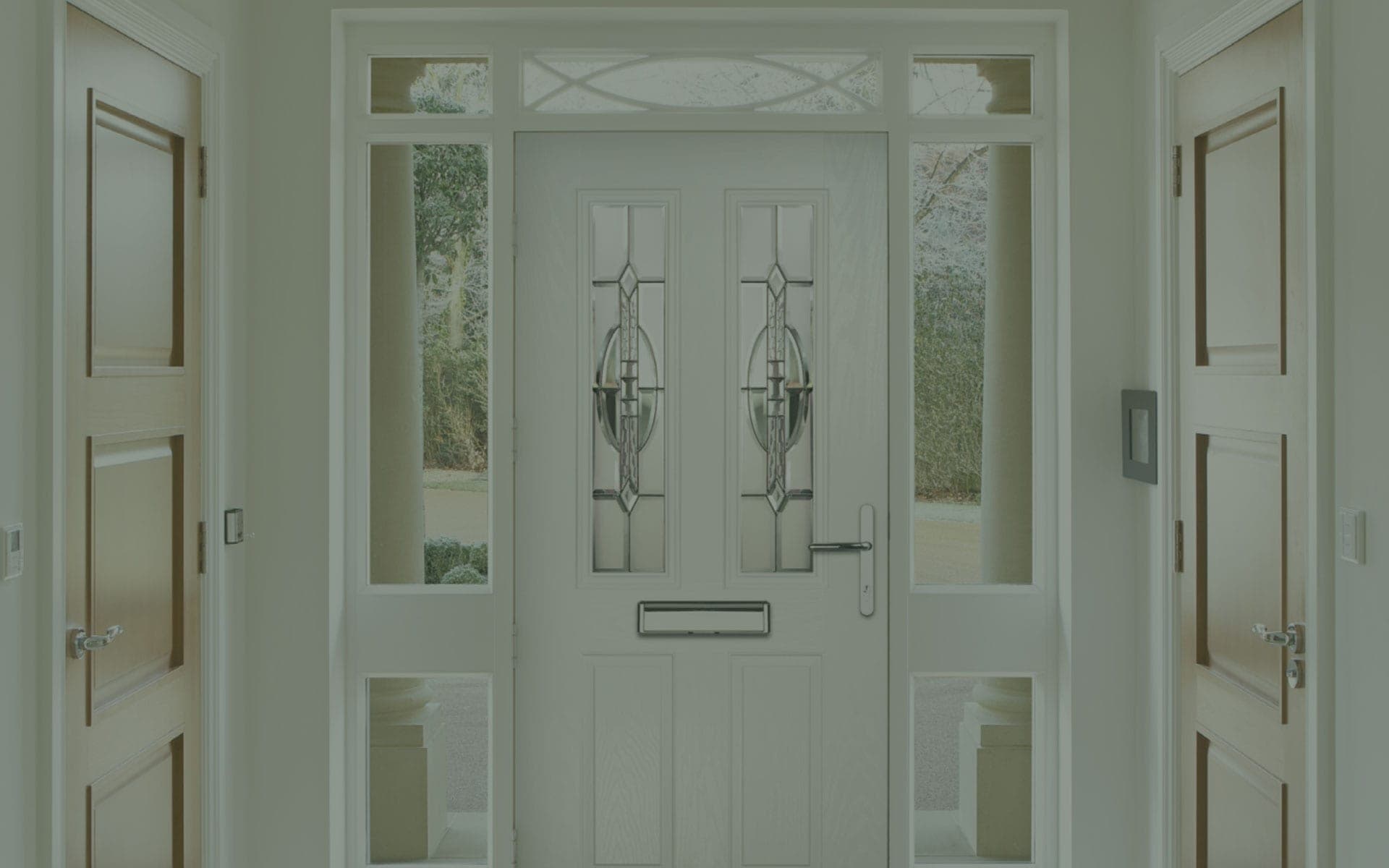
Every installation is FENSA registered and covered by a CPA insurance-backed guarantee. We also install composite entrance doors that complement heritage sash windows for a complete period-appropriate upgrade. For a sash-only view of the same question, our sister brand Sash Window Factory has a guide to sash windows in conservation areas.
Frequently Asked Questions
Can I replace sash windows in a conservation area without planning permission?
If your conservation area does not have an Article 4 direction covering windows, you can replace sash windows under permitted development — provided the new windows are of similar appearance to the originals. If an Article 4 direction is in place, you need planning permission for any window change visible from a public highway.
Will planning officers accept uPVC sash windows?
Many planning authorities now accept high-quality uPVC sash windows with mechanical joints, provided they closely replicate the original timber design. Acceptance varies by authority and by the specific conservation area. A pre-application enquiry is the best way to find out before committing.
How much cheaper are uPVC sash windows than timber?
uPVC sash windows typically cost substantially less than equivalent timber sash windows, including installation. Over 20 years, the total cost of ownership gap widens further because uPVC requires no painting or staining. For current figures on both, see our sash window cost guide.
What are run-through sash horns?
Sash horns are the small protrusions at the bottom of the upper sash on a traditional sash window. "Run-through" means the horns are an integral extension of the sash frame rather than a separate piece glued or screwed on. Conservation officers look for run-through horns as a sign of quality that replicates the original timber construction method.
Are there grants available for windows in conservation areas?
Not in general. There are no general public grants for replacing windows in a conservation area, and government energy schemes are aimed mostly at households on low incomes or benefits and fund windows only in limited cases. Vitrum Solutions does not offer or arrange grants. Our guide to window grants explains what does exist and who qualifies.
Need advice on your next project?
Talk it through with the team, or leave your details for a free no-obligation written quote.
FENSA registered · 10-year CPA insurance-backed guarantee · Cortizo, Schuco & Rehau approved · Origin Approved Partner