Composite Doors vs uPVC Doors: Which is Better?
Your front door makes the first impression on everyone who visits your home, and it is also the primary barrier against intruders, weather and heat loss. The two most popular front door materials in the UK today are composite and uPVC — but they are very different products with different strengths. This guide compares them honestly so you can decide which is right for your property, budget and priorities.
What Is a Composite Door?
A composite door is built from multiple materials layered together to combine their best properties. A typical composite door consists of:
- Outer skin: Glass Reinforced Plastic (GRP) — the same material used in boat hulls
- Core: High-density polyurethane foam or solid timber core
- Inner skin: GRP or uPVC
- Frame: Reinforced uPVC or aluminium outer frame
- Threshold: Aluminium low threshold with weather seals
This layered construction gives composite doors their characteristic combination of strength, insulation and realistic woodgrain texture. Premium composite doors from brands like Palladio use a solid monocoque core that eliminates the possibility of water ingress or panel delamination.
What Is a uPVC Door?
A uPVC front door uses the same material and construction methods as uPVC windows. The door panel is typically a hollow or foam-filled uPVC skin mounted in a uPVC frame. They are lightweight, affordable and functional, but they lack the solidity and premium feel of composite alternatives.
Most uPVC doors manufactured today use a reinforced multi-chamber profile with steel inserts for rigidity. While this is adequate for back doors and uPVC single doors, many homeowners find them underwhelming as a front entrance.
Appearance and Kerb Appeal
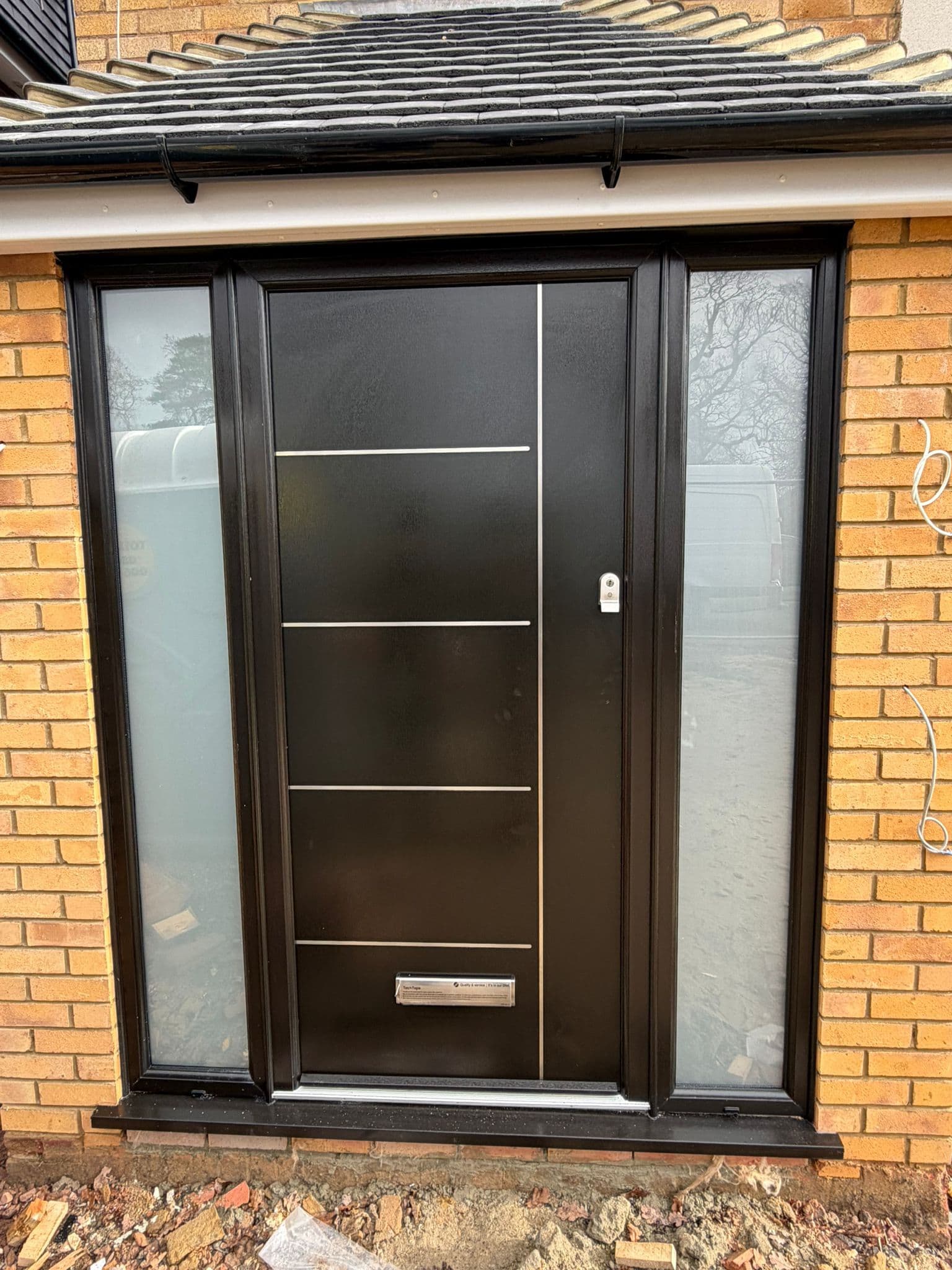
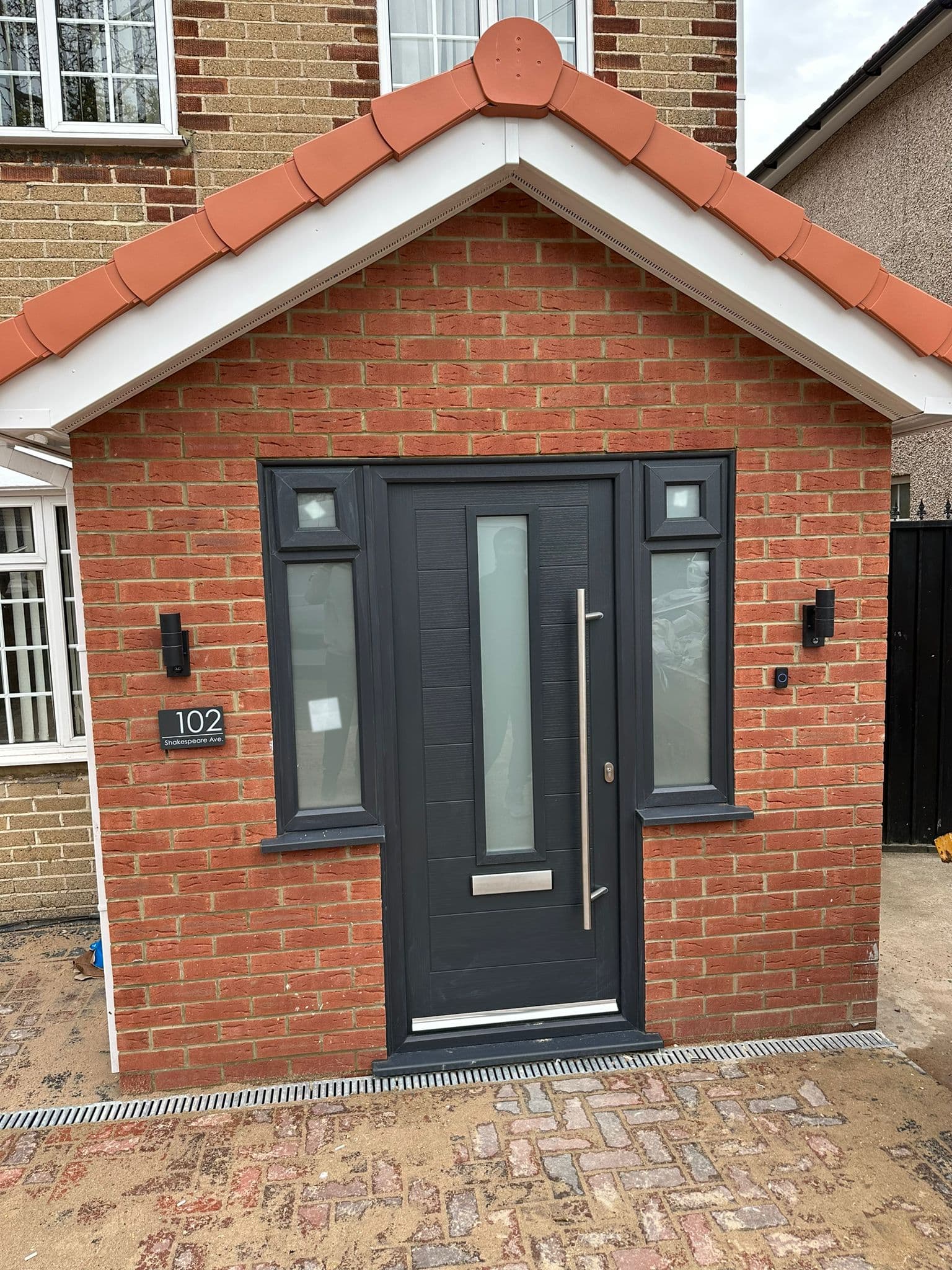
This is where composite doors win convincingly. The GRP surface of a composite door can be moulded to replicate the grain and texture of real timber — and from a distance, many are indistinguishable from a painted hardwood door. Colours are through-moulded or factory-applied, meaning they do not fade, peel or require repainting.
Composite doors are available in a vast range of styles, from traditional panelled designs to contemporary flush finishes. Glass options include decorative, frosted, clear and stained-glass effects. Hardware choices — handles, knockers, letterplates — are typically higher quality than uPVC equivalents.
uPVC doors have a distinctly plastic appearance. Even with a woodgrain foil, they lack the depth and texture of composite. The surface feels hollow when knocked, which immediately signals a lower-end product. For front doors, this aesthetic gap matters significantly to most homeowners.
Security Comparison
Composite Doors
- PAS 24 certified as standard on most systems
- Multi-point locking with hook locks, deadbolts and compression bolts
- Anti-snap, anti-bump, anti-drill cylinders (such as Ultion or ABS)
- Solid core resists forced entry — cannot be kicked through
- Secured by Design accreditation available on premium models
uPVC Doors
- PAS 24 available but not always standard
- Multi-point locking systems
- Standard euro cylinders on budget models (vulnerable to snapping)
- Hollow or foam-filled panels — less resistant to physical attack
- Steel reinforcement improves rigidity but the plastic outer remains a weak point
For front door security, composite doors are the clear winner. The solid core makes them significantly harder to breach through force, and the hardware specification is typically higher. If security is a priority, consider our Palladio composite doors which feature a solid monocoque core and 5-point locking system.
Thermal Performance
Composite doors achieve U-values of 1.0-1.6 W/m2K depending on the glazing area and core specification. A solid composite door with minimal glazing can achieve U-values as low as 0.9 W/m2K — better than most windows.
uPVC doors typically achieve U-values of 1.4-1.8 W/m2K. The multi-chamber profile provides reasonable insulation, but the thinner panel construction and less dense core material limit performance compared to composite.
In practical terms, a composite front door will lose less heat than a uPVC equivalent. Over a year this translates to a modest energy saving, but the more noticeable difference is the comfort gain: cold draughts around the door edge are eliminated by the thicker insulating core and tighter weather seal.
Durability and Lifespan
Composite Doors
- Lifespan: 30 years or more
- Colour stability: GRP does not fade, even in south-facing positions
- Warping: High-quality composite doors are engineered to resist warping. Budget models can occasionally bow in extreme heat
- Maintenance: Wipe with soapy water. No painting or staining required
- Weather resistance: Excellent. Triple-sealed frames prevent water and draught ingress
uPVC Doors
- Lifespan: 20-25 years
- Colour stability: White uPVC can yellow over time. Foiled finishes may peel or fade
- Warping: More prone to warping and misalignment, especially in south-facing positions
- Maintenance: Wipe clean. Hardware may need adjusting or replacing after 10-15 years
- Weather resistance: Good but seals degrade faster than composite
Cost Comparison
UK front-door tiers in 2026:
uPVC Front Doors
- Budget tier: standard panel
- Mid-range tier: foiled finish with multi-point locking
- Premium tier: reinforced construction with enhanced hardware
Composite Front Doors
- Budget tier: GRP skin, foam core
- Mid-range tier: solid core with good hardware
- Premium tier: Palladio (the door we install), with monocoque fibreglass construction, triple-glazed glass and 12-year manufacturer warranty
- High-end: bespoke design, premium glass
Vitrum Solutions is a quote-driven business: we do not publish fixed pricing on either category here. Final price depends on door size, glass options, hardware finish, sidelights and any structural alterations to the existing opening. The composite premium over uPVC reflects significant improvement in security, insulation, appearance and longevity.
Which Should You Choose?
Choose composite if:
- This is your front door and kerb appeal matters
- Security is a priority
- You want a door that looks and feels premium
- You plan to stay in the property for 10+ years
- You do not want to worry about maintenance
Choose uPVC if:
- Budget is the primary consideration
- This is a back door or side entrance
- You need a functional door that does the job without frills
- You are replacing a rental property door where cost matters most
For most homeowners replacing a front door, composite is the right choice. The price difference is modest compared to the improvement in security, appearance and longevity. Browse our full range of composite doors or Palladio composite doors to see what is available.
Frequently Asked Questions
Are composite doors worth the extra money over uPVC?
Yes, for a front door. Composite doors offer significantly better security, insulation, appearance and longevity. The price premium is well justified by the improvement in daily performance and kerb appeal. For current figures see our composite doors cost guide. For back or side doors, uPVC remains a sensible budget option.
How long do composite doors last compared to uPVC?
Composite doors typically last 30+ years, while uPVC doors last 20-25 years. Premium composite doors from brands like Palladio can last even longer with proper care. The GRP surface does not fade, peel or require repainting.
Does uPVC warp more than composite?
High-quality composite doors from reputable manufacturers are engineered to resist warping. Very cheap composite doors with foam cores can occasionally bow in prolonged heat. Solid-core designs like Palladio's monocoque construction virtually eliminate this risk. Always buy from a manufacturer with a proven track record.
Can you tell the difference between composite and uPVC in person?
Absolutely. The difference is immediately apparent. Composite doors have a solid, weighty feel and a realistic woodgrain texture. uPVC doors feel lighter and hollow by comparison, with a noticeably plastic appearance. Visitors and potential buyers will notice the difference.
What composite door brand does Vitrum Solutions install?
Vitrum Solutions installs Palladio exclusively across our composite door range. Palladio's GRP fibreglass monocoque construction is the differentiator we have settled on for premium UK installations: no timber core to swell or rot, 12-year manufacturer warranty on the slab, PAS 24-compliant 10-point locking. Other UK composite door brands exist in the market (Solidor, Endurance, Rockdoor, Apeer); we reference them for comparison context only and do not supply or fit them.
Do I need a new frame when replacing a uPVC door with composite?
In most cases, yes. Composite doors require a specific frame system to work correctly with the multi-point locking mechanism and weather seals. We always supply a complete door and frame unit to ensure proper fit and performance.
Need advice on your next project?
Talk it through with the team, or leave your details for a free no-obligation written quote.
FENSA registered · 10-year CPA insurance-backed guarantee · Cortizo, Schuco & Rehau approved · Origin Approved Partner