Slimline Roof Lanterns: Korniche vs Atlas Compared
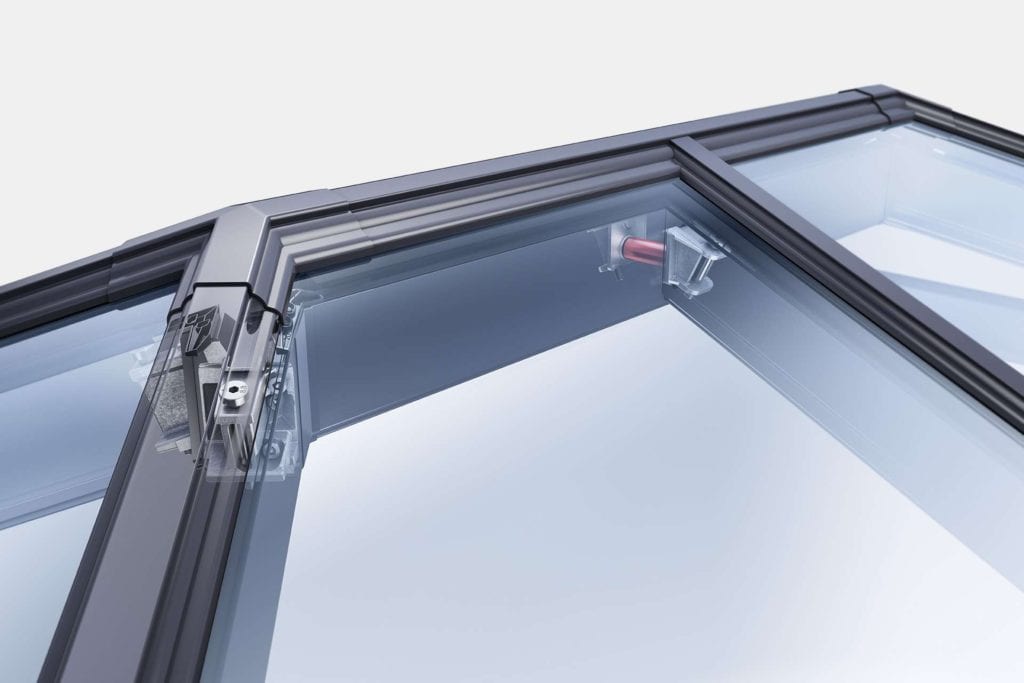
A slimline roof lantern puts more glass and less frame over your extension, so the room below gets more daylight and a cleaner view of the sky. We supply and install two slimline aluminium lantern systems, Korniche and Atlas. Both are thermally broken, both are PAS 24 tested, and both are a clear step up from a standard lantern with chunky ridge and rafters.
You can see both systems on our slimline aluminium roof lanterns page. This guide explains what actually makes a lantern slim, how Korniche and Atlas compare, and how to choose between them for your extension.
What Makes a Roof Lantern "Slimline"?
Every roof lantern is a frame of aluminium carrying glass units. The frame has three visible parts from inside the room: the ridge running along the top, the hips running down to the corners, and the rafters between the glass panels. On a standard lantern these are broad, boxy sections, and on a large roof they add up to a lot of frame overhead.
A slimline lantern reduces the visible width of those parts, especially the ridge, which is the most noticeable line from below. The result is more glass for the same opening and a lighter, more architectural look. Our guide to slim vs standard roof lanterns explains when the upgrade is worth it. For most kitchen and living extensions where the lantern is the centrepiece of the room, it is.
Slim does not mean weak. A good slimline lantern uses stronger sections and a thermal break through the frame, so it carries the glass, snow and wind loads and stays warm without needing bulky profiles.
Korniche Roof Lanterns
Korniche is a premium aluminium roof lantern made in the UK by Made for Trade, and it is our default choice for high-end extensions.
- Frame. A reduced-width ridge, hips and rafters, finished with slender external top caps and sculpted corners. The lantern is fully thermally broken, with an insulating core running through the structure.
- Glazing. 28mm argon-filled double-glazed units with a warm edge spacer, gasket-sealed with no silicone inside the structure. The glass-unit U-value is 1.2 W/m²K, or 1.0 W/m²K with the Premium glass range, as our Korniche U-value guide explains.
- Self-cleaning glass as standard, with solar control (blue or neutral), laminated and privacy options.
- Sizes. Made to measure up to 6m × 4m external.
- Security. PAS 24 tested as standard.
The Korniche Slim Ridge page covers the system in detail. Its strengths are the finish of the frame, the speed and neatness of the gasket-sealed glazing, and the consistency of a single premium specification.
Atlas Roof Lanterns
Atlas is a slimline aluminium roof lantern system widely used across the UK, available in contemporary and traditional styles.
- Frame. Slim, thermally broken aluminium rafters and a reduced ridge, designed to cut the visible frame compared with a conventional lantern.
- Glazing. Double-glazed, argon-filled units with self-cleaning and solar control options in blue and neutral tints.
- Sizes. A range of stock sizes as well as made-to-measure options, which can suit standard extension openings well.
- Security. PAS 24 tested.
- Colours. White, grey and black as standard, with other RAL colours available.
Atlas is often specified where a project needs a slimline lantern in a popular size, or where the traditional style suits the house better than a modern hipped look. Exact sizes, glass options and thermal figures depend on the configuration, so we confirm them with your quote.
Korniche vs Atlas: How They Compare
Look. Both are slimline. Korniche's tapered top caps and sculpted corners give a particularly crisp external finish, which matters if the lantern is visible from upstairs windows or the garden. Atlas offers a traditional style as well as a contemporary one, which can suit a period house better.
Glass and warmth. Both use argon-filled double glazing with self-cleaning and solar control options. When you compare thermal figures, check whether a number is for the glass unit alone or for the whole lantern including the frame: a glass-unit figure always looks better. Building Regulations in England require a rooflight to achieve 2.2 W/m²K or better, and both systems clear that comfortably.
Security. Both are PAS 24 tested. PAS 24 is not yet required for roof lanterns, but it is reassuring on a single-storey extension where the roof can be reached.
Sizes. Korniche is made to measure up to 6m × 4m external. Atlas offers stock sizes alongside bespoke ones. For very large openings, two lanterns or a different rooflight may be the better answer either way.
Colour. Both come in white, grey and black as standard with other RAL colours available, and Korniche offers a different colour inside and out, so the frame can match the window frames outside and the ceiling inside.
Installation. Both systems need a properly built, level and insulated upstand (kerb) and careful weather detailing at the base. Most lantern leaks come from the installation rather than the product, so the installer matters as much as the brand.
Glass Options Worth Considering
The glass does as much for comfort as the frame does for looks, so it is worth choosing deliberately.
- Solar control glass in a blue or neutral tint reduces heat gain and glare. On a south or west-facing extension it is the single most useful upgrade, and it keeps a kitchen or living room usable on a bright summer afternoon.
- Self-cleaning glass uses a coating that breaks down dirt in daylight so rain can wash it away. On a roof you cannot easily reach, it makes a real difference between cleans.
- Laminated glass holds together if it is broken, which adds safety overhead and a further layer of security.
- Privacy or obscure glass suits a lantern overlooked by neighbours' upstairs windows.
Questions to Ask Before You Buy
- Is the quoted U-value for the glass unit or the whole lantern?
- Is the lantern thermally broken throughout, including the ridge and hips?
- Who builds or checks the upstand, and how is it insulated and weathered?
- Which glass is included as standard, and which options cost extra?
- Does the installer register the work and provide an insurance-backed guarantee?
Which Slimline Lantern Should You Choose?
- Choose Korniche if the lantern is the focal point of a premium kitchen or living extension and you want the finest frame finish, self-cleaning glass as standard and a single high specification.
- Choose Atlas if your opening suits a standard size, you prefer a traditional lantern style, or you want a slimline lantern with a wide choice of configurations.
- Consider a flat rooflight if the roof is low or you want a frameless look; our skylights and flat rooflights page covers the options.
On south-facing extensions we recommend solar control glass on either system to keep summer heat gain under control.
Not sure which lantern suits your extension? Request a free quote or call 0800 861 1450 and we will survey the roof and recommend Korniche or Atlas, with a written quote and no obligation.
Planning, Cost and Installation
Most roof lanterns on a single-storey extension fall under permitted development, but listed buildings and conservation areas can need approval, as our roof lantern planning permission guide explains. For budgeting, our roof lantern cost guide sets out what drives the price: size, glass and the work needed on the roof.
We supply and install both Korniche and Atlas, never as a DIY kit, across the Home Counties and West London, including roof lanterns in Slough. Every installation is FENSA registered and backed by our 10-year CPA insurance-backed guarantee. Request a free quote and we will survey the roof, check the upstand and recommend the right lantern for your extension.
Frequently Asked Questions
What is a slimline roof lantern?
A slimline roof lantern is an aluminium lantern with a reduced-width ridge, hips and rafters, so more of the roof is glass and less is frame. It gives more daylight and a cleaner view of the sky than a standard lantern of the same size, and good slimline systems stay strong and warm by using thermally broken sections.
Is Korniche better than Atlas?
Neither is better for every project. Korniche has a particularly refined frame finish, self-cleaning glass as standard and a single premium specification, which suits high-end extensions where the lantern is the centrepiece. Atlas offers stock sizes and a traditional style alongside contemporary, which suits many standard openings and period homes. We fit both and recommend the one that suits your roof and budget.
Are slimline roof lanterns as warm as standard lanterns?
A well-made slimline lantern is at least as warm. Korniche and Atlas both use thermally broken aluminium and argon-filled double glazing, and both clear the Building Regulations standard for rooflights comfortably. Solar control glass helps keep the room cool in summer as well.
Do slimline roof lanterns leak?
A properly installed lantern should not leak. Leaks almost always come from the upstand or the weather detailing at the base rather than the lantern itself, which is why we survey the roof and build or check the upstand as part of every installation.
Can you fit a slimline lantern to an existing flat roof?
Usually, yes. We cut the opening, form or upgrade the upstand, fit the lantern and make good inside. Structural checks may be needed depending on the size of the opening and the roof construction, and we confirm what is required at survey.
Need advice on your next project?
Talk it through with the team, or leave your details for a free no-obligation written quote.
FENSA registered · 10-year CPA insurance-backed guarantee · Cortizo, Schuco & Rehau approved · Origin Approved Partner