Slim vs Standard Roof Lanterns: Which is Right?
Roof lanterns have become one of the most sought-after features in UK home extensions over the past decade. They transform flat-roof extensions from dark, boxy spaces into bright, airy rooms that feel connected to the sky. But with the rise of slimline aluminium systems like the Korniche roof lantern, homeowners now face a genuine choice: go slim or stick with a standard profile?
This guide sets out the real differences between slim and standard roof lanterns, covering sightlines, thermal performance, structure, planning and cost, so you can choose the right option for your extension.
What Makes a Roof Lantern "Slim"?
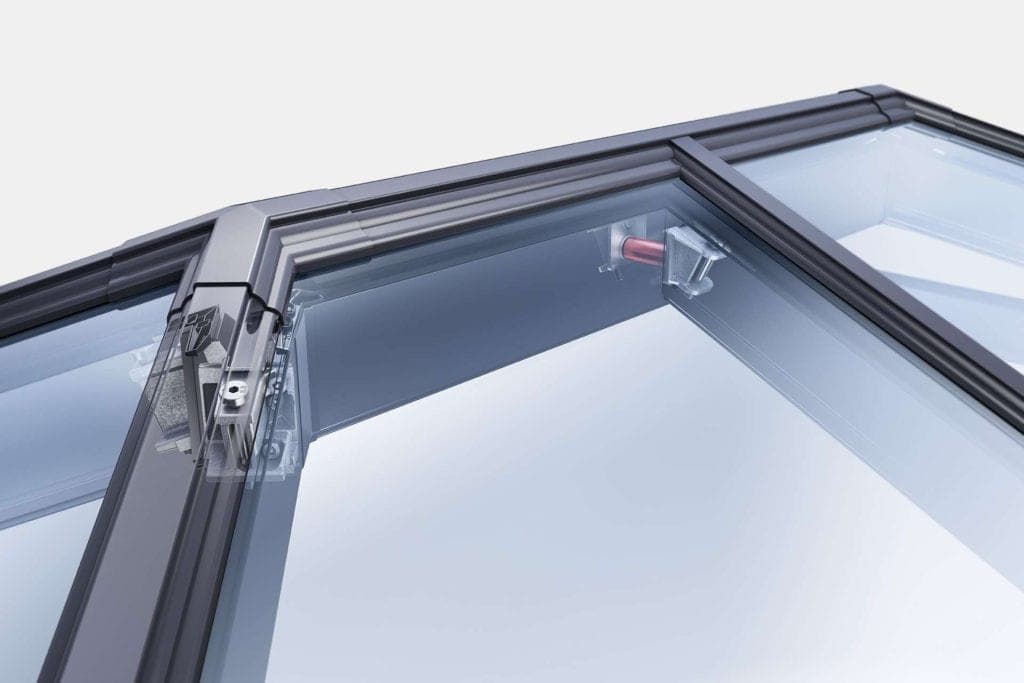
The term "slim" refers to the width of the bars (the ridge, hips and rafters) that make up the lantern frame. A slim system narrows those bars so that more of the roof is glass. Korniche, for example, uses a reduced-width ridge, hips and rafters, noticeably slimmer than many traditional designs.
This might sound like a marginal difference on paper, but the visual effect is significant. When you are lying on the sofa looking up through your roof lantern, those bars are the only thing between you and the sky. Thinner bars mean more glass, more light, and a cleaner, more contemporary look.
Key Characteristics of Slim Roof Lanterns
- Frame: a reduced-width ridge, hips and rafters
- Ridge profile: narrower than a traditional ridge
- Glass-to-frame balance: more of the roof is glass and less is frame
- Aesthetic: minimal and contemporary from inside
Key Characteristics of Standard Roof Lanterns
- Frame: wider bars, and wider still on many timber-framed versions
- Ridge profile: more prominent, often with decorative capping options
- Material options: aluminium, timber, uPVC and hybrid combinations
- Aesthetic: a traditional or heritage look that suits many period properties
- Cost: usually lower than a slim system of the same size
Sightlines: The Biggest Visible Difference
Sightlines are the single most important factor when comparing slim and standard roof lanterns. The term refers to the visible width of the frame when viewed from inside. Narrower sightlines mean more sky and less frame.
The effect grows with the size of the lantern: the more bars a lantern needs, the more a slimmer bar adds up across the roof. In a kitchen-diner extension, a slimline lantern makes the ceiling feel higher and the room feel larger.
If your extension is south-facing and you want as much daylight as possible, a slim roof lantern lets more of it in throughout the day. The gain matters most in winter, when the sun sits lower in the sky and every extra area of glass counts.
Thermal Performance
Slim or standard, a roof lantern must meet Building Regulations Part L. In England, Approved Document L sets a limiting U-value of 2.2 W/m²K for a rooflight, measured for the whole unit including its frame.
Slim Roof Lantern Thermal Performance
Korniche pairs thermally broken aluminium with 28mm argon-filled double-glazed units, rated at a glass U-value of 1.2 W/m²K, or 1.0 W/m²K on the Premium range. Across any lantern, four features do most of the work in holding on to heat:
- Thermally broken aluminium profiles: an insulating barrier within the aluminium stops the frame acting as a cold bridge
- Warm-edge spacer bars: reduce heat loss at the edge of the glass
- Gas fill: a low-conductivity gas such as argon between the panes
- Low-emissivity coatings: reflect heat back into the room
Standard Roof Lantern Thermal Performance
A standard lantern can use the same glass, but its wider frame means more of the roof is metal rather than glass. Aluminium conducts heat more readily than a sealed glass unit, so with the same glass a wider-framed lantern loses a little more heat overall.
Timber is the exception. It is a natural insulator, so a well-made timber lantern can perform well thermally. The trade-off is maintenance: timber needs regular redecoration, while powder-coated aluminium needs little more than cleaning.
Planning Permission and Building Regulations
Many roof lanterns fall within permitted development, but the answer depends on the roof, the property and where you live, and listed buildings usually need listed building consent. Our guide to whether roof lanterns need planning permission sets out the rules in full.
The choice between slim and standard does not change your planning position: the same rules apply to both. In a conservation area, a planning officer may prefer a more traditional profile that echoes heritage rooflight proportions.
Building Regulations apply whichever style you choose, covering the structure and the thermal performance. We confirm what your project needs at survey.
Installation Differences
Korniche is designed to glaze quickly with gasket seals and comes in bespoke sizes up to 6m × 4m. Standard roof lanterns, particularly timber models or those with more complex profiles, can need more on-site cutting and adjustment. How long any lantern takes to install depends on its size, the roof it sits on and the weather, and we confirm it for your project at survey.
Cost Comparison
A slim system costs more than a standard lantern of the same size, and the gap depends on the size, the glass and the finish. Our roof lantern cost guide sets out typical 2026 prices, and we price your lantern in a free, itemised quotation.
Which Should You Choose?
Choose a Slim Roof Lantern If:
- You want maximum natural light and a contemporary, minimal look
- Your extension is modern in design with clean lines
- You are building a kitchen-diner or living space where the lantern is a focal point
- Your budget allows for the premium over a standard lantern
Choose a Standard Roof Lantern If:
- Your property is period, heritage or in a conservation area
- You prefer a more traditional roof light aesthetic
- Budget is the primary concern
- You want timber construction for its natural insulation
- The lantern is in a utility room, bathroom or secondary space
The Best of Both Worlds
For many of our customers, the answer is the Korniche roof lantern: a slim, contemporary frame with self-cleaning glass as standard. For properties where a traditional look is preferred, we also install standard aluminium and slimline aluminium lanterns that balance heritage appearance with modern performance.
How Vitrum Solutions Can Help
We install both slim and standard roof lanterns across Buckinghamshire, West London and the surrounding areas. Every installation includes a full site survey and work to Building Regulations, and we are FENSA registered with a 10-year CPA insurance-backed guarantee.
If you are planning an extension and want to discuss which roof lantern style suits your project, get a free quote or call us on 0800 861 1450 for honest, no-pressure advice.
Frequently Asked Questions
Are slim roof lanterns structurally as strong as standard ones?
Korniche offers bespoke sizes up to 6m × 4m external, and we confirm the structural specification for your span at survey.
Do slim roof lanterns leak more than standard ones?
No. Leaks almost always come from the installation rather than the lantern design. Proper flashing, adequate falls on the flat roof and correct drainage detailing matter far more than the width of the frame.
Can I retrofit a slim roof lantern onto an existing flat roof extension?
Yes, provided the existing roof structure can support it. A structural check is recommended before work begins, and the installer then forms the opening, builds an upstand (kerb) and makes the waterproofing good around the perimeter.
How long do slim roof lanterns last?
A quality aluminium roof lantern should last 40 years or more with minimal maintenance. The powder-coated aluminium will not rust, rot or warp, while sealed glass units can eventually need replacing. Korniche's own warranty on the lantern is 10 years on the frame and hardware (5 years in a marine environment), and our installation carries a 10-year CPA insurance-backed guarantee.
Will a roof lantern make my extension too hot in summer?
Roof lanterns can add solar heat gain, particularly on south-facing extensions. Glass choice, blinds and ventilation all help. Korniche offers Clear, Neutral and Blue glass as well as a Premium glass range, and we advise on the right glass for your orientation at survey.
Need advice on your next project?
Talk it through with the team, or leave your details for a free no-obligation written quote.
FENSA registered · 10-year CPA insurance-backed guarantee · Cortizo, Schuco & Rehau approved · Origin Approved Partner