How Much Do Roof Lanterns Cost in 2026? UK Pricing Guide
A roof lantern transforms a flat-roofed extension from a dark, enclosed space into a light-filled room that feels genuinely connected to the sky. They have become one of the most sought-after features in UK home renovations — and for good reason. But the price range is broad, and understanding what drives the cost helps you make a confident decision.
This guide covers the real cost of roof lanterns in the UK in 2026, from budget options to premium slimline aluminium roof lanterns like the Korniche, and explains what you should expect to pay for supply, installation and everything in between.
What Is a Roof Lantern?
A roof lantern is a glazed structure that sits above a flat or low-pitched roof, projecting upwards to allow natural light to flood the room below. Unlike a flat rooflight (which sits flush with the roof surface), a lantern has angled glass panels set in a frame, creating a raised, architectural feature.
The key components are:
- Ridge bar: The horizontal bar running along the top
- Rafters: The angled bars connecting the ridge to the kerb
- Kerb: The upstand that sits on the roof structure
- Glazing: Typically double or triple-glazed units with solar-control coatings
- End hips or gable ends: The triangular sections at each end
Roof Lantern Prices by System
Budget Aluminium Systems — £1,200-£2,500
Entry-level aluminium roof lanterns with standard profiles. These work well for smaller openings (up to 2m x 1m) but have wider sightlines that reduce the glass area. Thermal performance is adequate but not exceptional, with U-values around 1.5-1.8 W/m2K.
Mid-Range Aluminium Systems — £2,500-£5,000
Quality aluminium systems with thermally broken profiles, slimmer sightlines and better glazing. Suitable for openings up to 3m x 1.5m. U-values typically around 1.2-1.5 W/m2K. This is where most homeowners find the best balance of quality and value.
Korniche Roof Lanterns — £3,500-£7,000
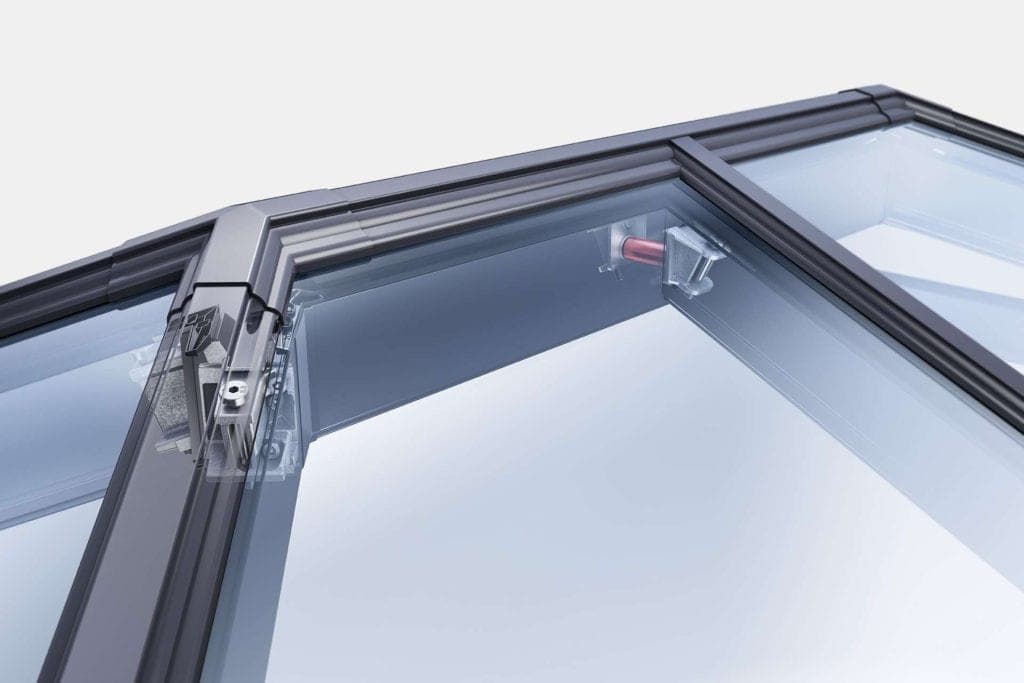
The Korniche roof lantern is our preferred premium system, and it is easy to see why. The design uses a reduced-width ridge, hips and rafters, creating a near-uninterrupted view of the sky. Key features include:
- Reduced-width ridge, hips and rafters: mostly glass, with slim aluminium
- Glass U-value of 1.2 W/m2K, or 1.0 on the Premium range, with self-cleaning glass as standard and solar-control options
- Sizes up to 6m x 4m in a single span
- Quick installation: Korniche designs the lantern to be fitted in minutes and glazed in seconds
- Slender top caps: narrow top and end caps follow the tapered ridge and hips
Premium Bespoke Systems — £7,000-£15,000+
Large, architecturally designed roof lanterns for significant openings. These are typically specified by architects for high-end extensions and often feature bespoke sizing, structural glazing and minimal framing. Suitable for spans exceeding 4m.
These ranges are a guide; every opening is different. For a written price on your own roof lantern, request a free quote or call 0800 861 1450. We survey, measure and quote with no obligation.
Installation Costs
The roof lantern price is only part of the total investment. Installation costs depend on several factors:
Standard Installation (existing flat roof, prepared opening) - **Labour:** £400-£800 - **Duration:** Half a day to one full day - **Includes:** Fitting the lantern, weatherproofing the kerb, internal finishing
New Opening Required - **Structural work:** £800-£2,500 (cutting the opening, adding steelwork if needed) - **Roof membrane and insulation work:** £400-£1,000 - **Internal plastering and decoration:** £300-£600 - **Total additional cost:** £1,500-£4,000
Full Project Costs (supply + installation)
For a typical kitchen or dining room extension with a single roof lantern:
- Small lantern (1.5m x 1m): £2,000-£4,000 all-in
- Medium lantern (2.5m x 1.5m): £3,500-£6,500 all-in
- Large Korniche (3m x 2m): £5,500-£9,000 all-in
- Extra-large bespoke (4m+ x 2.5m+): £9,000-£18,000+ all-in
What Affects the Price?
Size The most significant cost factor. Larger lanterns require more aluminium, more glass and often structural steel in the roof below. Prices scale roughly in proportion to the glazed area.
Glazing Specification - **Standard double glazing:** Included in base price - **Self-cleaning glass:** Adds £150-£400 - **Solar-control glass:** Adds £200-£500 (recommended for south-facing installations) - **Triple glazing:** Adds £300-£700 - **Blue-tint or privacy glass:** Adds £100-£300
Colour Standard colours (anthracite grey, black, white) are typically included. Non-standard RAL colours add £100-£300. Dual-colour finishes (different inside and outside) add £200-£500.
Structural Requirements If the existing roof structure cannot support the lantern without modification, structural steel and associated building work can add £1,000-£3,000 to the total cost. A site survey will determine whether this is necessary.
Roof Lanterns vs Flat Rooflights
Flat rooflights are an alternative to consider if budget is tight:
| Feature | Roof Lantern | Flat Rooflight |
|---|---|---|
| Cost | £2,000-£10,000+ | £500-£2,500 |
| Light volume | Excellent — light from multiple angles | Good — light from directly above |
| Visual impact | Dramatic architectural feature | Subtle, minimal |
| Height | Adds 150-300mm above the roof line | Flush or near-flush with roof |
| Installation | Half day to full day | 2-4 hours |
For rooms where you want a genuine wow factor and maximum natural light throughout the day, a roof lantern is the superior choice. For utility rooms, hallways or secondary spaces where additional light is welcome but the architectural statement is less important, a flat rooflight offers excellent value.
Planning Permission and Building Regulations
Most roof lanterns on single-storey rear extensions do not require planning permission under permitted development rights. However, there are restrictions:
- The lantern must not project more than 150mm above the existing roof plane
- The total height of the extension (including the lantern) must not exceed permitted development limits
- Properties in conservation areas, listed buildings or those subject to Article 4 directions may need planning consent
Building Regulations approval is required for all roof lanterns. This ensures the installation meets thermal performance standards and structural requirements. All our installations include FENSA certification as standard.
Why We Recommend Korniche
We have installed hundreds of roof lanterns across Buckinghamshire, West London and the surrounding areas. The Korniche system consistently delivers the best combination of aesthetics, performance and installation reliability. The reduced-width ridge means the view from below is almost all glass and sky, and slender external top caps keep the outside lines clean.
The Korniche is also one of the fastest systems to install, which keeps labour costs down and minimises disruption to your home. Most installations are completed in a single morning.
Frequently Asked Questions
How much does a Korniche roof lantern cost?
A Korniche roof lantern typically costs between £3,500 and £7,000 for supply, depending on size. Including installation, the total cost ranges from £4,500 to £9,000 for most residential projects. The premium over standard aluminium lanterns is justified by the superior aesthetics, faster installation and innovative ridgeless design.
Do roof lanterns make a room hot in summer?
Modern roof lanterns with solar-control glass significantly reduce heat build-up. Solar-control coatings allow visible light to pass through while reflecting a proportion of infrared heat. We recommend solar-control glass as standard on all south-facing installations. Combined with adequate ventilation through opening windows or French doors, overheating is easily managed.
Will planning costs add to my roof lantern budget?
Most roof lanterns on single-storey rear extensions fall under permitted development and do not need planning permission. The key restrictions are that the lantern must not project more than 150mm above the roof and the total extension height must stay within permitted development limits. Listed buildings and properties in conservation areas may need consent.
How long do roof lanterns last?
Quality aluminium roof lanterns last 40+ years. The aluminium frame is powder-coated and UV-stable, while the sealed glazing units typically last 20-25 years before needing replacement. The Korniche system carries a 10-year manufacturer guarantee with an expected lifespan well beyond that.
Can I install a roof lantern on an existing flat roof?
Yes, provided the roof structure can support the weight (typically 30-80kg depending on size). A site survey will assess whether additional structural support is needed. In most cases, a standard timber flat roof can accommodate a roof lantern with minor reinforcement.
Are roof lanterns energy efficient?
Modern roof lanterns achieve U-values of 1.2-1.5 W/m2K, which meets current Building Regulations. They also introduce significant passive solar heating during winter months, reducing the need for artificial heating and lighting. The net energy impact is often positive — the solar gain and reduced lighting costs outweigh the heat loss.
Need advice on your next project?
Talk it through with the team, or leave your details for a free no-obligation written quote.
FENSA registered · 10-year CPA insurance-backed guarantee · Cortizo, Schuco & Rehau approved · Origin Approved Partner