Gerda RC2 vs RC3 Steel Doors: Which Insurance Tier Do You Need?
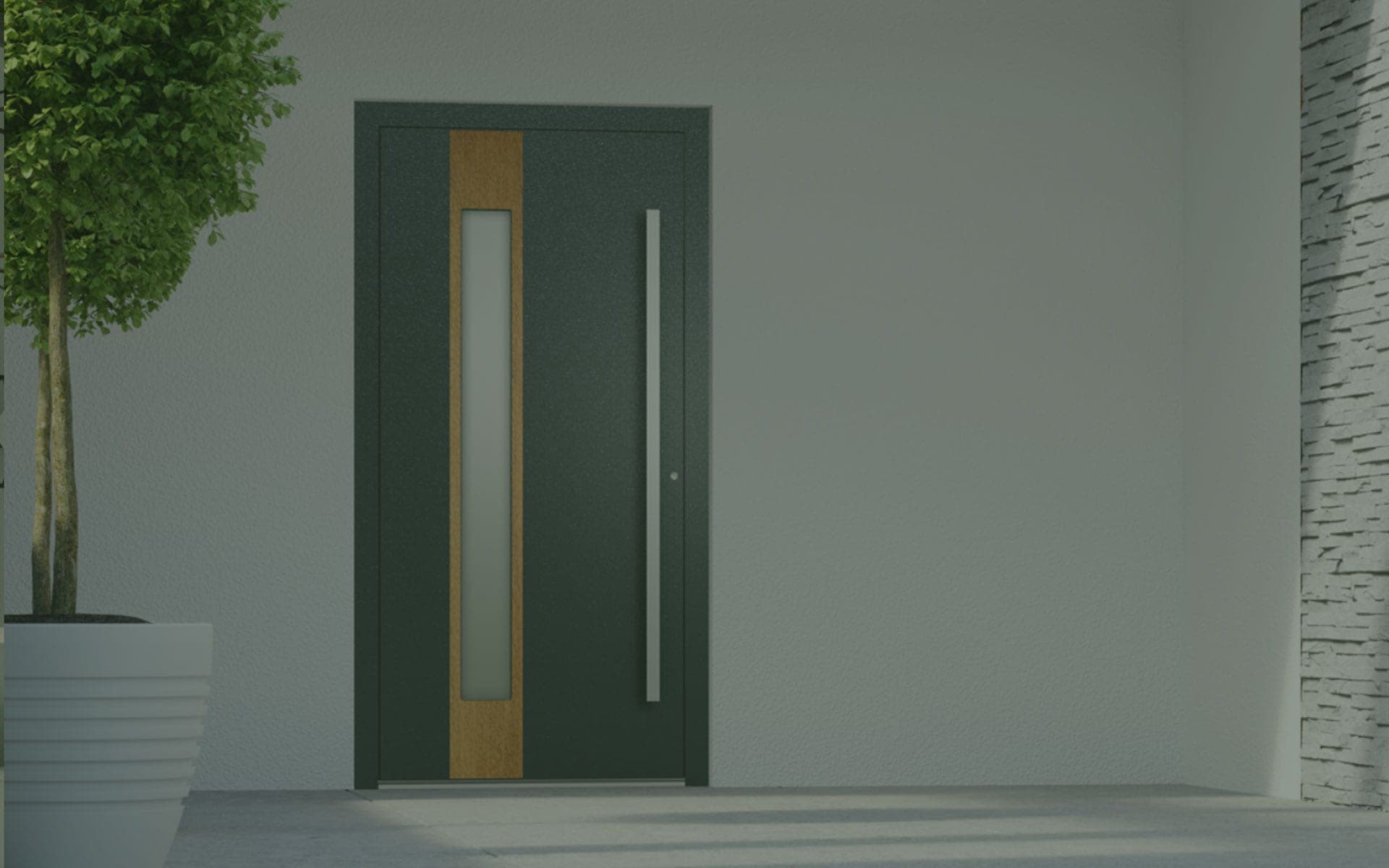
Gerda is the Polish steel security door brand we install at the upper end of our entrance door range. Every Gerda door tests to BS EN 1627:2011 RC2 as standard, with RC3 upgrade available on the Optima and Thermo Premium ranges. For UK homeowners specifying a steel security door — typically high-net-worth properties, rural homes, or properties where the home insurance underwriter requires certified resistance — the question is whether RC2 standard is sufficient or whether the RC3 upgrade is justified.
This guide explains the BS EN 1627:2011 test scheme, how RC2 and RC3 differ in practice, which Gerda range carries which certification, and how UK insurers treat each tier.
BS EN 1627:2011 — What the Test Actually Measures
BS EN 1627 is the European security standard for residential and commercial doors, windows and curtain walling. The Resistance Class (RC) certification is awarded based on a physical attack test in a certified laboratory.
- RC2 (Resistance Class 2): Tested against a casual burglar with simple tools — screwdrivers, pliers, wedges. The door must resist for at least 3 minutes of sustained attack.
- RC3 (Resistance Class 3): Tested against a sustained, deliberate attack by an experienced burglar with heavy tools — crowbars, hammers, drills, lever-attack tools. The door must resist for at least 5 minutes of sustained attack.
- RC4 (Resistance Class 4): Tested against heavy-duty hand tools and battery-operated power tools — drills, jigsaws, oscillating saws, larger crowbars. SteelR carries this rating in the single-leaf unglazed configuration; see SteelR brand hub.
Both RC2 and RC3 exceed the PAS 24:2022 baseline that most domestic doors carry. PAS 24 is the UK certification standard; BS EN 1627 is the European framework with deeper attack-resistance testing across more tool sets.
The Gerda Range and Which Carry RC3
| Gerda Range | Standard Rating | RC3 Upgrade Available? | |---|---|---| | ALTUS | RC2 (BS EN 1627:2011) | No — ALTUS is the thermal-priority spec | | THERMO PREMIUM | RC2 standard | Yes — RC3 upgrade option | | THERMO PRIME | RC2 (BS EN 1627:2011) | No — mid-spec, RC2 only | | OPTIMA | RC2 standard | Yes — RC3 upgrade option |
So RC3 is available on Optima (the value-tier RC3-eligible spec) and Thermo Premium (the RC3 upgrade premium tier with sustained-attack burglar resistance). RC2 is the standard across the whole range.
For the canonical Gerda range page see our Gerda brand hub. For specific tiers see Gerda ALTUS, Gerda OPTIMA, Gerda THERMO PRIME and Gerda THERMO PREMIUM.
What the 2-Minute Difference Means in Practice
The headline difference is 3 minutes (RC2) versus 5 minutes (RC3) of sustained-attack resistance. In real burglary terms, that 2-minute extension is significant.
UK police data on residential burglary consistently shows that most opportunistic break-ins are abandoned within 5 minutes if entry has not been gained. The burglar is exposed for too long; the noise of sustained attack draws attention. RC2 closes the door (literally) on the casual opportunist with a screwdriver. RC3 closes it on the sustained attack with crowbars and hammers.
For most UK suburban properties, RC2 standard is more than sufficient. The properties where RC3 starts to make commercial sense:
- High-net-worth properties where contents value justifies the upgrade
- Rural or isolated properties where neighbour-led intervention is unlikely
- Properties storing valuable items (art collections, jewellery, gun cabinets, business stock)
- Insurance-driven specifications where the underwriter requires or discounts for RC3
What UK Insurers Actually Require
Several UK insurance underwriters explicitly require or discount for BS EN 1627 certified doors on the front entrance of premium properties. The pattern varies by insurer:
- High-net-worth specialists (Hiscox, Chubb, AIG Private Client and others) commonly require RC2 minimum on the front entrance for properties above a contents-value threshold, with discounts for RC3.
- Mainstream home insurers rarely require BS EN 1627 certification but will recognise it for premium adjustments.
- Locks and certified hardware alone are not always sufficient for the discount. The full door system must be certified — frame, leaf, locking points, hinges all tested as a unit under BS EN 1627.
For both RC2 and RC3 we supply the BS EN 1627 test certificate plus FENSA installation documentation needed for the underwriter's policy file. Always check with your specific insurer before specifying.
Thermal Performance — RC2 vs RC3 Independent
A common misconception is that RC3 doors are thermally worse than RC2 because of the additional steel. In Gerda's range the thermal performance is driven by the door range (ALTUS, THERMO PRIME, THERMO PREMIUM, OPTIMA), not by the security rating.
- ALTUS: 88mm thick, U-value 0.74-0.81 W/m²K — the best in the Gerda range thermally. RC2 only.
- THERMO PRIME: 75mm thick, U-value 0.79-0.9 W/m²K. RC2 only.
- THERMO PREMIUM: RC3 upgrade option. U-value comparable to THERMO PRIME.
- OPTIMA: RC3 upgrade option. U-value at the value-tier price step.
These U-values sit tighter than premium composite whole-door U-values typically published, where premium composite runs around 0.85-0.98 W/m²K. The Gerda thermal advantage is driven by the sandwich construction of steel skin + mineral wool + polyurethane foam + second steel skin, plus thermally broken jamb and threshold details that prevent cold-bridging.
Acoustic Performance
Gerda doors typically deliver 32-35 dB Rw acoustic performance, versus 25-28 dB Rw on a standard composite door. The difference is most noticeable on properties near busy roads, flight paths or rail corridors. RC2 vs RC3 does not change acoustic performance materially. The same multi-layer core delivers the noise reduction regardless of the security tier.
Common Specifications We Install in 2026
The most common Berkshire / Buckinghamshire / Surrey high-net-worth specification we write in 2026:
- OPTIMA RC3 with one or two sidelights — value-tier RC3 spec, the accessible RC3 entry point
- THERMO PREMIUM RC3 with full glass surround — premium RC3 spec where the architectural priority matches the security priority
- THERMO PRIME RC2 — the practical mid-spec choice on properties where RC2 is sufficient
For projects targeting RC4 (the European framework's highest residential-relevant tier) the spec is SteelR, which is tested to BS EN 1627:2011 RC4 in the single-leaf unglazed configuration. SteelR is a separate brand we install at the upper end of the steel security door range; see the SteelR brand hub.
Hardware and Locking — Shared Across the Range
All Gerda doors regardless of RC tier ship with:
- Up to 12-point multi-point locking
- 3-star TS007 anti-snap cylinder, anti-drill, anti-pick
- Continuous reinforced steel frame
- 1.2-2.0mm galvanised steel panels
- Anti-removal hinges with reinforced hinge pins
- 200+ RAL colour finishes including wood-effect transfers
The RC3 upgrade adds reinforced strike plates, additional locking-point steel, and tested attack-resistant frame-fixings, not a different basic locking system.
Pricing
Vitrum Solutions is a quote-driven business and we do not publish fixed price tables on Gerda doors. Pricing varies materially with the range (ALTUS / OPTIMA / THERMO PRIME / THERMO PREMIUM), security tier (RC2 or RC3), door size, glazing specification, RAL finish, sidelights and any structural alterations to the existing opening.
For industry pricing context see How Much Do Steel Doors Cost UK. Every project starts with a free, no-obligation quotation, and our surveyor measures every opening precisely once you go ahead.
Frequently Asked Questions
What is the difference between Gerda RC2 and RC3?
The split is the test method, not just the time on the clock. RC2 is tested under BS EN 1627:2011 against a casual burglar with simple tools (screwdrivers, pliers, wedges) for at least 3 minutes. This is the typical opportunistic-burglary attack profile. RC3 adds resistance to a sustained, deliberate attack by an experienced burglar with heavy tools (crowbars, hammers, drills, lever-attack tools) for at least 5 minutes, and includes tool sets and attack methods that RC2 does not test. Gerda doors are tested and certified under BS EN 1627 only (not under the separate UK-specific LPS 1175 loss-prevention scheme). UK home insurance underwriters recognise BS EN 1627 ratings; RC3 typically attracts a stronger premium adjustment with high-net-worth specialists. If your underwriter has specifically asked for LPS 1175 SR2 or SR3 certification on the front entrance, BS EN 1627 RC2 / RC3 is not automatically equivalent paperwork — confirm the specific certification term in writing with the insurer before specifying.
Which Gerda ranges carry the RC3 upgrade?
RC3 is available on the OPTIMA (value-tier RC3-eligible) and THERMO PREMIUM (RC3 upgrade premium tier) ranges. ALTUS is the thermal-priority spec at RC2 only. THERMO PRIME is the mid-spec at RC2 only. All four ranges exceed the PAS 24:2022 baseline mandated for new-build dwellings.
Do UK insurers require RC2 or RC3?
Mainstream home insurers rarely require BS EN 1627 certification but will recognise it. High-net-worth specialists (Hiscox, Chubb, AIG Private Client and others) commonly require RC2 minimum on the front entrance of premium properties, with discounts for RC3. Always check with your specific underwriter before specifying. We supply the BS EN 1627 test certificate plus FENSA installation documentation needed for the policy file.
Is the RC3 upgrade worth the premium?
For most UK suburban properties, RC2 standard is more than sufficient. The properties where RC3 starts to make commercial sense are high-net-worth homes with substantial contents value, rural or isolated properties where neighbour-led intervention is unlikely, properties storing valuable items, and projects where the underwriter requires it. We discuss the right tier for your property at the survey stage rather than defaulting to the higher-margin spec.
Are Gerda doors thermally better than composite doors, and what does that mean for condensation risk?
Yes. The thermal advantage matters most in cold-bridge prone openings where condensation can form on the inside of an entrance door's frame or threshold. ALTUS reaches 0.74-0.81 W/m²K and THERMO PRIME 0.79-0.9 W/m²K, against premium Palladio composite at around 0.85-0.98 W/m²K whole-door. The Gerda multi-layer sandwich construction (steel skin + mineral wool + polyurethane foam + second steel skin) combined with thermally broken jamb and threshold detailing keeps the inner-face surface temperature several degrees warmer than the room dewpoint in typical UK winter conditions, which materially reduces the condensation risk on the inner face of the frame and threshold area where it most often appears on standard composite doors. On north-facing or sheltered porch installations where humidity sits high and air movement is low (common on rural and substantial-detached properties), the Gerda thermal-detail advantage is the most visible benefit beyond the security tier.
Why does Gerda not offer an RC4 spec?
Gerda's product positioning targets the residential RC2/RC3 specification tier — the security band that most UK home insurance underwriters require or recognise for high-net-worth residential entrance doors. RC4 testing under BS EN 1627:2011 introduces battery-operated power tools (drills, jigsaws, oscillating saws) into the attack set, which moves the steel skin gauge, frame steel section and lock-engagement geometry into commercial-grade specifications more associated with bank, vault and high-security commercial entrances than residential homes. For UK projects where the insurance, occupancy or risk profile actually justifies RC4, the right product is SteelR (BS EN 1627:2011 RC4 in the single-leaf unglazed configuration), which we install separately. Gerda's design choice is to deliver best-in-class residential RC2/RC3 plus market-leading thermal performance, not to compete on the RC4 tier. See SteelR brand hub.
Do Gerda doors meet UK Building Regulations across Part L, Approved Document Q and Part B?
Yes. Approved Document Q (security in dwellings, England and Wales) requires PAS 24 minimum on new-build entrance doors. Gerda's BS EN 1627:2011 RC2 standard exceeds PAS 24 across the test set, and the RC3 upgrade exceeds it further. Approved Document L (thermal performance) requires whole-door U-value of 1.4 W/m²K maximum on replacement entrance doors. Gerda's 0.74-0.9 W/m²K range exceeds this comfortably. Where Part B (fire safety) requires a fire-rated entrance door (for example flats above commercial premises, or specific HMO configurations), the right fire-rating specification is confirmed at survey based on the dwelling's fire-strategy and the Building Control or fire engineer's brief. All Gerda installations are FENSA-registered with a 10-year CPA insurance-backed guarantee, documenting Building Regulations compliance with the local authority for the policy file.
What's the warranty on Gerda doors and what does it cover?
Gerda's manufacturer warranty covers the door construction, the multi-layer steel skin and core, and the powder-coat finish for the warranty term published with the system specification. The term varies by range (ALTUS, OPTIMA, THERMO PRIME, THERMO PREMIUM), with the upper-tier ranges carrying longer terms. Hardware (multi-point lock gear, cylinder, hinges, handle) typically carries a separate hardware warranty term — common in steel-door manufacturing where the lock gear lifecycle differs from the door slab lifecycle. The galvanised finish under the powder-coat resists corrosion in UK climates and is covered against degradation under standard residential exposure conditions; coastal exposure or industrial-pollution environments can reduce the rated life and we confirm the right specification at survey. On top of the manufacturer warranty, every Vitrum Solutions Gerda installation carries our 10-year CPA insurance-backed installation guarantee covering the workmanship.
Getting a Quote
Vitrum Solutions installs Gerda steel security doors across Buckinghamshire, Berkshire, Oxfordshire, Surrey, Hampshire, Hertfordshire and West London. Request a free quote and we will specify the right Gerda range and security tier for your project based on property type, contents value, insurance requirements and the wider entrance-door brief.
For more on Gerda specifically see our Gerda Steel Doors Review. For higher-tier RC4 see SteelR brand hub and Aluminium vs Steel Front Doors. For composite alternatives see Palladio brand hub.
Need advice on your next project?
Talk it through with the team, or leave your details for a free no-obligation written quote.
FENSA registered · 10-year CPA insurance-backed guarantee · Cortizo, Schuco & Rehau approved · Origin Approved Partner