Aluminium vs Steel Front Doors: Which is Best in 2026?
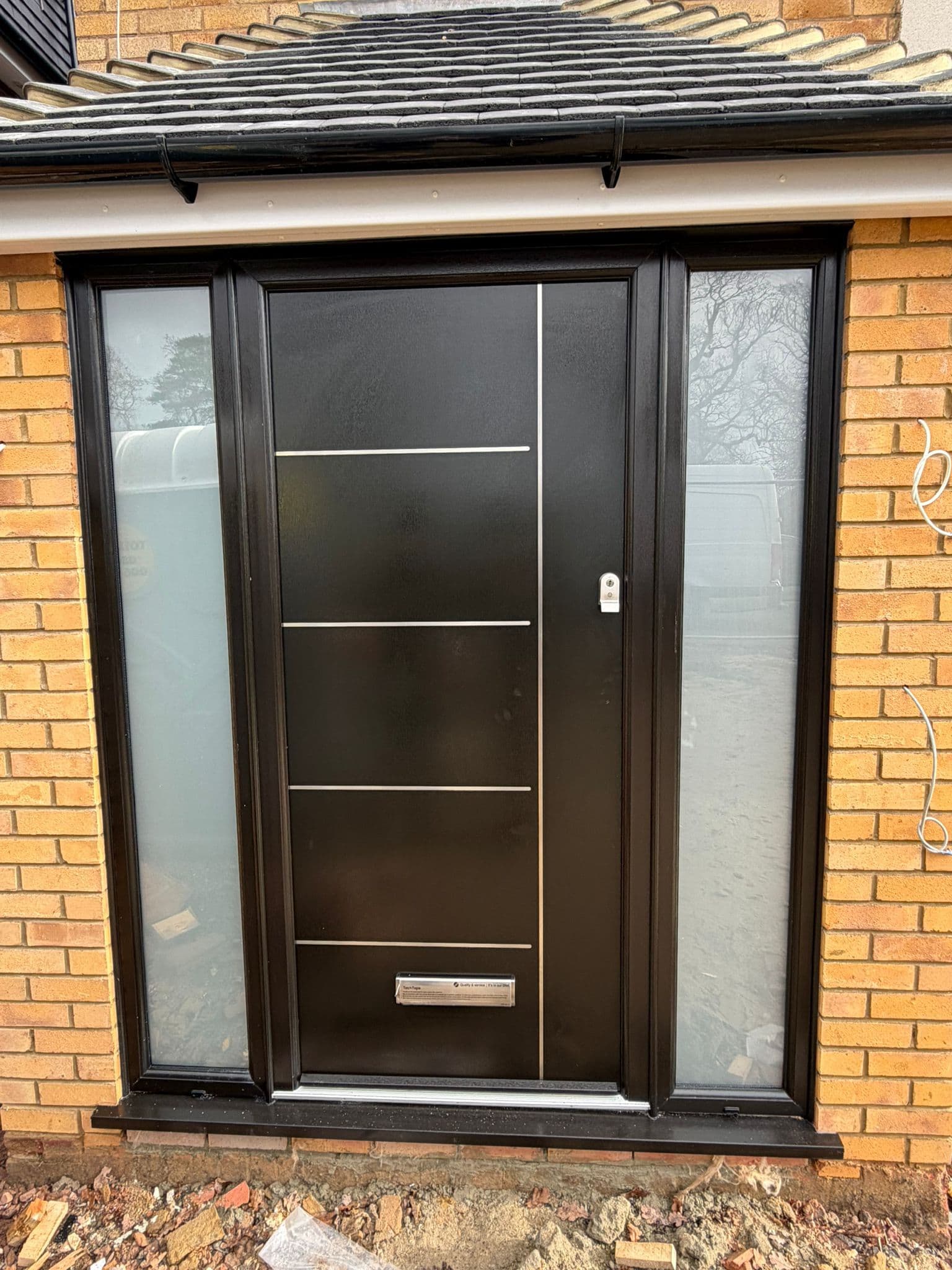
The front door is both the visual centrepiece and the security backbone of your home. For premium properties, the conversation in 2026 has moved beyond uPVC and composite into two harder-wearing options: aluminium and steel. Both deliver genuine premium finishes, both carry serious security credentials, and both sit at the upper end of the front door market, so the choice comes down to what matters most to you. We supply and install both, from aluminium entrance doors to steel front doors tested to BS EN 1627:2011 RC4 in the single-leaf unglazed configuration.
This guide compares aluminium and steel front doors head-to-head across security, thermal, design, price and lifespan, and explains which is typically the right choice for different UK property types.
Quick Summary
- Aluminium front doors: best for contemporary properties, modern architectural extensions, or any home where thermal performance and design flexibility matter as much as security. Generally the lower-cost of the two for a comparable opening.
- Steel front doors: best for security-critical installations — front-facing entrances on high-value properties, homes in higher-crime postcodes, remote rural properties, or anywhere the insurance policy requires RC3 or RC4 rating. Typically costs more than an equivalent aluminium door.
Both outperform composite doors on security, and both outperform hardwood on thermal performance and maintenance.
Security Comparison
Aluminium front doors
High-end aluminium front doors like the Cortizo Millennium Plus 70 / 80 Door achieve PAS 24 certification as standard. Multi-point locking is standard. Upgrades to Secured by Design accreditation require specific hardware and glass combinations that your installer should specify up-front.
Typical aluminium door security spec:
- PAS 24 certified as standard
- 3-star TS007 cylinder (anti-snap, anti-drill, anti-bump)
- Multi-point hook-bolt locking (typically 5 points)
- Laminated inner glass pane
- Reinforced threshold with no external screws
Steel front doors
Steel doors from Gerda (Polish manufacturer) and SteelR (UK bespoke) achieve significantly higher security ratings. Gerda is tested to RC2 (BS EN 1627:2011) as standard with RC3 upgrade available on Optima and Thermo Premium ranges; SteelR is tested to RC4 single leaf, unglazed (BS EN 1627:2011) — all under the European framework for sustained forced entry with power tools, rather than the hardware-only focus of PAS 24.
Typical steel door security spec:
- RC2 standard with RC3 upgrade on Optima/Thermo Premium (Gerda), or RC4 single leaf, unglazed (SteelR) — all under BS EN 1627:2011
- Multi-point hook-bolt locking
- Galvanised steel outer skin
- One-piece welded steel frame (not screwed-together)
- 3-star cylinder with hardened anti-drill plates
- Integrated peephole and chain as standard
For security, steel wins decisively. An RC3 steel door takes approximately 5 minutes to breach with professional tools; an RC4 takes around 10. A PAS 24 aluminium door typically takes 3-5 minutes with the same tools. For most UK homes this difference is academic — neither door will be the weakest link when your windows are glazed — but for security-critical situations (flat entrance doors, holiday homes, listed properties with original window glazing), steel is the defensible choice.
Thermal Performance
Aluminium front doors
Modern aluminium front doors use thermally broken profiles with polyamide insulation strips and insulated door slabs. U-values typically sit between 1.2 W/m²K (premium aluminium entrance doors) and 1.4 W/m²K (mid-range systems).
Steel front doors
Steel is naturally more conductive than aluminium, but high-end steel doors compensate with thick insulating core fills:
- Gerda TT: U-value from 0.8 W/m²K (62mm insulated core)
- SteelR bespoke: U-value from 0.9 W/m²K (configurable core)
Counterintuitively, the best steel front doors achieve slightly better U-values than aluminium because the thick insulating core outperforms thermal-break technology.
For thermal performance, premium steel edges ahead, though both are comfortably above Building Regulations requirements (1.4 W/m²K) and both outperform most composite doors.
Design and Aesthetics
Aluminium
Aluminium excels at slim sightlines and large glass areas:
- Sidelight and transom integration is seamless
- Glass panels can extend the full height of the door
- Powder-coat finishes in any RAL colour
- Available in extruded sections for bespoke architectural designs
- Handle, hinge and threshold options span from traditional to ultra-modern
Popular on contemporary extensions, architect-designed properties, and homes where the entrance is part of a larger glazed facade.
Steel
Steel offers a different aesthetic — inherently solid, substantial, and historically associated with industrial or heritage design:
- Thicker frame sections (70-80mm face view) give a more imposing presence
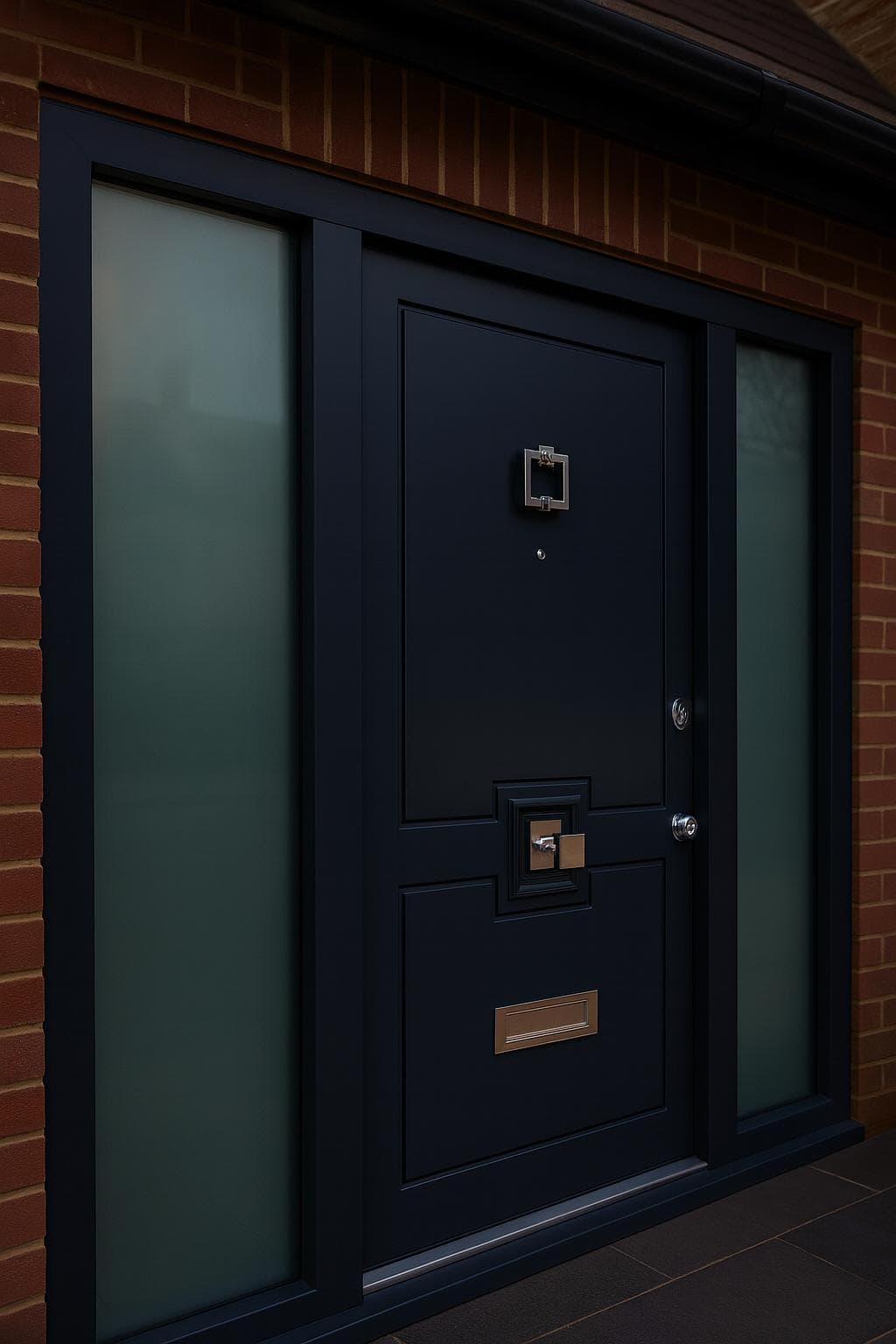
- Full panel doors (no glass) achieve the most "vault-like" look
- Heritage designs with raised mouldings are widely available
- Glass panel options exist but are typically smaller than aluminium equivalents
- Powder-coat in any RAL colour, with the decorative finish guaranteed for 5 years on SteelR
Popular on period properties where a substantial door is appropriate, on high-value detached homes, and increasingly on modern townhouses where owners want a security-first statement.
For design, the answer depends on the architectural style: aluminium for contemporary and transitional, steel for statement-security and heritage.
Price Comparison 2026
Both are quoted fully installed with FENSA certification, 10-year CPA insurance-backed guarantee, and standard hardware. Within each material, the price climbs with the amount of surrounding glass and the security class:
Aluminium front doors
- Cortizo Millennium Plus 70 / 80 Door, standard design, no sidelights: the entry point for a premium aluminium entrance
- Aluminium entrance door with integrated sidelight: a step up for the extra frame and glass
- Aluminium entrance door with full glass surround (door + 2 sidelights + transom): higher again
- Bespoke architectural aluminium: the top of the aluminium range
Steel front doors
- Gerda TT (RC2 standard), standard design: the entry point for steel
- Gerda TT with sidelight: a step up for the added sidelight
- Gerda Optima / Thermo Premium (RC3 upgrade): a premium for the higher security class
- SteelR bespoke (BS EN 1627:2011 RC4, single-leaf unglazed): the top of the steel range
Steel typically costs more than an equivalent aluminium installation, reflecting the manufacturing complexity, heavier materials, and higher security certifications. For current figures, see our Cortizo Millennium Plus door cost guide and steel door cost guide.
Lifespan
Aluminium and steel front doors are both designed to last 30+ years with minimal maintenance:
- Aluminium: durable powder-coat finish, hardware 15-20 years before servicing
- Steel: galvanised core + powder-coat, SteelR guarantee of 10 years on construction, 5 years on finish and 3 years on hardware components, hardware 20-25 years before servicing
Both avoid the refinishing that hardwood needs every 8-12 years.
Installation Considerations
Aluminium
- Thinner, lighter sections are easier to install
- Standard fit into existing openings with minimal structural work
- Installation day typically 4-6 hours for a simple swap
- FENSA registered installation is straightforward
Steel
- Heavier door slabs (40-60 kg typical) and one-piece welded frames require more careful installation
- Often need additional structural support in the threshold and jambs
- Installation day typically 6-8 hours, sometimes requiring two fitters + specialist fixings
- Gerda installation often handled by a Gerda-accredited installer due to the frame complexity
Which Is Right for Your Property?
Choose aluminium if:
- You have a contemporary or architect-designed property
- You want integrated sidelights and large glass areas
- Thermal performance and U-value matter (e.g. Passivhaus-approaching specs)
- You want a premium entrance at a lower cost than steel
- Security is important but not mission-critical
Choose steel if:
- Security is the primary driver (high-value property, higher-crime area, insurance requires RC3+)
- You want a statement entrance — visibly substantial, not slim
- You have a period property where a heavier door is architecturally appropriate
- You are replacing a previous steel or hardwood door and want similar presence
- Your budget allows for the steel premium
Consider composite or hardwood instead if:
- Your budget sits below the premium aluminium and steel bracket
- You want a classic painted timber look at a lower price point
For composite doors, see our Best Composite Doors UK and Palladio Review guides. For steel specifically, see How Much Do Steel Doors Cost UK and Gerda Doors Review.
Typical Questions
Do steel front doors look industrial or cold?
Modern steel doors are available in a huge range of finishes and designs — from minimal slab doors to heritage raised-moulding panels with decorative glass. The "industrial" perception comes from older-generation bank-vault aesthetics; contemporary residential steel doors look like any other premium front door until you notice the weight and solidity.
Are aluminium front doors secure enough?
PAS 24 certified aluminium front doors meet the minimum security standard required by UK building regulations (Approved Document Q) and by most home insurance policies. For the vast majority of UK homes this is sufficient. Steel becomes necessary when insurance specifically requires RC3 rating, or when the property is at elevated risk.
What about maintenance?
Both are low-maintenance. Aluminium needs a gentle wash twice a year and light lubrication of hinges and locks annually. Steel needs the same wash schedule plus occasional inspection of the threshold seal (a wear item on all front doors). Neither needs painting, sanding or treatment during their expected lifespan of 30+ years.
Can I get sidelights matched to aluminium or steel?
Yes for both. Aluminium is particularly flexible here — full-height sidelights and over-door transoms can be specified to match the door exactly. Steel sidelights are typically smaller (steel frames require more structural width) but still available in heights up to 2200mm.
Getting Advice
Vitrum Solutions installs both aluminium and steel front doors across Buckinghamshire, Berkshire, Oxfordshire, Surrey, Hampshire, Hertfordshire and West London. We work with Cortizo for aluminium, Gerda (Polish import) and SteelR (UK bespoke) for steel, and we can quote both at a single survey so you can compare like-for-like.
Request a front door quote and we'll provide a written itemised price for your preferred option. FENSA registered, 10-year CPA insurance-backed guarantee.
Frequently Asked Questions
Is a steel front door really more secure than aluminium?
Yes, by a meaningful margin on the certification side. A SteelR door tests to BS EN 1627:2011 RC4 (single-leaf unglazed), the highest residential class on the standard. A Cortizo Millennium Plus 70 aluminium entrance door typically tests to PAS 24, the UK baseline for new-build dwellings. Both are secure enough to deter opportunistic break-in; the RC4 steel adds resistance to sustained attack with crowbars and heavy tools that aluminium cannot match. For most suburban homes PAS 24 aluminium is sufficient; for high-value properties or where insurance underwriters require an upgrade, RC4 steel is the right specification.
What is the weight difference and does it matter for the frame?
A SteelR door weighs 80-120 kg compared to 35-55 kg for an aluminium entrance door of the same size. The weight requires three or four heavy-duty concealed hinges (vs two on most aluminium doors) and a frame fixed securely to the surrounding masonry, which sometimes means structural reinforcement on older properties. Aluminium doors can usually be retrofitted into existing openings with minimal preparation; steel doors typically need the structural opening checked at survey.
Can a steel door look as good as a Cortizo Millennium Plus aluminium?
The aesthetics target different design languages. Aluminium entrance doors (Cortizo Millennium Plus 70 / 80) read as contemporary, slim-framed and architectural — best paired with modern new-builds or contemporary refurbs. Steel front doors (SteelR, Gerda) carry more visual weight, with deeper panel reveals, available in CNC-cut patterns, ribbed designs, or heritage panel layouts. On a period property steel often reads more sympathetically; on a contemporary property aluminium often wins.
Do steel doors cost significantly more than aluminium for the same opening?
Typically yes. A SteelR bespoke door for a single-leaf opening with sidelights usually costs more installed than a Cortizo Millennium Plus 70 single-leaf aluminium entrance door in the same configuration. The differential reflects manufacturing complexity (steel is heavier, harder to machine), security certification cost, and lower production volumes on bespoke steel. Both sit above composite doors such as Palladio. For figures on your own opening, request an itemised written quote and we can price both in one quotation.
Which is the better long-term investment?
For pure security, RC4 steel: the BS EN 1627 certification is the highest residential class available, and SteelR warrants the door construction for 10 years and the decorative finish for 5. For thermal performance, contemporary aesthetics and lower install complexity, premium aluminium. For most homeowners, the answer is determined by property style and insurance requirements rather than absolute "better" or "worse". On high-value homes in security-conscious postcodes the steel premium typically returns at resale; on more modest properties the aluminium spec is the better commercial choice.
Need advice on your next project?
Talk it through with the team, or leave your details for a free no-obligation written quote.
FENSA registered · 10-year CPA insurance-backed guarantee · Cortizo, Schuco & Rehau approved · Origin Approved Partner