Palladio Composite Doors Review: Are They Worth the Premium?
Palladio is a name that comes up in virtually every conversation about premium composite doors in the UK. The Irish manufacturer has built a reputation for doors that genuinely look and feel different from the competition — but they come at a higher price point than most alternatives. This review examines whether the Palladio premium is justified, based on our experience installing hundreds of their doors across Buckinghamshire, West London and the surrounding areas.
What Makes Palladio Different?
The fundamental difference is construction. While most composite doors use a foam-filled core enclosed in a GRP (Glass Reinforced Plastic) skin, Palladio uses a monocoque construction — a single-piece, solid core that integrates the door slab, frame and threshold into one engineered unit.
This is the same structural principle used in Formula 1 cars and aircraft. The entire door acts as a single structural element rather than a collection of parts glued and screwed together. The practical benefits are significant:
No Delamination Standard composite doors consist of a skin bonded to a core. Over time — particularly in south-facing positions that experience thermal cycling — the bond between skin and core can weaken, causing the surface to bubble or separate. Palladio's monocoque construction eliminates this risk entirely because there are no bonded layers to separate.
No Water Ingress Foam-core composite doors can absorb moisture if the skin is damaged or the edge seals fail. Water absorption causes swelling, warping and reduced thermal performance. Palladio's solid construction is impervious to water — there is no foam to absorb moisture and no cavities for water to enter.
Superior Rigidity The monocoque core is exceptionally rigid, which means Palladio doors do not flex or bow under thermal stress. This eliminates the warping issue that affects some foam-core composite doors during hot weather — a complaint that is common on online forums about cheaper alternatives.
Design and Aesthetics
Palladio doors are designed in Italy, and the aesthetic quality is immediately apparent. The door surfaces feature deep, authentic woodgrain textures that are moulded rather than applied. From a distance — and often up close — they are genuinely difficult to distinguish from painted hardwood.
Colour Range Palladio offers approximately **20 standard colours** including popular choices like anthracite grey, black, chartwell green, French navy and duck egg blue. Custom colours are available on request. The colour is integral to the GRP surface, meaning it will not fade, peel or require repainting.
Glass Options The decorative glass range is one of Palladio's strongest features. Options include:
- Clear double glazing with bevelled or etched designs
- Triple-glazed decorative panels (standard on most models)
- Sandblasted and frosted patterns — from traditional to ultra-contemporary
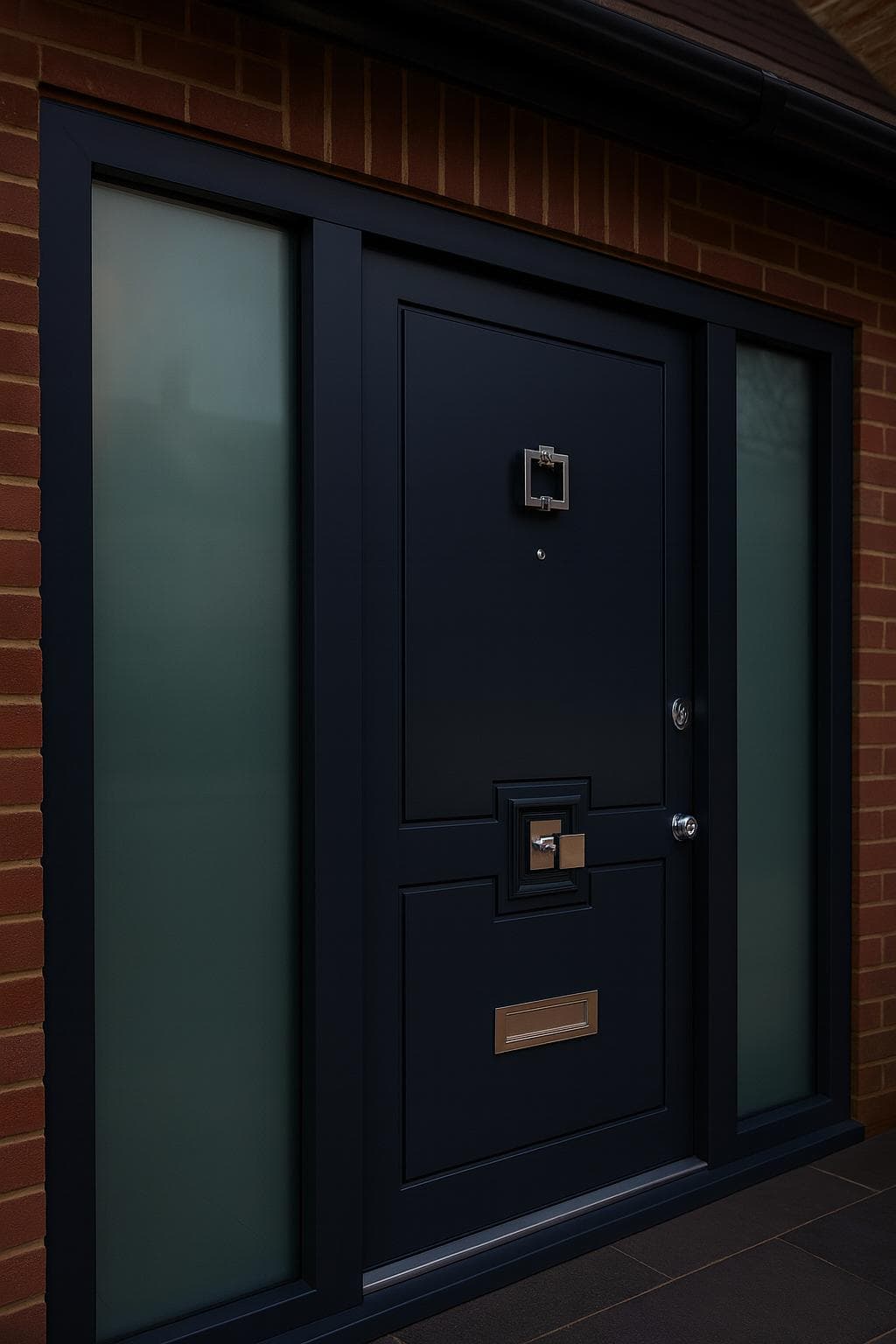
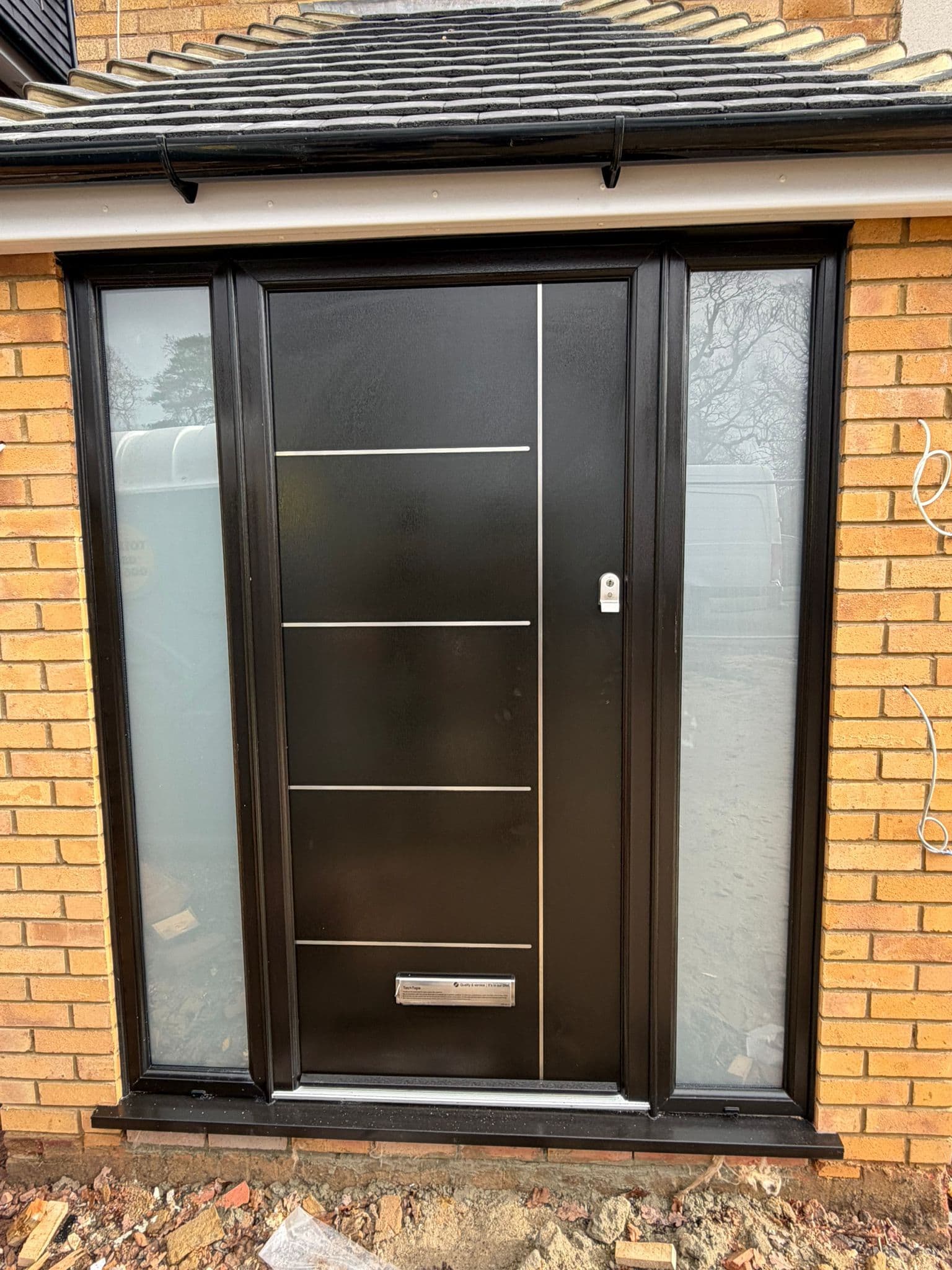
- Sidelight configurations — single and double sidelights with matching glass
The glass designs are exclusive to Palladio and are not available from other composite door manufacturers. This means your front door will not look like every other composite door on the street.
Door Styles The range covers traditional, contemporary and transitional designs:
- Classic range: Traditional panelled designs with period-appropriate glass options
- Contemporary range: Clean lines, minimal panels, large glass areas
- Roma range: Italian-inspired with distinctive proportions
- Bologna range: Architectural contemporary designs
Security Specification
Palladio doors are built for security:
- PAS 24:2022 certified — the latest UK security standard
- 5-point locking system with hook bolts, deadbolts and compression bolts
- Anti-snap, anti-bump, anti-drill cylinders (Ultion or equivalent)
- Reinforced hinges — adjustable, heavy-duty, with anti-removal pins
- Achieved Secured by Design accreditation on qualifying configurations
The solid monocoque core means the door cannot be kicked through or breached with a crowbar in the way that a hollow uPVC panel can. Combined with the multi-point locking system, Palladio doors provide genuine peace of mind.
Thermal Performance
Palladio doors achieve a whole-door U-value of 0.85 W/m²K (solid) and 0.98 W/m²K (glazed), including frame. Both figures comfortably exceed Building Regulations requirements for replacement doors.
The triple-glazed glass units used in most Palladio designs contribute to the thermal performance, providing better insulation than the double-glazed units found in many competitor doors.
How Does Palladio Compare to Other Brands?
Palladio vs Solidor Solidor uses a 48mm solid timber core rather than Palladio's monocoque GRP construction. Solidor publishes a wider catalogue colour range (over 30 colours) and more traditional design options. Palladio's monocoque construction removes the timber-core swell / delamination failure modes entirely, carries a 12-year manufacturer warranty (longer than Solidor's 10-year) and offers more contemporary design choices. Vitrum Solutions installs Palladio exclusively and does not supply Solidor; the comparison here is for context only.
Palladio vs Endurance Endurance doors use a cross-laminated timber core. Palladio's monocoque GRP construction eliminates the timber-core failure modes (swell, delamination) entirely. Vitrum Solutions installs Palladio exclusively and does not supply Endurance; the comparison here is for context only.
Palladio vs Rockdoor Rockdoor uses a reinforced composite construction with carbon fibre inserts on some models. The finish quality and design sophistication do not match Palladio's premium positioning. Vitrum Solutions installs Palladio exclusively and does not supply Rockdoor.
Palladio vs uPVC Doors This is not a like-for-like comparison. A [uPVC door](/upvc/single-doors) targets a different price tier and use case (rental property, secondary entrance), while a Palladio composite is a long-life premium front-door specification. Both are Vitrum-installed; they are different products for different briefs.
Pricing
Palladio sits at the premium end of the composite door market. Vitrum Solutions is a quote-driven business: we do not publish fixed price tables here because Palladio cost varies with door style, glass options, hardware, sidelights and any structural alterations to the existing opening. A Vitrum installation includes the door, frame, threshold, hardware, professional installation, removal of the old door and a full FENSA certificate. Every project starts with a free, no-obligation quotation, and our surveyor measures every opening precisely once you go ahead.
Is Palladio Worth the Premium?
In our professional opinion — and based on feedback from hundreds of customers — yes. The Palladio premium over mid-range composite doors is modest considering the improvement in:
- Durability: The monocoque core will not warp, delaminate or absorb water
- Aesthetics: The Italian design and surface quality are visibly superior
- Longevity: We expect Palladio doors to last 30+ years with zero maintenance
- Security: PAS 24 certification with a genuinely breach-resistant core
- Resale value: A Palladio front door makes a strong first impression on potential buyers
The only scenario where we would not recommend Palladio is when budget is the overriding constraint. In that case, a mid-range composite door is still a massive upgrade over uPVC and provides excellent performance for the price.
Browse our full Palladio composite door range or explore other composite door options on our website.
Frequently Asked Questions
Are Palladio doors better than Solidor?
Vitrum Solutions installs Palladio exclusively, so the honest answer is that we have committed to Palladio as the better technical specification. Palladio's monocoque construction eliminates the risk of water absorption and delamination that can affect timber-cored composite alternatives (Solidor included). Palladio also carries more contemporary design options and Italian-quality surface textures. Solidor sits in a comparable price bracket and has a wider colour range, but we do not install Solidor; if you are weighing the two for a project outside our service area, the Palladio monocoque construction is the differentiator we would point you towards.
How long do Palladio composite doors last?
Palladio doors are expected to last 30+ years with minimal maintenance. The monocoque construction is impervious to the degradation issues (warping, delamination, water absorption) that limit the lifespan of cheaper composite doors. The colour is UV-stable and will not fade.
Do Palladio doors warp in hot weather?
No. The monocoque construction is engineered to resist thermal expansion and contraction. Unlike foam-core composite doors that can bow in extreme heat, Palladio doors maintain their shape year-round. This is one of the primary advantages of the solid GRP core.
Can I get a Palladio door with sidelights?
Yes. Palladio doors are available with single and double sidelights in matching designs and colours. The sidelights feature the same decorative glass options as the main door, creating a coordinated entrance. Sidelight configurations add to the cost depending on size and glass specification, set per project at survey.
How do Palladio doors compare to steel entrance doors?
Palladio and steel entrance doors serve different markets. Steel doors (such as Gerda) offer the highest security ratings (up to RC3) and an ultra-premium aesthetic. Palladio offers excellent security (PAS 24) at a lower price point with more colour and style options. For most UK homes, Palladio represents the best balance of security, aesthetics and value.
Need advice on your next project?
Talk it through with the team, or leave your details for a free no-obligation written quote.
FENSA registered · 10-year CPA insurance-backed guarantee · Cortizo, Schuco & Rehau approved · Origin Approved Partner