Sliding Doors vs Bifold Doors: Which is Better?
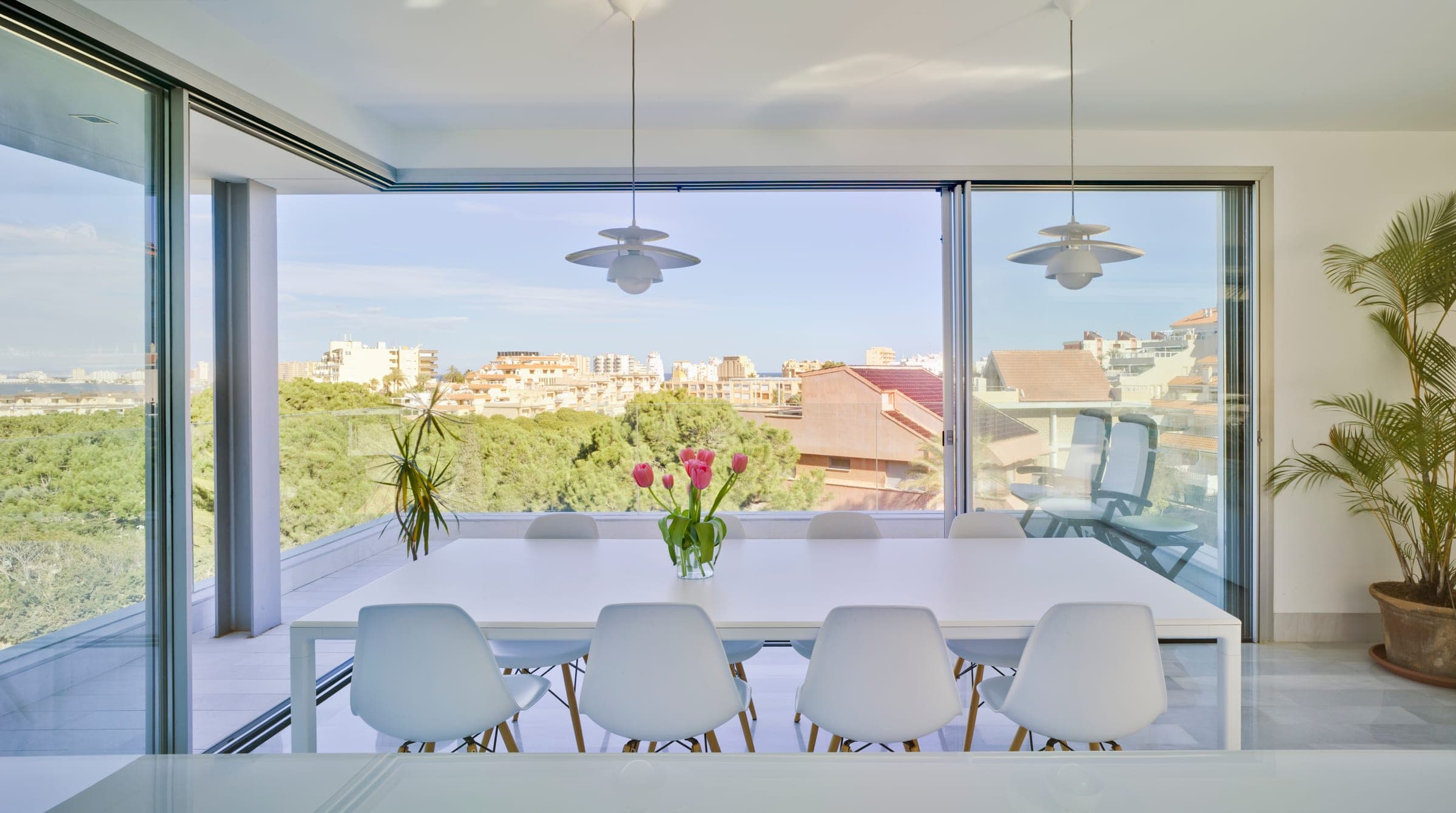
When you are designing a rear extension or opening up a living space to the garden, the choice usually comes down to two options: sliding doors or bifold doors. Both connect indoor and outdoor space beautifully, but they work in fundamentally different ways — and the right choice depends on how you actually want to use the opening.
This guide compares sliding and bifold doors across every factor that matters, from daily practicality to long-term value, so you can make a decision you will not regret.
How They Work
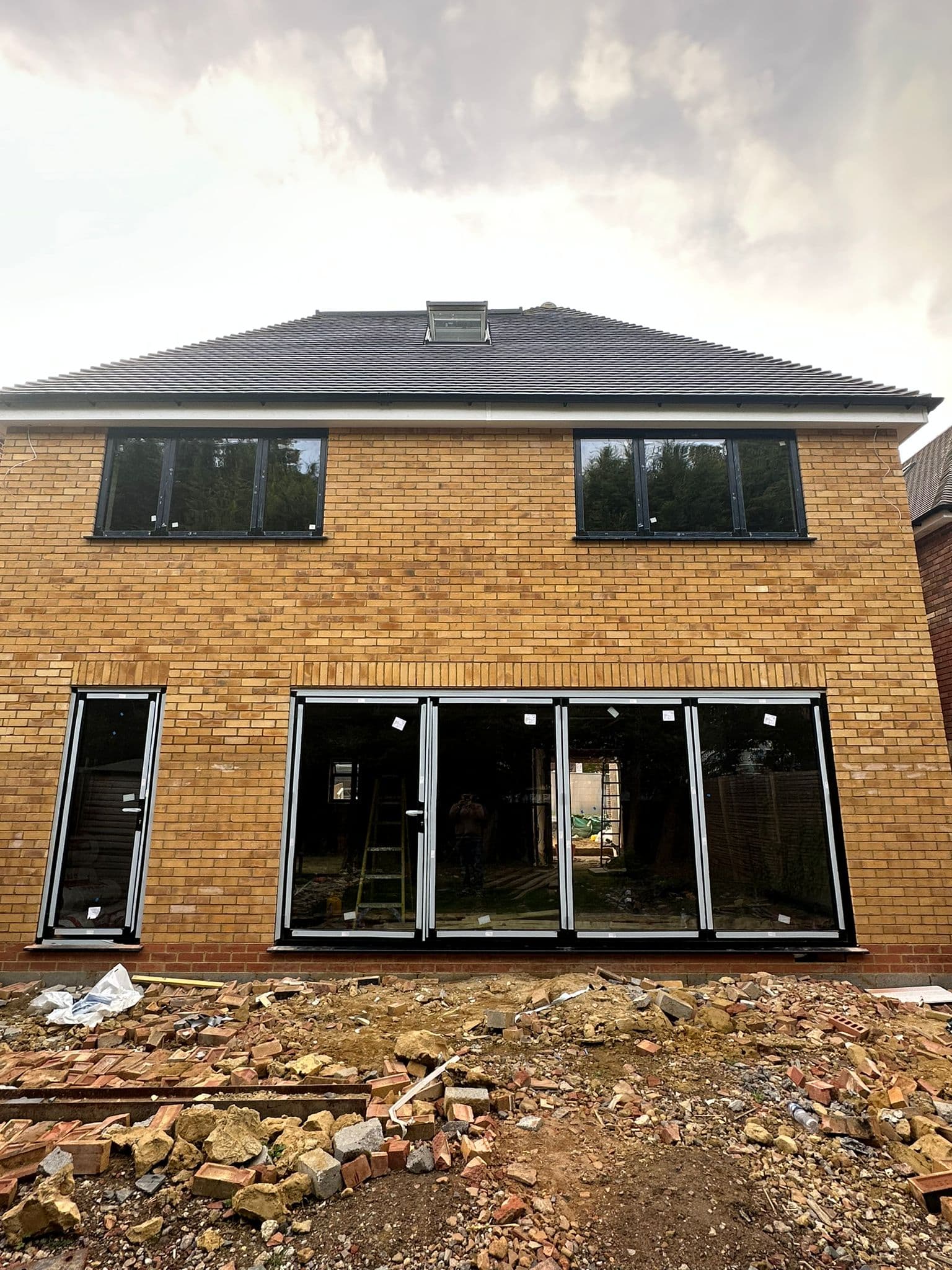
Bifold Doors [Bifold doors](/aluminium/bifold-doors) consist of multiple panels hinged together that fold concertina-style to one or both sides of the opening. When fully open, the panels stack neatly against the wall, leaving approximately **90% of the opening clear**. A traffic door allows everyday access without folding the entire set.
Sliding Doors [Sliding doors](/aluminium/sliding-doors) use large glass panels that glide horizontally along a track. One panel slides behind another, meaning that at most **50-66% of the opening** is accessible at any time (depending on the number of panels and configuration). The panels do not fold or stack — they remain in place within the frame.
Sightlines and Aesthetics
This is where sliding doors have a clear advantage. Because sliding panels do not need hinges, folding mechanisms or multiple frame joints, the sightlines can be dramatically slimmer:
- Sliding doors: Sightlines as narrow as 20-35mm on premium systems
- Bifold doors: Sightlines typically 36-128mm depending on brand
The visual difference is significant. A sliding door wall appears as an almost uninterrupted sheet of glass, creating a panoramic effect that bifolds cannot match. When closed, sliding doors look cleaner, more contemporary and more architectural.
For homeowners who prioritise the view — particularly those with gardens, countryside or water views — sliding doors deliver a noticeably superior visual experience.
Opening Width and Access
This is where bifold doors fight back. When fully opened, bifolds create a near-complete opening that physically connects inside and out. This is ideal for:
- Entertaining: Guests flow freely between the kitchen/dining area and the garden
- Summer living: The boundary between indoor and outdoor space effectively disappears
- BBQ access: Easy to move food, furniture and people back and forth
Sliding doors, by contrast, always leave at least one panel in the frame. A two-panel sliding door gives you 50% of the opening; a three-panel inline sliding door gives you approximately 66%. This is still a generous opening, but it is not the same as the full-width access that bifolds provide.
The honest reality: Most homeowners with bifold doors rarely open them fully. In typical British weather, the traffic door handles 90% of daily use. The full-open, entertaining-in-the-sunshine scenario happens perhaps 10-20 days per year. For the remaining 345 days, the view through the closed doors is what you experience — and sliding doors win that comparison convincingly.
Thermal Performance
Sliding doors generally outperform bifolds thermally:
- Sliding doors: U-values from 1.0-1.4 W/m2K (fewer frame joints = less thermal bridging)
- Bifold doors: U-values from 1.3-1.6 W/m2K (more frame joints and hinges create thermal bridges)
The difference translates to modest energy savings — approximately £20-£40 per year for a typical installation. More importantly, sliding doors tend to be more airtight because the compression seal between the sliding panels is continuous, whereas bifold doors have multiple hinge joints that can allow air infiltration over time.
Weather Performance
UK weather is the great test for any door system, and sliding doors handle it better:
- Rain resistance: Sliding doors with raised tracks and drainage channels handle driving rain exceptionally well. Bifolds can be vulnerable to water ingress at the threshold, particularly with flush thresholds
- Wind resistance: Large sliding panels are inherently stable in high winds. Bifold panels can catch the wind when partially open, which is both inconvenient and potentially damaging
- Draughts: The continuous compression seal on sliding doors provides better long-term draught resistance than the multiple sealing points on bifold hinges
Security
Both door types offer excellent security when properly specified:
- Sliding doors: Multi-point locking along the full height of the meeting stile. The interlocking track design makes the panels extremely difficult to lift out. Cortizo sliding doors achieve PAS 24 certification
- Bifold doors: Multi-point locking with shoot bolts at top and bottom. PAS 24 certified on quality systems. The traffic door lock is the primary security point
Neither type is inherently more secure than the other. The quality of the locking system and the installation matter more than the door configuration.
Threshold Options
Both sliding and bifold doors are available with various threshold configurations:
- Standard raised threshold: The most weatherproof option. A small step (15-25mm) at the door line
- Low threshold: Reduced step height (10-15mm) with improved accessibility
- Flush threshold: Level access between inside and outside. Requires careful drainage detailing to prevent water ingress
Flush thresholds are slightly more reliable on sliding doors because the track design naturally accommodates drainage. Bifold flush thresholds require meticulous installation to maintain weather resistance.
Cost Comparison
Here are realistic fully-installed prices for both door types in 2026:
Bifold Doors (Aluminium) - **3-panel (2.4m wide):** £3,500-£7,000 - **4-panel (3.2m wide):** £4,500-£9,000 - **5-panel (4.0m wide):** £5,500-£11,000
Sliding Doors (Aluminium) - **2-panel inline (2.4m wide):** £3,000-£6,000 - **3-panel inline (3.6m wide):** £5,000-£9,000 - **4-panel (two pairs, 4.8m wide):** £7,000-£13,000
Lift-and-Slide Doors (Premium) - **2-panel (3.0m wide):** £5,000-£8,000 - **3-panel (4.5m wide):** £7,000-£12,000
Sliding doors are comparable in price to bifolds for standard configurations. Premium lift-and-slide systems (which offer the smoothest operation and largest panel sizes) carry a premium of approximately 20-30% over standard inline sliding.
Space Requirements
Bifold Doors When open, the folded panels project approximately **600-800mm** into the room (or outside, depending on the opening direction). This stack of panels sits against the wall and takes up usable floor space. Inward-opening bifolds can interfere with furniture near the opening.
Sliding Doors Sliding panels remain within the frame — they do not project into the room at all. This makes sliding doors the better choice for rooms where furniture sits close to the door line. The only space consideration is the wall area behind the fixed panel where the sliding panel tucks away.
Our Recommendation
For most modern extensions in the UK, sliding doors are the better choice. They offer slimmer sightlines, better thermal and weather performance, quieter operation and a more contemporary aesthetic. The view through closed sliding doors — which is what you experience for most of the year — is substantially better than bifolds.
Choose bifold doors if: - Full-width access to the garden is genuinely important to your lifestyle - You entertain outdoors regularly during summer - The opening is relatively narrow (under 3m) where bifolds can fold to leave a near-complete opening - You prefer the traditional concertina look
Choose sliding doors if: - The view is your priority - You want the slimmest possible frames - The opening is wide (3m+) where sliding panels can be impressively large - Weather performance and airtightness are important - You want a quieter, smoother operation
Browse our aluminium sliding doors and aluminium bifold doors to compare the options available from Cortizo and Schuco.
Frequently Asked Questions
Are sliding doors better than bifold doors?
For most UK homes, yes. Sliding doors offer slimmer sightlines, better thermal performance, superior weather resistance and a more contemporary appearance. Bifold doors are better if full-width access to the garden is your top priority, but most homeowners use the traffic door for daily access regardless.
Do sliding doors or bifold doors cost more?
Prices are broadly comparable for standard configurations. A 3-panel bifold and a 2-panel sliding door for a similar opening width cost within 10-15% of each other. Premium lift-and-slide systems carry a 20-30% premium over standard inline sliding doors.
Can sliding doors open as wide as bifold doors?
No. Sliding doors leave at least one panel in the frame, giving 50-66% clear opening width. Bifold doors fold to leave approximately 90% clear. However, a wide sliding panel (1.5-2m) provides a generous opening that is more than adequate for most uses.
Which is more energy efficient — sliding or bifold?
Sliding doors are typically more energy efficient. Fewer frame joints mean less thermal bridging, and the continuous compression seal provides better airtightness. The difference in U-values is approximately 0.2-0.3 W/m2K in favour of sliding doors.
How wide can sliding doors go?
Premium aluminium sliding door systems can span up to 6-7 metres or more with multiple panels. Individual panels can be up to 3m wide and 3m tall on lift-and-slide systems. For very wide openings, sliding doors are often the only practical option as bifold panels become unwieldy beyond 5 panels.
Need advice on your next project?
Talk it through with the team, or leave your details for a free no-obligation written quote.
FENSA registered · 10-year CPA insurance-backed guarantee · Cortizo, Schuco & Rehau approved · Origin Approved Partner