Do uPVC Sash Windows Meet Building Regulations? (UK 2026)
Homeowners comparing uPVC sash quotes often notice something confusing: one installer quotes a window at 1.3 W/m²K, another quotes 1.5, and both insist theirs meets Building Regulations. Both are usually telling the truth. England allows two separate routes to compliance for replacement windows, and most of the uPVC sash market passes on the second one rather than the first. Here is how it actually works, and what it means when you are reading a quote.
The Rule, Stated Plainly
Since 15 June 2022, replacement windows in existing dwellings in England must meet either:
- a whole-window U-value of 1.4 W/m²K or better, or
- a Window Energy Rating of band B or better
Those are alternatives. A window needs to satisfy one, not both. Timber windows received a one-year extension to the deadline; uPVC did not.
For new build the figures differ: the limiting standard is 1.6 W/m²K with a notional specification of 1.2 W/m²K.
Why This Matters for Sash Windows Specifically
Vertical sliding sash windows sit at a structural disadvantage on U-value, and it has nothing to do with build quality.
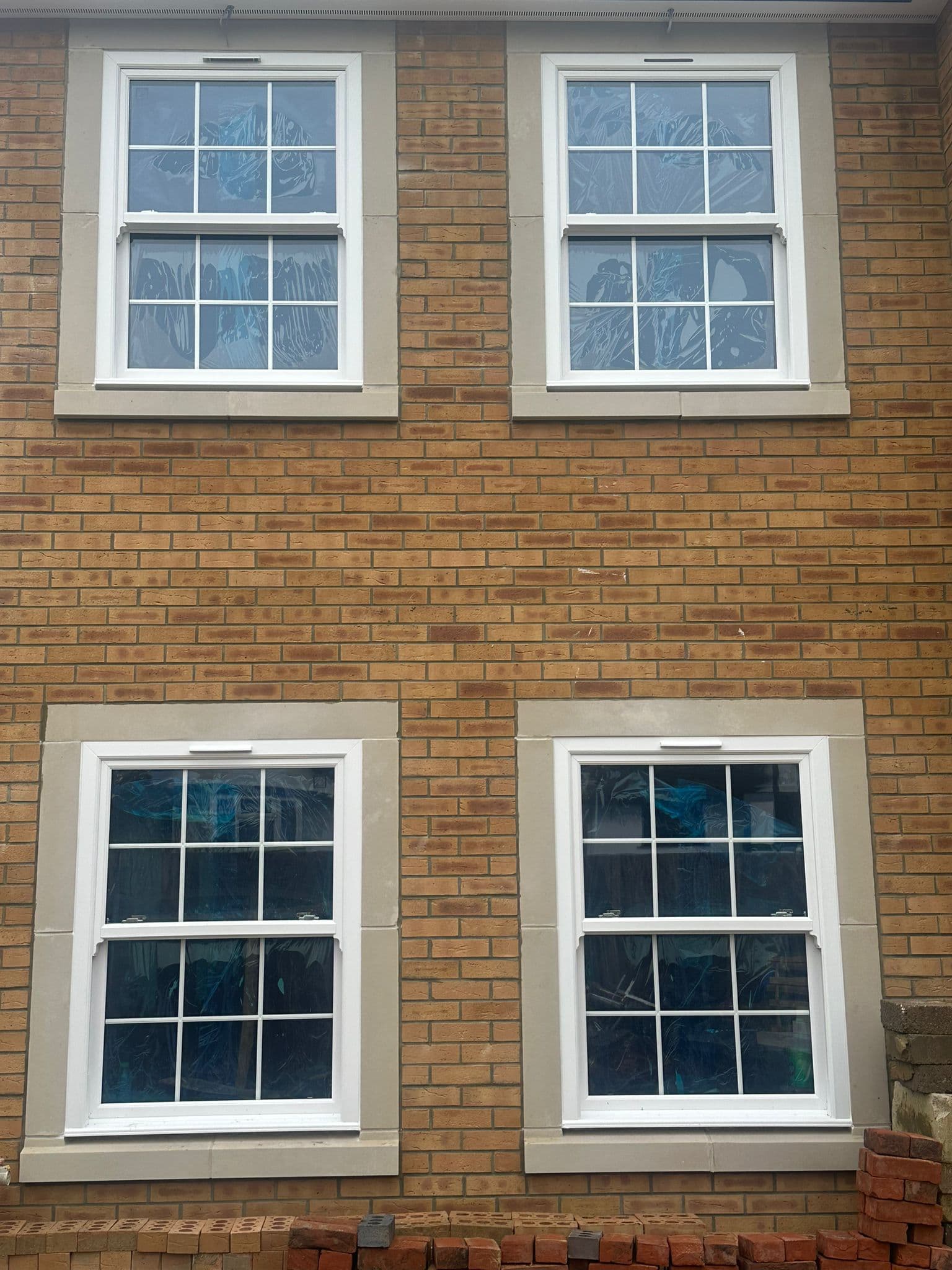
A sash window carries a horizontal meeting rail across the middle of the opening where the two sashes overlap. A casement window does not. That rail adds frame area and removes glass area from the same aperture.
Window Energy Ratings score solar gain as a positive and heat loss as a negative. Less glass means less solar gain, so a sash window starts from a worse position than a casement of identical size and identical glazing. That is why the best uPVC sash systems reach around 1.2 W/m²K while a good uPVC casement reaches 1.2 with double glazing and drops further with triple.
It is a geometry problem, not a manufacturing one.
What the Main UK Sash Systems Actually Publish
| System | Standard U-value | Best published | How it complies as standard | |---|---|---|---| | Victorian Sliders ECOSlide | 1.3 W/m²K | 1.2 W/m²K, optional | U-value route, outright | | Quickslide Legacy | 1.4 W/m²K | 1.2 W/m²K, chargeable upgrade | U-value route, at the threshold | | Masterframe Bygone Symphony | 1.4 W/m²K, 18mm krypton | 1.2 W/m²K with FINEO vacuum glazing, chargeable | U-value route, at the threshold | | Masterframe Bygone Harmony / Melody | 1.5 W/m²K | Not published | Energy-rating route | | Roseview Ultimate / Heritage Rose | 1.5 W/m²K | 1.2 W/m²K with ThermoVFlex | Energy-rating route | | Roseview Charisma Rose | 1.5 W/m²K | 1.4 W/m²K, no 1.2 available | Energy-rating route | | Eurocell Charisma | "as low as" 1.3 W/m²K | 1.3 W/m²K | Depends on the quoted configuration |
Two observations worth carrying into a quote conversation.
First, most of the market complies on the energy-rating route. A 1.5 W/m²K window is perfectly legal for a replacement job in an existing home because its band A rating satisfies the alternative. Nobody is cutting corners.
Second, almost every 1.2 W/m²K figure in this market is conditional. Masterframe's requires chargeable FINEO vacuum glazing. Quickslide's is a paid thermal upgrade over a 1.4 standard. Roseview's requires the ThermoVFlex enhancement. Victorian Sliders' 1.2 is an optional upgrade over a 1.3 standard. If a quote leads with 1.2, ask whether that figure is included in the price.
Where the Distinction Actually Bites
For a straightforward replacement in an existing house, either route works and the question is academic.
It stops being academic in three situations:
New build and some extensions. Where the assessment is running on U-value against the notional 1.2 W/m²K specification, an energy-rating pass does not substitute. A system whose standard specification already sits at 1.3 gives you more headroom than one at 1.5.
SAP and EPC calculations. These use U-value inputs. A better U-value improves the modelled result whether or not the window would have complied on its rating.
Whole-house replacements. The gap between 1.3 and 1.5 W/m²K compounds across ten or twelve windows in a way it does not on a single opening.
What to Ask Your Installer
Three questions that will tell you what you are actually buying:
1. Is the U-value you have quoted the standard specification or an upgrade? Most 1.2 figures in this market are chargeable. 2. Which compliance route is this window using, U-value or energy rating? A straight answer indicates the installer understands what they are selling. 3. Does the quoted price include PAS 24 security? This varies more than people expect. Victorian Sliders includes PAS 24:2022 as standard; Roseview offers PAS 24:2016 as an option across its range; Quickslide's brochure lists PAS 24 as a chargeable upgrade that must be requested. Masterframe publishes no PAS 24 claim at all, though its ranges hold Secured by Design accreditation.
That third point is not a Building Regulations requirement for a straightforward replacement, but it becomes one under Part Q on new dwellings, and insurers increasingly ask.
Triple Glazing Is Not the Answer Here
Homeowners often ask whether triple glazing solves the sash U-value problem. In practice it is unavailable.
No major UK uPVC sash manufacturer offers a triple-glazed vertical slider. The weight strains the balance mechanism that holds the sash at height, the cost is disproportionate to the gain, and astragal bars are not practical with triple units. Roseview's managing director has cited cost, weight and practicality directly.
The workarounds the market has settled on instead improve the profile rather than the glass. Roseview's ThermoVFlex is a REHAU-patented profile enhancement. Quickslide replaces steel sash reinforcement with an insulating alternative and adds material into the frame and cill chambers. Masterframe reaches 1.2 with FINEO vacuum glazing, which is a double unit rather than a triple. All three arrive at roughly the same place by different means.
What We Fit and Why
We fit Victorian Sliders ECOSlide, and the compliance position is part of the reason. Its 1.3 W/m²K standard specification clears the U-value route without an upgrade, it carries an A+ Window Energy Rating rather than A, and PAS 24:2022 is included rather than optional. On a full-house sash replacement that removes three separate upgrade conversations from the quote.
That is a declared preference, not a neutral verdict. Roseview, Masterframe and Quickslide all make compliant, well-built windows, and Roseview's Ultimate Rose has a genuine advantage on conservation-area corner detail that we would not argue against.
We install as a FENSA registered company and every job carries a CPA insurance-backed guarantee.
Frequently Asked Questions
What U-value do windows need to meet in the UK?
Replacement windows in existing English dwellings must achieve either 1.4 W/m²K or a Window Energy Rating of band B, in force since 15 June 2022. New build works to a limiting standard of 1.6 W/m²K with a notional specification of 1.2 W/m²K. The two routes for replacements are alternatives, so a window only needs to satisfy one.
Is a 1.5 W/m²K sash window legal?
Yes, for a replacement in an existing home, provided it achieves Window Energy Rating band B or better. Several major uPVC sash systems publish 1.5 W/m²K as standard and comply through their band A rating. It would not satisfy an assessment running specifically on U-value, which is where new build and some extension work differs.
Which uPVC sash window has the best U-value?
On standard specification, Victorian Sliders ECOSlide at 1.3 W/m²K is the strongest published figure among the major UK systems. Several brands reach 1.2 W/m²K, but in every case it requires a chargeable upgrade: FINEO vacuum glazing for Masterframe, a thermal upgrade for Quickslide, ThermoVFlex for Roseview, or the optional upgrade for Victorian Sliders.
Can you get triple-glazed uPVC sash windows?
No major UK manufacturer offers them. The weight strains the balance mechanism, the cost outweighs the benefit, and astragal bars are impractical with triple units. Manufacturers improve sash U-values through the profile instead, using insulating reinforcement, patented profile enhancements or vacuum glazing.
Do sash windows perform worse than casement windows?
On U-value, generally yes, and it is structural rather than a quality difference. The horizontal meeting rail adds frame area and reduces glass area, which lowers solar gain and therefore the energy rating. The best uPVC sash sits around 1.2 W/m²K; a good uPVC casement reaches 1.2 with double glazing and improves further with triple, which sash systems do not offer.
Does my installer need to register the work?
Yes. Replacement windows are notifiable work under Building Regulations. Using a FENSA registered installer means the installation is self-certified and registered with your local authority without a separate building control application. You should receive a certificate after the work. Our installations are FENSA registered and carry a CPA insurance-backed guarantee.
Need advice on your next project?
Talk it through with the team, or leave your details for a free no-obligation written quote.
FENSA registered · 10-year CPA insurance-backed guarantee · Cortizo, Schuco & Rehau approved · Origin Approved Partner