Rehau Windows Review UK 2026: Is Rehau Worth It?
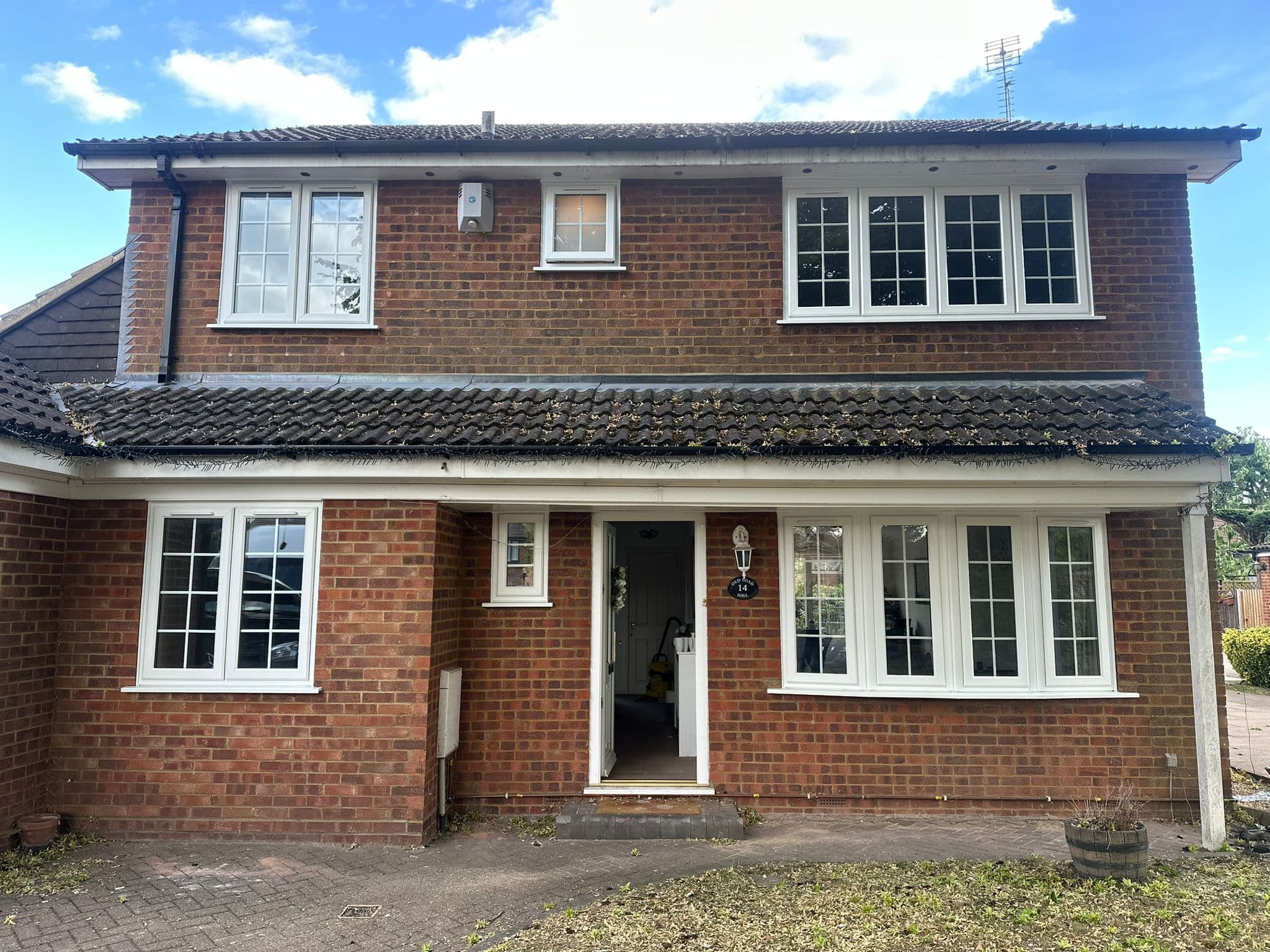
If you are considering new uPVC windows for your home, Rehau is a name you will encounter repeatedly. As one of the largest polymer profile manufacturers in the world, Rehau supplies window and door systems to thousands of UK fabricators and installers. But are Rehau windows actually worth it in 2026, or is the brand name doing more work than the product? This review covers the full Rehau range — TOTAL70 casements, Rio flush casements and Slinova inline sliding patio doors — with real-world costs, performance figures and an honest verdict.
Looking for a Rehau installer? We fabricate Rehau TOTAL70, Rio and Slinova in our Uxbridge workshop and install them across London and the Home Counties. See our Rehau windows and doors or request a free quote.
Quick Decision Frame
Choose Rehau TOTAL70 if you want the volume-tier premium uPVC casement for standard residential homes: A+ energy rating achievable, PAS 24 security, factory-integrated EPDM gaskets, and a 10-year profile guarantee. This is the workhorse of the Rehau range and the right specification for most UK installations.
Choose Rehau Rio if your property is in a conservation area or Article 4 zone, or you want timber-look flush casements with mechanical-jointed corners. Most planning officers in Buckinghamshire, Berkshire and Surrey accept the Rio where they reject welded-corner alternatives.
Choose Rehau Slinova if you want an inline-sliding patio door to match your Rehau casements: 2-, 3- or 4-pane configurations up to 4m wide × 2.4m high (4.9m on SLINOVA X), 80mm slim frame depth and PAS 24 multi-point locking. Rehau's answer to aluminium sliding doors at uPVC pricing.
Either works for PAS 24 security as standard, 10-year Rehau profile guarantee, FENSA-certified installation, and the full Rehau colour range including dual-colour and woodgrain foils.
Who is Rehau?
Rehau is a German engineering company founded in 1948. They do not manufacture finished windows themselves. Instead, they design and extrude uPVC profiles — the raw frames — which are then fabricated into complete windows by approved partners across the UK. This is an important distinction. When someone says they have "Rehau windows," they mean the profile system is Rehau, but the fabrication quality depends on the manufacturer, and the installation quality depends on your installer.
Rehau has been operating in the UK market for over 30 years and their profiles are used in an estimated one in four uPVC window installations across the country. Their main competitors in the UK profile market are Veka, Deceuninck, Liniar, and Eurocell.
The Rehau TOTAL70 System
The TOTAL70 is Rehau's flagship uPVC window system for the UK residential market. The name refers to the 70mm depth of the main frame profile — a standard measurement that balances thermal performance with slim sightlines.
Key Specifications
- Frame depth: 70mm
- Chambers: Multi-chamber design (the TOTAL70 range includes 3, 5 and 6-chamber profiles) for thermal insulation
- Energy rating: can achieve A+ (Rehau states an A rating is easily achievable)
- U-value: down to 0.8 W/m²K with triple-glazed argon-filled units
- Security: PAS 24:2022 certified as standard — the current UK security benchmark
- Weatherproofing: Tested to BS 6375 for wind, water, and air resistance
- Recycled content: Up to 75% post-consumer recycled content on the TOTAL70c variant per the published Rehau brochure
What Makes TOTAL70 Different?
The standout feature of the TOTAL70 system is its long-term frame and seal integrity. The multi-chamber profile is reinforced with steel inserts in the high-stress zones, and the EPDM weather gaskets are factory-fitted into the profile during extrusion rather than inserted as a separate component after fabrication. In practical terms, this integrated approach reduces the chance of seals shrinking or falling out over time (one of the most common complaints with budget uPVC frames after 10-15 years) and keeps the corners and weather line consistent for the long term.
For projects where embodied-carbon credentials matter, Rehau offers the TOTAL70c variant which uses up to 75% post-consumer recycled content per the published brochure. The recycled profile sits inside a virgin outer skin, so the appearance and weatherability are identical to standard TOTAL70.
Energy Performance
Rehau TOTAL70 can achieve an A+ energy rating, and Rehau states an A rating is easily achievable, which places it among the best-performing uPVC systems available in the UK. The multi-chamber profile design traps pockets of air within the frame itself, adding insulation beyond what the glass provides.
For context, the minimum Building Regulations requirement for replacement windows in England is a U-value of 1.4 W/m²K or a Window Energy Rating (WER) of band B. Rehau TOTAL70 comfortably exceeds both thresholds. If you are upgrading from windows installed before 2002, you can expect a noticeable reduction in draughts and cold spots, and a measurable improvement in your EPC rating.
For homeowners considering triple-glazed aluminium windows for superior thermal performance, it is worth noting that Rehau's triple-glazed uPVC option achieves comparable U-values at a significantly lower price point — though aluminium offers slimmer sightlines and a more contemporary aesthetic.
PAS 24 Security
All Rehau TOTAL70 windows are PAS 24:2022 certified as standard. PAS 24 is the security standard that tests windows against physical attack — including attempts to force the lock, lever the frame, and break through the panel. It is the benchmark specified by Secured by Design, the police-backed initiative for crime prevention.
In practical terms, PAS 24 certification means your windows will include:
- Multi-point locking systems (typically 4+ locking points on each sash)
- Reinforced steel or aluminium inner chambers in critical stress areas
- Anti-leverage beading (glazing is secured from the inside, not the outside)
- Toughened or laminated glass options for ground-floor and accessible windows
This level of security comes as standard with Rehau profiles — you should not need to pay extra for it. If an installer quotes a premium for PAS 24, question why.
Colour Options
Rehau offers a comprehensive colour range that has expanded significantly in recent years. Options include:
- Standard whites: Brilliant white (both sides), white exterior with white interior
- Woodgrain foils: Irish Oak, Golden Oak, Rosewood, Mahogany, Cream Woodgrain, Anthracite Woodgrain
- Solid colours: Anthracite Grey (RAL 7016), Chartwell Green, Agate Grey (RAL 7038), Slate Grey, Black, Cream
- Dual colour: Different colours on interior and exterior faces — for example, Anthracite Grey outside with white inside
Anthracite Grey has become the most popular colour choice in the UK market, accounting for roughly 30% of all coloured uPVC orders. The colour is achieved through a foil wrap applied to the profile surface. Modern foils are UV-stabilised and carry a 10-year colour guarantee, though in practice they maintain their appearance for 20+ years.
If you are considering Rehau windows for a period property or conservation area, the uPVC sliding sash windows in the Rehau range offer a heritage aesthetic that planning officers generally find acceptable.
Cost Comparison: What Do Rehau Windows Actually Cost?
Are Rehau windows expensive? They sit in the mid-to-premium tier of the UK uPVC market: more than budget uPVC, and well below premium aluminium. Here is how the three compare, fully supplied and installed with FENSA certification:
| Option | Relative installed cost | What the extra buys |
|---|---|---|
| Budget uPVC | Entry | Basic replacement windows |
| Rehau TOTAL70 | Mid | Better profile engineering, superior weld quality, PAS 24 security as standard |
| Premium aluminium | Premium | Slimmer sightlines and a more contemporary aesthetic |
Within each tier, size drives the figure: a large casement costs more than a standard one, a bay more again, and a full house is the sum of its openings. Rehau does not publish a consumer price list, because it supplies profile to fabricators rather than selling finished windows; the price you pay is set by your fabricator and installer for your sizes, colour and glass. For current installed prices by window type and house size, see our Rehau windows cost guide.
Rehau carries a clear premium over budget uPVC, which reflects the better profile engineering, superior weld quality, and PAS 24 security as standard. Whether that premium is worth it depends on how long you plan to stay in your home — the longevity and lower maintenance of Rehau profiles tends to pay for itself over 10+ years.
For a written price on Rehau windows for your own home, request a free quote or call 0800 861 1450. We fabricate Rehau in our Uxbridge workshop and quote with no obligation.
Pros and Cons
Pros
- Proven track record — 30+ years in the UK market with millions of installations
- Excellent thermal performance: can achieve A+, exceeding Building Regulations comfortably
- PAS 24 security included — no need to pay extra for enhanced security
- Integrated weather sealing — factory-fitted EPDM gaskets stay in the profile rather than shrinking out
- Wide colour range — including dual-colour options and convincing woodgrain foils
- Recyclable — TOTAL70c variant uses up to 75% post-consumer recycled content; fully recyclable at end of life
- 10-year Rehau profile guarantee
Cons
- More expensive than budget brands: a noticeable premium over entry-level uPVC
- Quality varies by fabricator — the Rehau profile is only as good as the company that fabricates and installs it
- Not the slimmest sightlines — 70mm frame depth is standard but wider than aluminium alternatives
- Limited premium feel — even the best uPVC cannot match the aesthetic of aluminium bifold doors or aluminium casement windows
- Foil colours can look different in certain lights — particularly woodgrain finishes compared to painted aluminium
The Rehau Range Beyond TOTAL70: Rio and Slinova
The TOTAL70 is the volume casement product, but the Rehau range extends further into specific use cases that the volume profile cannot cover.
Rehau Rio — Flush Casement for Heritage and Conservation
The Rehau Rio is a dedicated flush casement system designed for period properties and conservation areas. The sash sits flat within the frame when closed (no protruding step), and the corners are precision-cut with mechanical joints rather than welded — producing sharp, timber-like 90-degree corners. This single detail is what gets uPVC accepted by conservation officers where standard welded-corner uPVC would be rejected.
Key Rio specifications:
- 70mm frame depth (same as TOTAL70)
- A-rated thermal performance; U-value 1.3 W/m²K
- Mechanical joints or welded corners (choose by application)
- PAS 24:2022 security as standard
- Heritage colours including Chartwell Green, Agate Grey, Cream, Pearl Grey and Anthracite Grey
We cover the Rio in depth in our Rehau Rio flush casement windows guide, including planning-application tips for Buckinghamshire and Berkshire Article 4 directions.
Rehau Slinova — Inline Sliding Patio Doors
The Rehau Slinova is Rehau's answer to aluminium sliding doors at uPVC price points. It is an inline-sliding patio door system — meaning the panes slide parallel to the wall on a precision track rather than folding or pivoting — and it delivers the slim sightlines and large glass area that typically drive customers toward aluminium.
Key Slinova specifications:
- 80mm frame depth, 54mm sash depth
- 2-pane, 3-pane or 4-pane configurations
- Maximum overall dimensions up to 4m wide × 2.4m high (the SLINOVA X variant extends to 4.9m wide)
- Multi-chamber profile
- PAS 24:2022 multi-point locking with anti-lift hardware
- Ciilock self-levelling rollers for smooth long-term operation
The Slinova is the right choice when a customer wants the look of a slim-frame slider but does not want to step up to the price of aluminium. The 4m × 2.4m standard configuration handles most rear-extension openings without structural lintel changes; the SLINOVA X variant extends that reach for wider apertures.
How to Choose a Good Rehau Installer
Since Rehau does not install windows directly, choosing the right installer is critical. Look for:
1. FENSA or Certass registration — this is a legal requirement for window replacement in England and Wales. Without it, you will not receive a building regulations compliance certificate. Learn more about what FENSA is and why it matters. 2. Insurance-backed guarantee — your installer should provide a 10-year guarantee backed by an independent insurance provider (such as CPA or HomePro). This protects you if the company ceases trading. 3. Rehau Network Installer status — Rehau maintains a network of approved installers who must meet quality and training standards. This is not a guarantee of excellence, but it is a useful baseline. 4. No high-pressure sales tactics — any installer who pressures you to sign on the day or offers a "today only" discount is not one you should trust.
At Vitrum Solutions, we are an approved Rehau installer covering Buckinghamshire, Berkshire, and West London. We use TOTAL70 profiles for all our uPVC casement window installations and provide a 10-year insurance-backed guarantee on every job. Where flush-casement heritage detail is wanted we use the Rehau Rio profile; for inline sliding patio doors we use the Rehau Slinova system.
The Verdict: Are Rehau Windows Worth It?
Yes, Rehau windows are worth the investment for most UK homeowners. The TOTAL70 system offers genuinely superior engineering compared to budget uPVC brands, with better thermal performance, stronger corner welds, and PAS 24 security as standard. Choose an installer who backs the finished windows with a 10-year insurance-backed guarantee.
The caveat is that the profile is only one part of the equation. A Rehau window fabricated and installed poorly will underperform a budget window installed correctly. Choose your installer at least as carefully as you choose your profile system.
If budget is your primary concern and you need basic replacement windows, a reputable installer using Liniar or Veka profiles will serve you well. If you want the best uPVC system available and are happy to pay a modest premium, Rehau TOTAL70 is the right choice. And if aesthetics and ultra-slim sightlines are your priority, consider stepping up to aluminium windows from Cortizo or Schuco — though the price difference is significant.
Frequently Asked Questions
How does Rehau compare to Veka?
Rehau and Veka are the two German engineering peers at the top of the UK uPVC market. Both reach an A energy rating, both ship PAS 24 security as standard, and the day-to-day performance is effectively tied. Rehau's edge is long-term: factory-integrated EPDM gaskets and the Rio's mechanical-joint corner option for conservation areas. Veka's edge is supply: Burnley-based UK extrusion and a larger fabricator network. For a full side-by-side, see our Rehau vs Veka comparison.
How long do Rehau windows last?
Rehau windows have a realistic lifespan of 35+ years with minimal maintenance. The profile itself carries a 10-year guarantee from Rehau, but the actual material degradation is extremely slow. The most common reasons for replacement are seal failure (typically after 20+ years), hardware wear, or a desire to upgrade the glass specification rather than actual frame failure.
Can I get Rehau windows in Anthracite Grey?
Yes. Anthracite Grey (RAL 7016) is one of the most popular colour options in the Rehau range. It is available as a full wrap (both sides), exterior only (with white interior), or as a woodgrain textured finish. The colour is applied as a UV-stabilised foil that carries a 10-year guarantee against fading or peeling.
Do Rehau windows come with a guarantee?
Yes. Rehau guarantees its profile to the fabricator, and the fabricator or installer guarantees the finished windows to you, so the installer's guarantee is the one that protects you. Look for a FENSA-registered installer with a 10-year insurance-backed guarantee, which stays in force even if the company stops trading. Every Vitrum Solutions installation carries a 10-year CPA insurance-backed guarantee.
Are Rehau windows good for energy efficiency?
Rehau TOTAL70 windows can achieve an A+ Window Energy Rating, which is among the best available in the UK uPVC market. The multi-chamber profile design provides excellent thermal insulation, and with triple-glazed argon-filled units they reach U-values of 0.8 W/m²K, well below the Building Regulations maximum of 1.4 W/m²K.
Is Rehau better than Eurocell?
Yes, for premium installations Rehau is meaningfully better than Eurocell. Eurocell sits one tier below Rehau in the UK uPVC market — it is widely used in volume builds and trade-merchant supply where price is the primary driver. Rehau profiles have better weld quality, better long-term seal integrity, higher recycled content, and a more comprehensive range (TOTAL70 + Rio + Slinova) than Eurocell's profile portfolio. Rehau costs more than Eurocell, and that difference reflects the engineering gap. For a premium long-term installation, Rehau is the right specification; Eurocell is the right choice when budget is the dominant constraint.
Need advice on your next project?
Talk it through with the team, or leave your details for a free no-obligation written quote.
FENSA registered · 10-year CPA insurance-backed guarantee · Cortizo, Schuco & Rehau approved · Origin Approved Partner