Korniche Roof Lantern Review: Is It the Best on the Market?
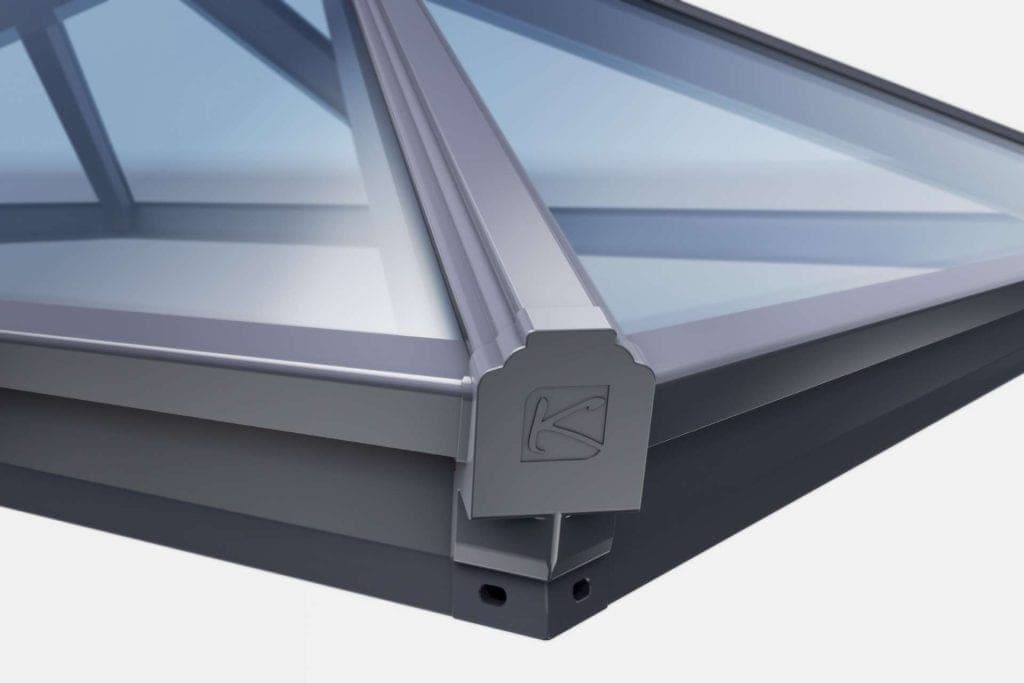
The Korniche roof lantern has rapidly become one of the most talked-about roof glazing products in the UK market. Manufactured by Made for Trade — a County Durham-based company that has been quietly disrupting the fenestration industry since 2011 — the Korniche combines slimline aluminium construction with a snap-fit glazing system that has fundamentally changed how roof lanterns are installed.
But is the hype justified? We have installed hundreds of Korniche roof lanterns across Buckinghamshire and West London, and this review is based on our real-world experience with the product — from site survey through to long-term customer feedback.
What Sets the Korniche Apart?
The Korniche was designed from the ground up to solve three problems that plagued traditional roof lanterns: complex installation, wide sightlines and thermal bridging. Here is how it addresses each one.
Snap-Fit Glazing System
This is the Korniche's signature innovation. Traditional roof lanterns require the glass units to be lifted into the frame from above — typically requiring two people, external scaffolding and a good weather window. The Korniche's patented system allows the glass to be clicked into place from inside the building by a single installer.
The glazing bars have integrated clips that grip the sealed glass unit when pressed into position. No external access is needed, no cranes, no scaffolding. A skilled installer can glaze a standard 3m x 1.5m Korniche lantern in under 2 hours, with the entire installation from start to finish completed in approximately 6 hours.
This is not just a convenience feature — it directly reduces installation cost. Fewer labour hours, no scaffold hire, and less exposure of the roof opening to weather all contribute to a lower installed price compared to traditional systems of similar quality.
40mm Slimline Rafters
The Korniche achieves rafter sightlines of just 40mm — significantly narrower than most competing products. For comparison:
| Product | Rafter Sightline | |---------|-----------------| | Korniche | 40mm | | Atlas Aluminium | 50mm | | Stratus | 60mm | | Skypod (uPVC) | 70mm+ | | Traditional timber | 80-100mm |
Narrower rafters mean more glass and less frame. On a 3m x 1.5m lantern, the Korniche delivers approximately 15-20% more glazed area than a standard 70mm rafter system. The visual impact from inside the room is striking — the lantern almost disappears, leaving just glass and sky.
Thermally Broken Aluminium
Every Korniche profile incorporates a polyamide thermal break — an insulating barrier within the aluminium extrusion that prevents cold bridging from the exterior to the interior face. This is critical for thermal performance and condensation prevention.
Without a thermal break, the interior face of the aluminium bars would become cold enough in winter to cause condensation dripping — a common complaint with cheaper roof lanterns. The Korniche's thermal break keeps the internal face warm, eliminating condensation under normal conditions and contributing to overall energy efficiency.
Thermal Performance: The Numbers
Thermal performance is measured by the U-value — the rate of heat transfer through the structure. Lower numbers are better. Building Regulations require a maximum U-value of 1.4 W/m²K for roof glazing elements.
Korniche U-Values
- Centre-pane U-value (double glazed): 1.0 W/m²K
- Centre-pane U-value (triple glazed): 0.7 W/m²K
- Overall U-value (double glazed, typical size): 1.2-1.4 W/m²K
- Overall U-value (triple glazed, typical size): 0.8-1.1 W/m²K
The overall U-value includes the frame contribution and varies by size — larger lanterns have a better overall U-value because the glass-to-frame ratio is higher. For the Future Homes Standard compliance anticipated from 2025 onwards, the triple-glazed Korniche option positions homeowners well ahead of likely regulatory requirements.
How Does This Compare?
| Product | Overall U-Value (Double Glazed) | |---------|-------------------------------| | Korniche | 1.2-1.4 W/m²K | | Atlas Aluminium | 1.3-1.5 W/m²K | | Stratus | 1.2-1.4 W/m²K | | Skypod (uPVC) | 1.3-1.6 W/m²K | | Timber (premium) | 1.0-1.3 W/m²K |
The Korniche is competitive with or better than most aluminium competitors. Only premium timber systems offer marginally better thermal performance, and they come with significantly higher maintenance requirements.
Sizes and Configurations
The Korniche is available in a wide range of sizes:
- Width: 1,000mm to 6,000mm
- Projection: 500mm to 3,000mm
- Configuration: 2-bar, 4-bar, 6-bar and 8-bar options depending on size
- Ridge options: Contemporary flat ridge or traditional raised ridge
- Ventilation: Manual or electric opening vents available on selected configurations
The modular design means the Korniche can be specified for almost any flat-roof opening, from a compact 1m x 0.5m bathroom lantern to a dramatic 6m x 3m kitchen-diner centrepiece. Custom sizes are available for non-standard openings.
Colour Options
The Korniche offers a dual-colour option as standard — meaning you can specify different colours for the interior and exterior faces. Common combinations include:
- Exterior anthracite grey (RAL 7016) / Interior white (RAL 9010) — the most popular choice
- Exterior black (RAL 9005) / Interior white
- Exterior grey / Interior grey — for a contemporary throughout look
- Custom RAL colours — available at a premium for any RAL colour on either face
All finishes are marine-grade powder coating rated to a minimum 25-year guarantee against peeling, fading or chalking.
Installation: What to Expect
A Korniche roof lantern installation follows a predictable sequence:
1. Site survey and structural assessment — Confirming the flat roof can support the lantern weight and determining whether additional steelwork is needed 2. Kerb preparation — A timber or GRP kerb is constructed on the flat roof to the exact dimensions of the lantern. The kerb height is typically 150-200mm 3. Waterproofing — The kerb is flashed and sealed into the flat roof membrane 4. Frame installation — The Korniche aluminium frame is positioned on the kerb and fixed in place. This takes approximately 1-2 hours 5. Glazing — The sealed glass units are snapped into the frame from inside the building. This takes 1-2 hours for a standard 4-bar lantern 6. Finishing — Internal trims, silicone seals and any decorative capping are applied
Total installation time for a standard Korniche lantern: 4-8 hours depending on size and site conditions. Compare this with 1-2 days for many competing products.
Cost: What Does a Korniche Roof Lantern Actually Cost?
Pricing varies by size, glazing specification and colour choice. Here are realistic 2026 prices including supply and professional installation:
| Size | Double Glazed (Installed) | Triple Glazed (Installed) | |------|--------------------------|--------------------------| | 2m x 1m | £2,800-£3,600 | £3,400-£4,200 | | 3m x 1.5m | £4,200-£5,400 | £5,000-£6,400 | | 4m x 2m | £6,000-£7,800 | £7,200-£9,200 | | 5m x 2.5m | £8,500-£11,000 | £10,000-£13,000 |
These prices include the kerb, frame, glazing, installation, Building Regulations compliance and a 10-year insurance-backed guarantee. They do not include any structural steelwork required for the roof opening, which is a separate cost typically ranging from £500 to £2,000.
How Does This Compare to Competitors?
The Korniche sits in the mid-premium price bracket. It is more expensive than budget uPVC roof lanterns (Skypod starts from around £1,500 installed for a small unit) but significantly cheaper than premium brands like Atlas or bespoke timber systems.
When you factor in the reduced installation time — which directly translates to lower labour costs — the Korniche often works out comparable or cheaper than seemingly lower-cost products that require longer, more complex fitting.
Pros and Cons: Our Honest Assessment
What We Love
- Installation speed is genuinely transformative. Less time on site means lower cost and less disruption for the homeowner
- Slimline sightlines at 40mm are among the best available at this price point
- Thermal performance is excellent, particularly with the triple-glazed option
- Dual-colour option at no extra cost is unusual at this price point
- Build quality is consistently high — we have not experienced a faulty unit in hundreds of installations
- 20-year manufacturer guarantee provides long-term confidence
What Could Be Better
- Maximum size limitations — the 6m width limit means very large openings may need multiple units or an alternative product
- Limited ventilation options — electric opening vents are available but add significant cost (£800-£1,200) and are only available on certain configurations
- No structural glazing option — homeowners wanting a truly frameless appearance need to look at bespoke structural glass systems
- Lead times can be 4-6 weeks during peak season (spring/summer), compared to 2-3 weeks for stock uPVC products
Who Is the Korniche Best For?
The Korniche is the ideal choice for homeowners who want:
- A high-quality aluminium roof lantern without the premium price of bespoke systems
- Fast, efficient installation with minimal disruption
- Slimline aesthetics that maximise light and complement modern extension design
- A product backed by a strong manufacturer guarantee and proven track record
It is less suitable for listed buildings or conservation areas where a traditional timber aesthetic may be required, or for very large openings exceeding 6m where a bespoke structural glazing solution is more appropriate.
How Vitrum Solutions Can Help
As experienced Korniche installers, we handle every stage of the process — from the initial site survey and structural assessment through to installation, Building Regulations sign-off and aftercare. We also install slimline aluminium lanterns and skylights for projects that require different configurations.
To discuss whether a Korniche roof lantern is right for your extension, call 0800 861 1450 or request a free quote.
Frequently Asked Questions
Is the Korniche roof lantern worth the extra money over a Skypod?
In our experience, yes. The Korniche delivers significantly better thermal performance, narrower sightlines, a more premium appearance and faster installation. The Skypod is a decent budget option for utility rooms or garages, but for a kitchen, living room or any space where the lantern is a focal point, the Korniche is a substantially better product that justifies the price difference.
How long does a Korniche roof lantern last?
The aluminium frame is expected to last 40+ years with no maintenance. The powder-coated finish is guaranteed for 25 years. The sealed glass units have a typical lifespan of 20-25 years, and the manufacturer's guarantee covers the complete product for 20 years. In practical terms, a well-installed Korniche should outlast most of the building elements around it.
Can I install a Korniche roof lantern myself?
Made for Trade markets the Korniche as suitable for competent DIY installation, and the snap-fit system does make it simpler than traditional lanterns. However, we strongly recommend professional installation for several reasons: structural assessment is essential, the kerb construction and waterproofing are critical to long-term performance, and Building Regulations compliance requires either a FENSA-registered installer or a Building Control application.
Does the Korniche come with blinds?
The Korniche does not include integrated blinds as standard, but it is compatible with a range of aftermarket blind systems. Electric pleated blinds fitted within the frame are the most popular option, typically costing £400-£1,200 depending on the lantern size. Alternatively, solar-control glass can be specified at the point of order to reduce heat gain without the need for blinds.
What is the difference between the Korniche and the Korniche Plus?
The Korniche Plus is the premium version with triple glazing as standard, an ultra-low U-value of 0.7 W/m²K centre-pane, and enhanced acoustic performance. It uses the same 40mm slimline rafters and snap-fit installation system. The Plus typically costs 15-25% more than the standard double-glazed Korniche and is recommended for north-facing or highly exposed positions where maximum thermal performance is a priority.
Need advice on your next project?
Talk it through with the team, or leave your details for a free no-obligation written quote.
FENSA registered · 10-year CPA insurance-backed guarantee · Cortizo, Schuco & Rehau approved · Origin Approved Partner