How Much Do Composite Doors Cost in the UK? (2026 Price Guide)
A composite front door is the most popular entrance-door upgrade in Britain, and the price spread confuses almost everyone who starts researching it. The same phrase — composite door — covers a £1,000 builders-merchant slab and a £4,500 engineered door that behaves differently in every way that matters. This guide sets out realistic 2026 fitted prices across that range, itemises what pushes a quote up, and explains where the premium tier earns its money.
Typical Composite Door Prices in 2026
Fitted prices for a single front door, including frame, standard glazing and hardware:
- Standard composite door: £1,000 to £1,800 fitted. Timber-core or entry-level foam-core slabs in popular styles and colours.
- Premium composite door (Palladio): £2,200 to £4,500 fitted. A thicker engineered slab, deeper frame, higher-grade hardware and finishes, and the design range to suit both period and contemporary frontages.
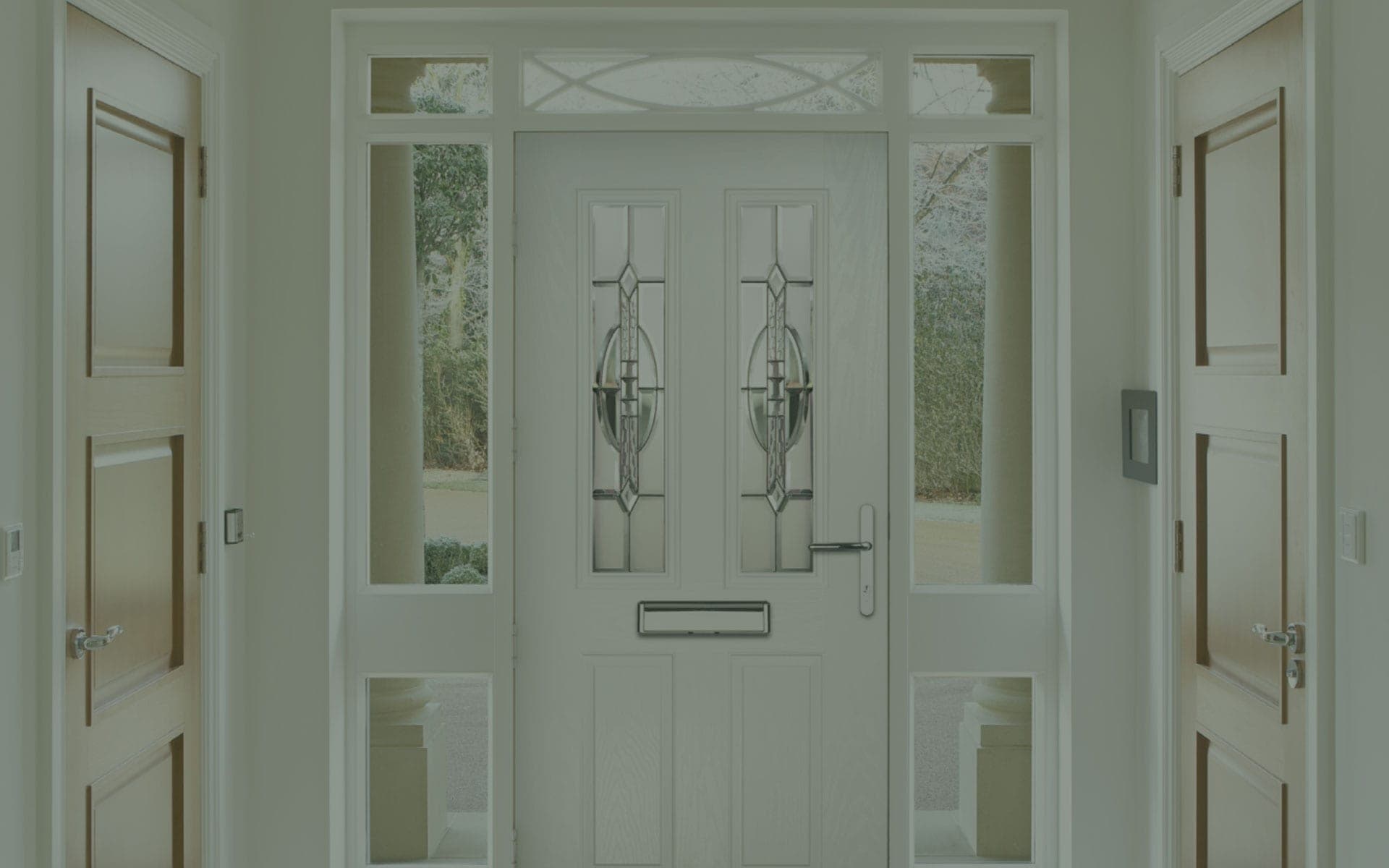
- Additions that move any quote: glazed sidelights typically add £400 to £900 each; a matching top light, wider frame-outs and bespoke colours add further; premium glass designs and upgraded locking sit on top.
For context against other door materials — uPVC below, aluminium and steel above — our entrance-door brands guide and steel door cost guide bracket the market from both ends. Composite occupies the sensible middle: warmer and more solid than uPVC, while premium aluminium and steel entrance doors overlap the top of the composite band and climb well beyond it.
What You Get at Each Price Point
At £1,000 to £1,800 you get a genuine improvement over a tired uPVC or timber door: a standard-thickness foam- or timber-core slab, a choice of mainstream styles, multi-point locking and a tidy finish. The compromises hide in the details — thinner slabs, shallower embossing on the woodgrain, more limited colour stability and plainer hardware.
At £2,200 to £4,500 — the Palladio range we fit — the slab itself changes class. Palladio doors are built as a 65mm fibreglass-reinforced monocoque with a high-density insulating core, substantially thicker than a standard composite slab. That thickness delivers measurably better insulation — solid Palladio doors achieve a U-value of 0.85 W/m²K, comfortably beyond Building Regulations — plus a deeper, more convincing woodgrain, heavier hardware and PAS 24 security accreditation. The style library runs from traditional cottage and Victorian designs to flush contemporary slabs, each covered in our Palladio review.
Whether that step up is worth it depends on the house and how long you plan to keep it. Our comparison of Palladio vs Solidor and the broader best composite doors guide put the premium tier in context against the rest of the market.
The Line Items That Move a Composite Door Quote
1. Sidelights and top lights. The single biggest addition. One glazed sidelight adds £400 to £900; a pair with a top light can double the project cost, because each is a made-to-measure glazed frame in its own right. 2. Glass design. Obscure, leaded, etched and decorative triple-glazed designs each carry a premium over standard glazing. 3. Colour. Standard colours are the baseline; bespoke and dual-colour finishes (one colour outside, another inside) add cost and lead time. 4. Hardware and security. Upgraded handles, knockers, letterplates and higher-specification locking add real money. On the security side, our guide to how long composite doors last covers what quality hardware protects. 5. The opening itself. Widening, new lintels, or replacing a frame that previous installers built around all add labour honestly charged.
One line that should never be a paid extra: certification. Every Vitrum Solutions door installation is FENSA registered where glazing applies and carries a 10-year CPA insurance-backed guarantee as standard.
Composite vs the Alternatives on Price
Against uPVC doors, composite carries a premium of several hundred pounds and repays it in solidity, insulation and kerb appeal — the full comparison is in composite vs uPVC doors.
Against aluminium and steel, composite is the value option. Premium aluminium and bespoke steel entrance doors overlap the top of the composite band and climb well beyond it, as our aluminium vs steel front-door comparison and steel door cost guide set out. If the budget conversation is heading that way, those guides are the next read.
The honest summary: most UK homes are best served in the £2,200 to £4,500 premium composite band, where the slab engineering, security accreditation and finish quality are all a visible class above the entry tier, while the price stays well below metal doors.
If you are pricing a front door in London, Buckinghamshire, Berkshire or the surrounding counties, request a free quotation and we will quote both the door and any sidelights properly. The full range is on our Palladio page and the entrance doors hub.
Frequently Asked Questions
What does a composite front door cost supply and fit in 2026?
A standard composite door lands between £1,000 and £1,800 fitted. A premium engineered door such as the Palladio range runs £2,200 to £4,500 fitted, reflecting a 65mm fibreglass-reinforced slab, better insulation and PAS 24 security accreditation. Sidelights, top lights, bespoke colours and decorative glazing add to either figure.
Why are some composite doors so much more expensive than others?
The slab construction. Entry-level composite doors use a noticeably thinner slab; premium doors such as Palladio use a 65mm fibreglass-reinforced monocoque with a high-density core, achieving a U-value of 0.85 W/m²K on solid styles, with deeper woodgrain texture, heavier hardware and certified security. The two tiers look similar in photographs and behave very differently on the doorstep.
How much do sidelights add to a composite door?
Typically £400 to £900 per glazed sidelight, with a matching top light on top of that. A door flanked by two sidelights is effectively three made-to-measure frames, which is why a full entrance composition can cost double the door alone. Pricing the whole opening at survey avoids the mid-project surprise.
Are expensive composite doors more secure?
Generally yes, through both the slab and the locking. The premium tier carries PAS 24 accreditation — the security standard Building Regulations Approved Document Q references — with multi-hook locking engaging a reinforced frame, and the thicker monocoque slab resists the crude attacks that defeat thin-slab doors. Fitting quality matters as much as the door, which is why installer accreditation is worth checking.
Is a composite door better value than an aluminium front door?
For most homes, yes. Premium composite runs £2,200 to £4,500 fitted, while premium aluminium entrance doors overlap the top of that band and climb well beyond it. Aluminium buys slimmer lines, bespoke sizes and a contemporary aesthetic; composite buys warmth, traditional and modern styles and certified security at a friendlier figure. The right answer follows the house and the budget.
Need advice on your next project?
Talk it through with the team, or leave your details for a free no-obligation written quote.
FENSA registered · 10-year CPA insurance-backed guarantee · Cortizo, Schuco & Rehau approved · Origin Approved Partner