Aluminium Internal Doors and Glass Room Dividers: A UK Guide
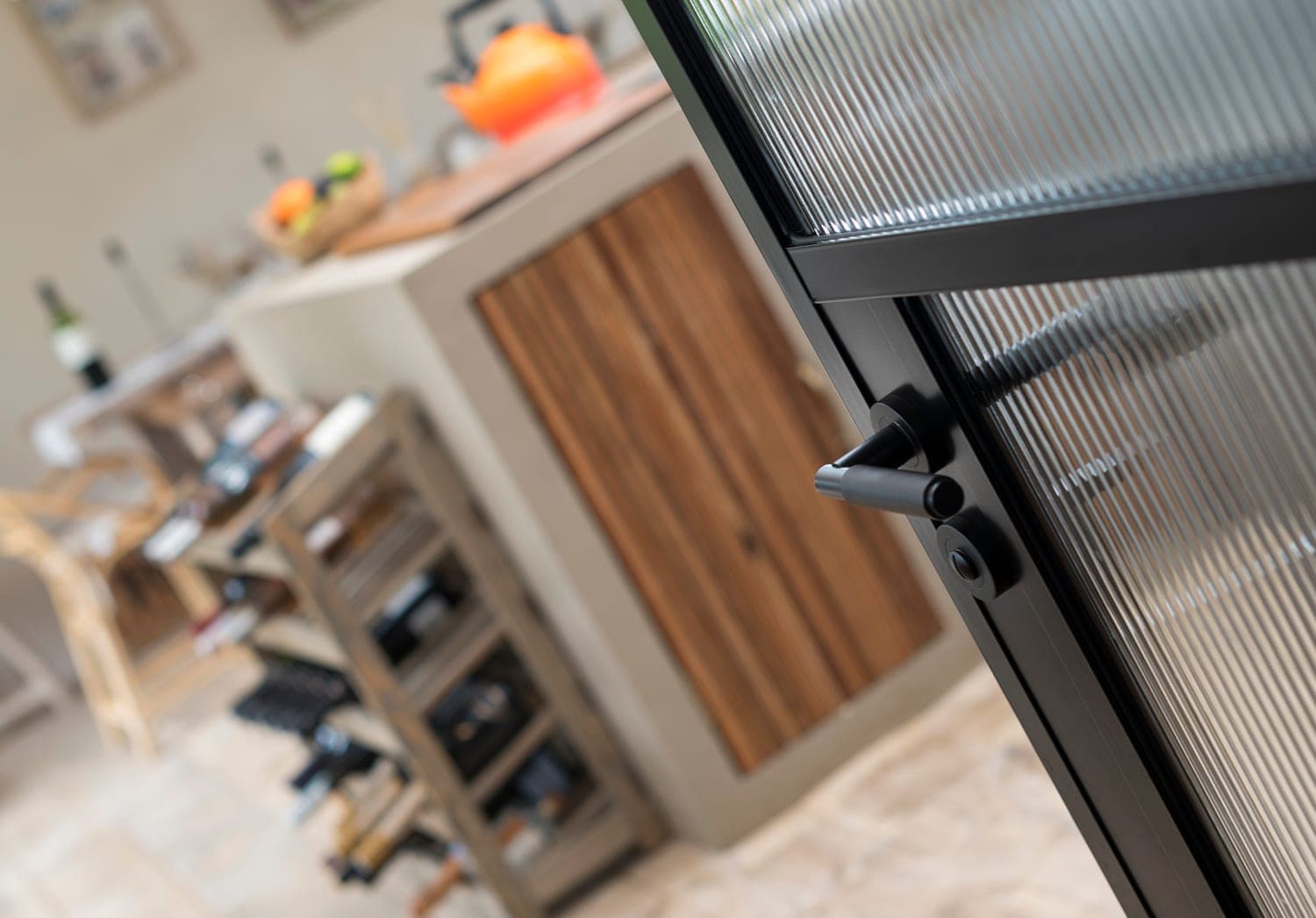
An aluminium internal door, or a run of glazed screens, is a simple way to divide an open-plan space without losing the light that made you knock the walls down in the first place. A kitchen can be closed off from the living room when the extractor is running, a home office can have a door that shuts, and a hallway can feel separate from the stairs, all while the glass keeps every room bright.
This guide covers the configurations available, the sizes you can expect, the glass and hardware choices, and the Building Regulations point that affects some layouts. We use the Origin OI-30, which we supply and install as an Origin Approved Partner, as the worked example throughout.
What Is an Aluminium Internal Door?
An aluminium internal door is a slim-framed glazed door, or a combination of doors and fixed glass panels, designed for use inside the home. Because it sits inside the heated part of the home, it does not need the insulating thermal break, weather seals or security certification of an external door.
The Origin OI-30, for example, has a frame just 30 mm wide and 40 mm deep, glazed with 4, 6 or 6.8 mm glass. With glazing bars dividing the glass, it gives the black-framed look of a traditional steel screen in a lighter aluminium frame, available in more than 150 colours.
Single, French, Fixed and Corner Configurations
Most projects use one of four building blocks, combined as needed:
- Single door: one opening leaf in a frame, for an ordinary doorway between two rooms.
- French doors: two opening leaves meeting in the middle, for a wider opening such as kitchen to dining room.
- Fixed screen: a non-opening glazed panel that closes off part of an opening while keeping the light. A fixed screen beside a single door is the classic kitchen divider.
- Corner set: screens and doors coupled around a corner to enclose a space such as a study or a snug.
On the OI-30, door leaves can be 300 to 1,000 mm wide and 1,500 to 2,500 mm tall, and frames can be up to 3,048 mm tall, so floor-to-ceiling screens are possible in most homes. Fixed screens run up to 2,000 mm wide each and can be coupled together for longer runs. The one limitation to plan around is that opening doors cannot be coupled side by side.
Choosing the Glazing Pattern
The glazing pattern is what gives an internal screen its character. On the OI-30 you choose the number and position of horizontal and vertical divides on each door. A few horizontal bars give a calm, contemporary look; a grid reads as more industrial and closer to a traditional steel screen.
Two practical options are worth considering:
- A solid bottom panel or kickplate protects the lower glass in busy areas such as a kitchen or a hallway used by children and pets.
- A top light above the door carries the glass up to the ceiling, which makes a standard-height door feel part of a full-height screen.
Reeded glass gives privacy for a home office or a utility room while still letting light through.
Do Glazed Internal Doors Need to Be Fire Doors?
This is worth settling early. In most homes an internal glazed door does not need to be fire rated. But some layouts do require fire doors. The common case is a house with a floor more than 4.5 m above ground level, such as a three-storey house or a loft conversion, where the doors onto the escape route generally need to be fire doors. A door between the house and an integral garage is another common case.
The Origin OI-30 is not currently fire rated. We check the layout when we survey, and if a fire-rated door is required in a particular position, we tell you before anything is ordered so the design can be adjusted.
Handles, Hinges and Locks
Hardware shapes how an internal screen looks and feels. The OI-30 offers several handle collections, including Signature Knurled, Contemporary and Heritage, in finishes such as Antique Brass, Satin Brass, Matt Black, Matt Bronze, Satin Nickel and Hammered Pewter, with coordinating hinges and door stops. Origin's Essential handle is available at no extra cost.
For a home office, bathroom or utility room, a turn-and-release lock gives privacy, and keyed locking is also available.
Where Aluminium Internal Doors Work Best
- Kitchen to living or dining room: closes off cooking smells and noise while keeping the open feel.
- Home office: a door that shuts for calls, with glass so the room keeps its light.
- Hallway and stairs: separates the entrance from the living space and keeps heat in the rooms you use.
- Snug or playroom: a defined zone inside a larger space, with sightlines kept open.
Aluminium or Steel?
Traditional steel screens are what this look comes from. An aluminium internal door gives the same slim, black-framed appearance in a lighter frame, in more than 150 colours. Our guide to Crittall-style door alternatives compares the steel-look options in more detail.
What Drives the Cost?
The price of an internal screen depends on the overall size, the number of opening doors, the glazing pattern, the glass type, the colour and the hardware. A single door in a standard opening is the simplest; a floor-to-ceiling corner set with several doors and a dense glazing grid is the most involved of these. We quote each project individually so you can see exactly what you are paying for.
Frequently Asked Questions
How wide can an aluminium internal room divider be?
On the Origin OI-30, a single fixed screen can be up to 2,000 mm wide, a French door frame up to 2,060 mm and a single door frame up to 1,046 mm. Screens and doors can be coupled to cover a wider opening, though two opening doors cannot sit side by side.
Can an aluminium internal door go up to the ceiling?
Yes. OI-30 frames can be up to 3,048 mm tall, and a top light above a door carries the glass up to the ceiling in most homes.
Are aluminium internal doors fire doors?
Not usually. The Origin OI-30 is not currently fire rated. Most internal doors in a house do not need to be, but doors onto the escape route in a home with a floor more than 4.5 m above ground generally do, as does a door into an integral garage, so we check this at survey before anything is ordered.
Can I lock an aluminium internal door?
Yes. A turn-and-release lock gives privacy for rooms such as a home office or bathroom, and keyed locking is available in Matt Black, Satin Brass and Satin Nickel.
What glass is used in an aluminium internal door?
The OI-30 takes 4, 6 or 6.8 mm glass. Clear glass keeps the most light; reeded glass adds privacy, and a solid bottom panel or kickplate protects the lower section in busy areas.
Next Steps
See the full specification on our Origin internal doors page, or browse every system on our aluminium internal doors page. When you are ready, request a free quote or call 0800 861 1450, and we will design the layout around your room.
Need advice on your next project?
Talk it through with the team, or leave your details for a free no-obligation written quote.
FENSA registered · 10-year CPA insurance-backed guarantee · Cortizo, Schuco & Rehau approved · Origin Approved Partner