How Long Does Window Installation Take? A Complete UK Guide
How long does window installation take? It depends on how many windows you are replacing, whether structural work is involved, and the access requirements of your property. For most homeowners, a full-house window replacement takes between one and three days. A single window can typically be completed in under four hours.
In this guide we break down realistic timeframes for different types of window installation — from a single casement to a full-house replacement — and explain exactly what affects how long the job takes.
Single Window Installation (2–4 Hours)
Replacing a single casement, sash or fixed-light window in an accessible ground-floor location typically takes two to four hours from start to finish. This includes:
- Removing the existing window and frame
- Preparing the reveal (checking levels, clearing old fixings and mastic)
- Fitting the new frame and mechanically securing it
- Installing the glazed unit into the frame
- Fitting and adjusting all hardware (handles, hinges, locks, trickle vents)
- Sealing internally and externally with silicone
- Cleaning up and checking smooth operation
If the window is on the first floor and requires a ladder setup rather than direct access, allow an extra hour for access preparation. A standard first-floor casement window can usually be completed in a comfortable half-day.
Multiple Windows: What a Team Can Fit in a Day
A skilled two-person installation team can typically fit between three and five windows in a single day, depending on size and complexity. An average semi-detached house with ten to twelve windows will therefore take two to three full days.
At Vitrum Solutions we plan one installation day per four to six windows for standard uPVC or aluminium casement projects. This allows time for thorough sealing, hardware adjustment and a proper final check rather than rushing to hit a target number.
Full-House Replacement Timeframes
Here are realistic timeframes for common UK property types:
Terraced House (6–8 Windows) — 1 to 1.5 Days
A typical mid-terrace with six to eight windows is usually completable in a single full day by an experienced two-person team, or comfortably split across two days. Splitting over two days allows time for proper finishing work and ensures nothing is rushed at day's end.
Semi-Detached House (10–12 Windows) — 2 Days
Most three-bedroom semi-detached properties fall here. Two days gives a team adequate time for all windows, including any bathroom obscure glass, bathroom top-hung vents or small fixed lights that take proportionally longer per unit.
Detached House (14–20+ Windows) — 3–4 Days
Larger detached properties with multiple storeys, bay windows, Juliet balconies or substantial ground-floor glazing typically need three to four days. Homes with bespoke aluminium systems or architectural features may take longer as each window needs precise alignment and adjustment.
What Can Extend Installation Time
Knowing what slows a project down helps you plan realistically and avoid surprises.
Structural Work
If you are widening an existing opening — perhaps to accommodate a larger window or a different style — structural work is required. This typically means fitting a steel lintel or altering the timber head plate, adding half a day to a full day of extra work. This kind of alteration must comply with Building Regulations, and in some cases a structural engineer's sign-off is required before work begins.
Difficult Access
Narrow side passages, small rear gardens, first-floor bay windows or restricted parking can all add time. Properties where scaffolding is needed for upper-floor windows — rather than ladder access — require a separate scaffolding erection and strike, which may add a day at each end of the project timeline.
Lead Time vs On-Site Time
It is important to distinguish between lead time and on-site installation time. Lead time is the period between placing your order and the team arriving on site.
For standard uPVC windows, lead time is typically two to four weeks. For premium aluminium systems from manufacturers such as Cortizo or Schuco, four to six weeks is typical because each window is made precisely to measure. The on-site installation itself stays within the timeframes above regardless of how long manufacturing takes.
Cold Weather and Sealant Curing
Window installation can proceed year-round in the UK. However, some silicone sealants cure more slowly below five degrees Celsius. Experienced installers carry sealants rated for low-temperature application and take extra care on cold days to achieve a complete, airtight seal. There is no need to delay a winter installation with a reputable company.
Does the Frame Material Affect Installation Time?
In most cases, no. uPVC and aluminium windows are both installed using the same core method: frame into the reveal, level and plumb, mechanically fix, seal internally and externally. A thermally broken aluminium casement from Cortizo is not significantly more complex to install than a uPVC equivalent.
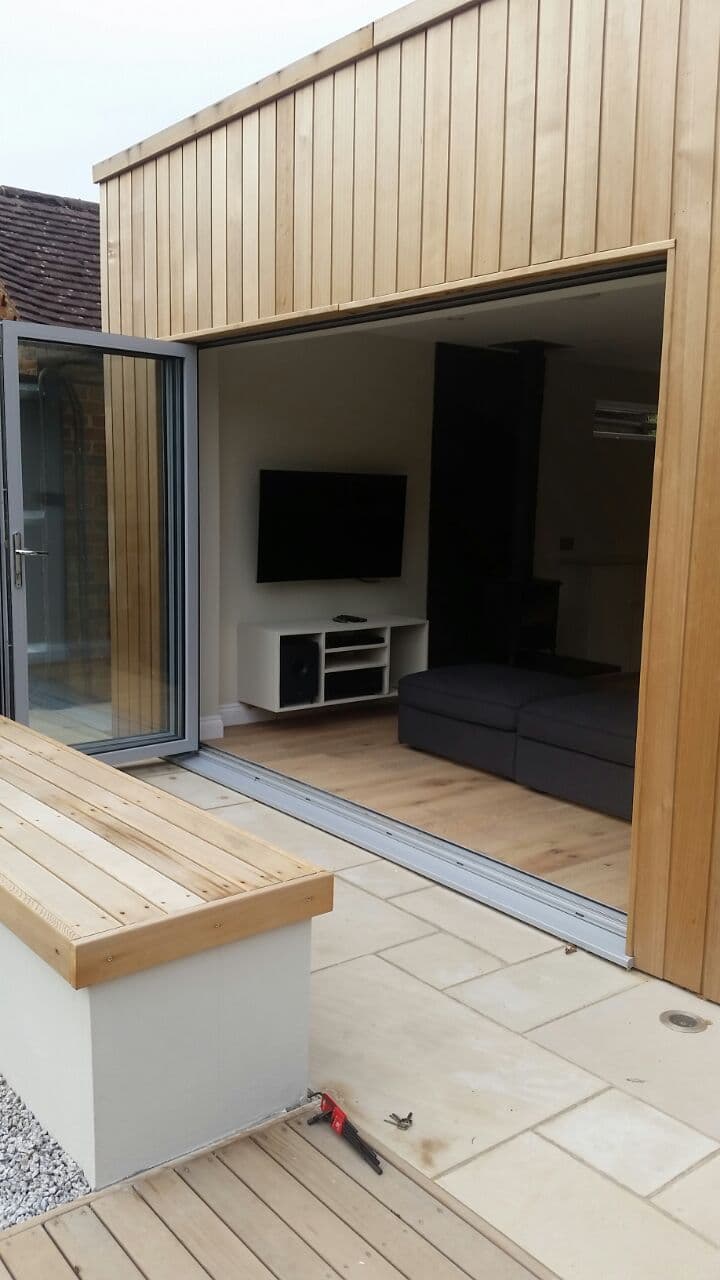
The exception is very large aluminium panels wider than 1.5 metres, or multi-pane bifold and sliding configurations, which require an additional person for safe lifting. At Vitrum Solutions, all bifold door and large-format aluminium installations are carried out by a three-person team.
Bay Windows Take Longer
Bay windows take proportionally more time than standard casements because of the compound angles involved. A three-section bay — comprising a front face and two angled returns — typically takes three to five hours to install correctly. Getting the angles right, ensuring the cill is level and properly supported, and sealing a bay against water ingress is a skilled, time-consuming job. Rushing bay windows is one of the most common causes of callbacks in the glazing industry.
What Happens Inside Your Home During Installation
One of the most common questions homeowners ask is how disruptive installation actually is. Here is what to expect:
- Dust and debris: There will be some plaster dust when old frames are extracted, particularly if the reveals need any remediation. A good team protects floors and furniture with dust sheets and tidies after each window.
- Exposed openings: Each opening is temporarily exposed during the swap. A competent team works one window at a time, so the exposure period is brief — usually five to fifteen minutes per window. In winter, plan for the property to feel cool for short periods during the day.
- Noise: The initial extraction of old frames can be noisy for a few minutes. Once the new frames are in, the remainder of the work is relatively quiet.
- Remaining in the property: For most installations you can stay home throughout. You simply need to keep clear of the room being worked in at any given time. Full-house replacements over two to three days are genuinely manageable.
How to Prepare for Installation Day
A little preparation helps the job run faster and reduces any disruption:
- Clear the area around each window of furniture, ornaments, curtains and blinds before the team arrives
- Ensure clear external access — move vehicles, unlock gates, clear pots and garden furniture
- Tell your installer about any complications in advance: hidden pipes, awkward access, conservation area restrictions
- Confirm whether scaffolding is needed and who is arranging it (your installer should advise at survey stage)
What to Expect After Installation
Your installer should demonstrate the operation of every window before leaving — including tilt-and-turn function where applicable. All windows should open, close and lock without stiffness or binding. If anything is not right, flag it before signing off the work.
A small amount of sealant shrinkage is normal in the days following installation. Any gaps larger than a hairline at the window-to-wall junction should be reported promptly. Most quality window companies, including Vitrum Solutions, provide a 10-year insurance-backed guarantee (IBG) covering both product and installation.
Every Vitrum Solutions installation also includes a FENSA registration certificate issued within 30 days, confirming the work meets Building Regulations Part L (thermal performance) and Part F (ventilation). This certificate is required by solicitors during property sales — without it, you may need a retrospective inspection report, so always insist on it.
Booking Timeline: When to Start the Process
From your initial enquiry to installation day, allow the following:
- Survey: Within one to two weeks of enquiry in most cases
- Quote and order confirmation: Within a few days of the survey
- Manufacturing lead time: Two to four weeks for uPVC, four to six weeks for aluminium
- Installation: One to four days on site depending on the project
For a full-house aluminium replacement, starting the process eight to ten weeks before you want the work completed gives a comfortable buffer. For a single uPVC window, five to six weeks from first call to completion is a realistic expectation.
If you are in Buckinghamshire, Berkshire, Oxfordshire, Surrey, West London or the surrounding areas, Vitrum Solutions offers free quotations with no obligation. We will give you a precise timeline for your specific project at the survey stage — not a vague estimate.
Frequently Asked Questions
How long does it take to fit one window?
A single standard casement or sash window typically takes two to four hours, including removal of the old window, installation of the new frame and glazed unit, and completion of all seals and hardware. First-floor windows requiring ladder access take slightly longer.
Can all my windows be replaced in one day?
For smaller properties with six to eight windows, a full replacement in one day is achievable with an experienced two-person team. For most semi-detached and detached homes, two to three days is more realistic and allows for a higher quality finish.
How far in advance should I book?
Allow four to six weeks for uPVC windows and six to eight weeks for bespoke aluminium systems from survey to installation. Booking in advance also allows time for any structural or access preparations to be arranged.
Do I need to stay home during installation?
Yes. Someone responsible needs to be present throughout — to provide access to each room, to answer questions as they arise, and to sign off the completed work. Most homeowners find it manageable to work from home during a window installation.
Will installation disrupt my heating?
Each opening is exposed briefly during the swap — typically five to fifteen minutes per window. A professional team works one window at a time to limit heat loss. Once all the new windows are fitted, your home should feel noticeably warmer and draught-free compared to before.
What paperwork should I receive after installation?
You should receive a FENSA certificate (confirming Building Regulations compliance), the manufacturer's guarantee documents, and your installer's IBG certificate. Keep these safely — your solicitor will ask for them when you sell the property.
Need advice on your next project?
Talk it through with the team, or leave your details for a free no-obligation written quote.
FENSA registered · 10-year CPA insurance-backed guarantee · Cortizo, Schuco & Rehau approved · Origin Approved Partner