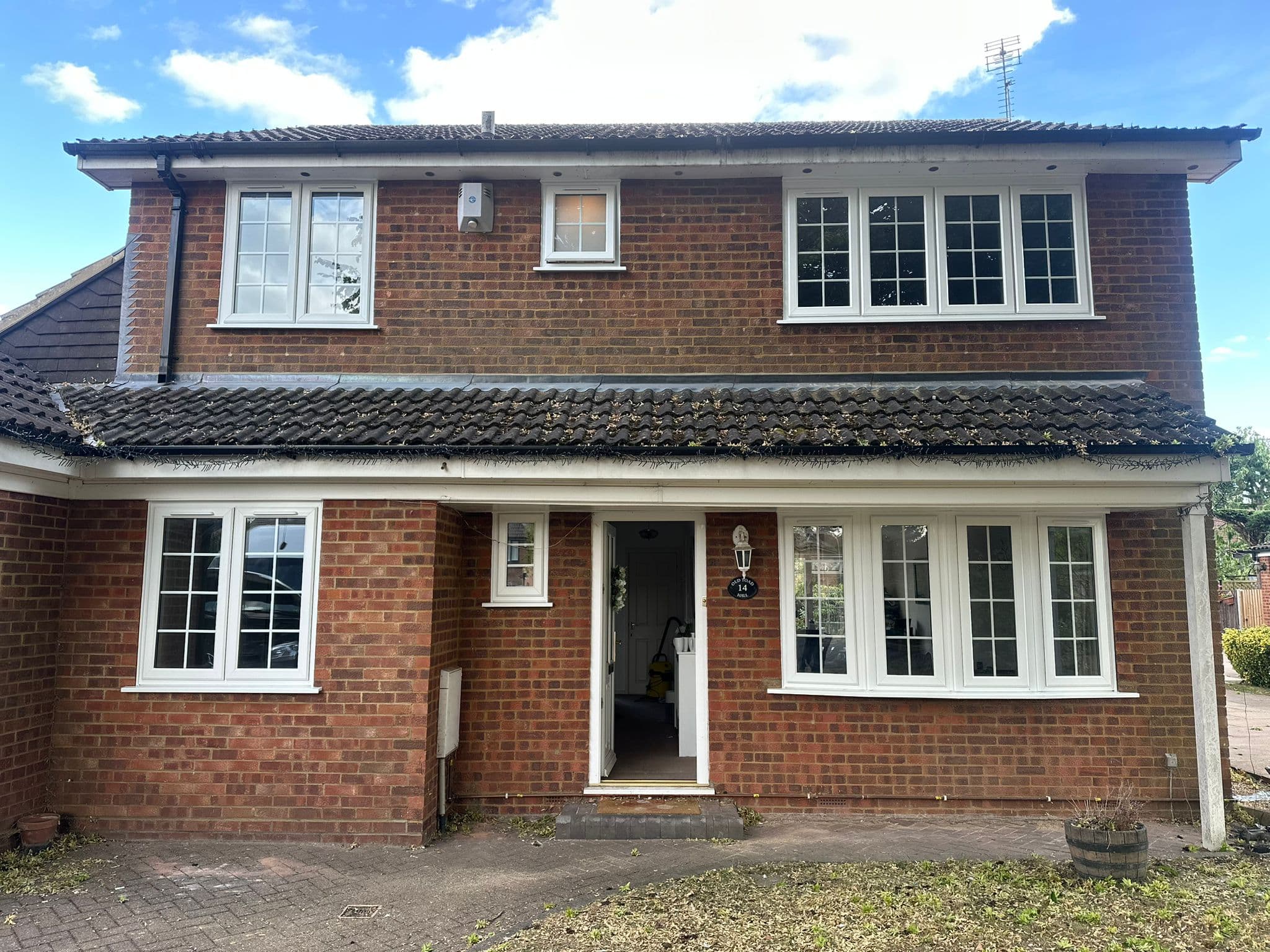
How Much Do New and Replacement Windows Cost in the UK? 2026 Price Guide
New replacement windows are one of the biggest home improvement decisions UK homeowners face — and one of the hardest to get a straight answer on. Quotes for the same job can vary by thousands of pounds, jargon makes it difficult to compare like with like, and headline "from" prices rarely reflect what you'll actually pay once your home is surveyed.
This guide gives you the honest 2026 price ranges for new windows in the UK — broken down by frame material, window style and whole-house totals — along with the factors that genuinely move the price up or down, the hidden costs to budget for, and how to recognise a fair quote when you receive one.
Price Per Window by Frame Material
The single biggest factor in the cost of a new window is the frame material. uPVC remains the most popular choice across the UK because it offers the best value, but aluminium has become the premium standard for newer homes and contemporary extensions. Timber and composite (timber-aluminium hybrid) windows occupy the high end of the market and are usually specified for listed buildings or architect-designed properties.
The figures below are realistic UK 2026 ranges for a single, standard-size casement window (approximately 1m x 1.2m), fully supplied and installed by a FENSA registered installer:
uPVC Casement — £400 to £900 fitted
The most cost-effective option for the majority of UK homes. A-rated thermal performance, multi-chamber profiles, low maintenance and a 10-year insurance-backed guarantee on quality systems like Rehau TOTAL70. The lower end of the range covers smaller standard sizes in white, and the upper end includes woodgrain foils, chamfered or sculptured profiles, and larger formats. Full breakdown in our uPVC windows cost guide.
Aluminium Casement — £700 to £1,600 fitted
Slim sightlines, thermally broken profiles, and powder-coated finishes in any RAL colour with a 25-year frame guarantee. Premium systems like Cortizo Cor 70 Hidden Sash and Schuco AWS 70.HI sit at the top of the range and deliver excellent thermal performance. Aluminium is typically 1.5 to 2x the price of uPVC for the same window size. Full breakdown in our aluminium windows cost guide.
Heritage uPVC Sash & Flush Casement — £700 to £1,400 fitted
Designed to replicate traditional Georgian, Victorian and Edwardian timber sash or flush casement windows in modern uPVC. Uses run-through horns, deep bottom rails and authentic profiles. The most popular replacement style for period properties in conservation areas where the council requires a sympathetic appearance. Full breakdown in our sash windows cost guide.
Timber & Composite — £1,200 to £2,500+ fitted
Engineered timber windows or composite (timber inside, aluminium outside) systems are the premium tier of the UK window market. Used on listed buildings, architect-designed properties and high-end conservation work. They look outstanding but require ongoing maintenance and a five-figure budget for a full house.
Cost by Window Style
Beyond frame material, the style of window has a significant effect on price. A simple top-hung casement is the cheapest format because it has the least mechanism and the smallest frame requirement. Sash, bay and bow windows cost considerably more because they involve more material, more glass and more complex installation:
Bay Windows (3-pane) — £1,500 to £4,000+ fitted
A traditional three-pane bay window combines a central fixed pane with two angled side windows. uPVC bay windows for a standard semi-detached frontage usually fall between £1,500 and £2,800 fitted, while aluminium or larger formats can exceed £4,000.
Bow Windows (4-5 pane curved) — £1,800 to £4,500 fitted
A bow window curves outward in 4 or 5 segments, creating a softer arc than a bay. They're slightly more expensive than equivalent bay windows because of the additional frame material and more complex installation geometry.
Tilt-and-Turn Aluminium — £900 to £1,800 fitted
A continental-style design that tilts inward at the top for ventilation or opens fully inward for cleaning and emergency egress. Tilt-and-turn windows are popular in modern apartments and contemporary extensions, and command a 15-25% premium over standard casements due to the more sophisticated hardware.
Replacement Windows Cost by House Size: 3, 4 and 5-Bed Totals
When budgeting for a full window replacement, the most useful figure is the total project cost rather than the per-window price. Most reputable installers offer better per-window pricing as the order size grows, so doing the whole house at once is almost always more economical than phasing the work. Here is the average cost of new windows for a 3-bed, 4-bed and 5-bed house in 2026, fully supplied and installed by a FENSA registered company:
Average Cost of New Windows for a 3-Bed House (8-10 windows)
uPVC: £4,000 to £8,500 fitted. Aluminium: £8,000 to £16,000 fitted. Most homeowners with a 3-bed semi land between £5,000 and £7,500 for a full uPVC replacement with A+ rated glazing in white or anthracite grey.
Average Cost of New Windows for a 4-Bed House (12-15 windows)
uPVC: £6,500 to £13,500 fitted. Aluminium: £12,500 to £25,000 fitted. This is where the choice between uPVC and aluminium has the biggest financial impact. Many 4-bed homeowners specify uPVC for the front elevation and aluminium for rear extensions or garden-facing rooms.
Average Cost of New Windows for a 5-Bed House (18-25 windows)
uPVC: £10,000 to £20,000 fitted. Aluminium: £18,000 to £40,000+ fitted. Larger detached and executive properties are frequently specified entirely in aluminium for the slim sightlines and long-term durability. Bespoke colour, larger formats and mixed style requirements push the upper end of the range.
Want these numbers made specific to your home? Call us free on 0800 861 1450 for honest advice, or use the quote form at the end of this guide for a free surveyed, itemised price with no obligation.
What Affects the Price (and What Doesn't)
Understanding which specifications genuinely affect the cost helps you avoid paying for upgrades you don't need and recognise corners installers might cut to win the job:
Glazing Specification
Standard double glazing is usually a 28mm sealed unit with argon gas filling and a low-emissivity coating. Triple glazing typically adds 15-25% to the per-window cost. Toughened safety glass is required by building regulations within 800mm of floor level and either side of doors — this is usually included as standard. Acoustic glass for noise reduction adds around 10-15%.
Frame Colour and Finish
White uPVC is the cheapest option. Woodgrain foils (Irish Oak, Rosewood, Anthracite Grey) typically add £30-£80 per window. Foiled both sides or premium colours (Chartwell Green, Agate Grey) cost more again. For aluminium, RAL 9005 (jet black) and RAL 7016 (anthracite grey) are usually no more than the standard powder coat — bespoke colours and dual-colour finishes (different inside vs outside) add 5-10% to the order total.
Energy Rating
UK windows are rated A++ (best) to E (worst). Most modern uPVC and aluminium systems achieve A or A+ as standard. Building Regulations in England require replacement windows to achieve at least band B (or a U-value of 1.4 W/m²K), so ensure your quote specifies A or A+ rather than the minimum.
Conservation Area and Listed Building Requirements
If your property is in a conservation area or listed, your local authority may require sympathetic replacement windows that match the original profile, glazing pattern and colour. This typically means heritage uPVC sliding sash or flush casement with run-through horns, deep bottom rails and astragal bars. Expect a 20-30% premium over standard casement windows. Always check planning requirements before signing a quote.
Hidden Costs to Budget For
The headline window price is rarely the full picture. Depending on your property and the scope of the project, you may also need to budget for the following:
- Scaffolding for upper floors:Usually £400-£800 for a typical 3-bed semi if upper-floor windows can't be fitted from inside. Some installers absorb this cost; others add it as an extra. Always ask.
- Removal and disposal of old units:Should be included in the quoted price by any reputable installer. If it's listed as an "extra", treat it as a red flag and get more quotes.
- FENSA registration certificate: Always included by FENSA registered installers at no extra charge. The certificate is your proof of building regulations compliance.
- Plastering and decorating after install: Most modern installations cause minimal disruption to plasterwork, but older properties with deeper reveals may need light plaster patching. Budget £50-£150 per window if you want a perfect finish.
- Internal sills:Replacement internal sills are usually quoted separately. If you're keeping the existing sills, the trim is typically included; if you want new ones, expect £30-£80 per window.
How to Recognise a Fair Quote
Get at least three written quotes for any window replacement project. A quality installer's quote should include all of the following: the manufacturer and product range (e.g. Rehau TOTAL70 or Cortizo Cor 70 Hidden Sash), the energy rating (A or A+), the frame colour, the glazing specification (28mm A+ argon-filled with low-E coating, for example), the locking system, the FENSA registration number, the guarantee (minimum 10 years CPA insurance-backed), and a clear schedule of who pays for scaffolding, disposal and any structural work.
Avoid quotes that pressure you to sign on the day, offer unusually large "today only" discounts, or refuse to itemise the spec. Reputable installers like Vitrum Solutions base their pricing on the actual cost of the product and the work involved — there are no inflated prices to discount, no high-pressure tactics, and no hidden extras after installation day.
We install premium Rehau uPVC, Cortizo and Schuco aluminium windows across Buckinghamshire, Berkshire, Oxfordshire, Surrey, Hampshire, West London and Hertfordshire, all with FENSA registration and a 10-year insurance-backed guarantee.
Frequently Asked Questions
How much do new windows cost in the UK in 2026?
A single uPVC casement window typically costs £400 to £900 fully fitted in 2026, while an aluminium casement is usually £700 to £1,600. A complete uPVC window replacement for a 3-bed semi (8-10 windows) ranges from around £4,000 to £8,500, and the equivalent in aluminium runs £8,000 to £16,000. Final price depends on size, glazing specification, frame colour, hardware and any structural work.
Is it cheaper to replace all windows at once or one at a time?
Replacing all of your windows in a single project is almost always cheaper per window than doing them in phases. You only pay one set of survey, scaffolding, delivery and installation team mobilisation costs. Most installers (Vitrum Solutions included) offer better per-window pricing as the order size grows. As a rough guide, full-house orders are typically 15-25% cheaper per window than ordering one or two at a time.
Why are aluminium windows more expensive than uPVC?
Aluminium frames cost more because the raw material is more expensive than uPVC, the manufacturing process involves thermal break technology and powder coating, and aluminium systems are typically built to higher tolerances with a longer guaranteed lifespan (25 years on the frame versus 10-15 for uPVC). You also get slimmer sightlines, more colour and finish options and significantly better long-term durability — the price reflects a genuinely different product.
Are triple glazed windows worth the extra cost in the UK?
Triple glazing typically adds 15-25% to the cost of each window over double glazing. For most UK homes the energy saving payback is 15-25 years, so the financial case is marginal — but the comfort improvement is immediate and noticeable. If your property is in an exposed location, has thin walls or you're building/extending to high thermal performance standards (Passivhaus or near it), triple glazing makes sense. For a standard suburban replacement, A+ rated double glazing usually delivers the best balance of cost and performance.
Do new windows include FENSA certification?
Yes — any reputable UK window installer must be registered with FENSA (or a competent equivalent like CERTASS) and the installation should automatically include the FENSA certificate of compliance. This proves the work meets current building regulations and removes the need for separate building control approval. Always confirm FENSA registration before agreeing a quote, and ask to see the installer's registration number.
What grants or financial help are available for new windows in the UK in 2026?
There are no general government grants for replacement windows in the UK in 2026. Government energy schemes are aimed mostly at households on low incomes or benefits, mainly fund insulation, heating and solar, and include windows only in limited cases; applications start with your council or an energy supplier (or Nest in Wales). Vitrum Solutions does not offer or arrange grants, so our quotes carry no grant deduction. Check current eligibility on gov.uk.
Get a no-obligation itemised quote for your project
Talk it through with the team, or leave your details for a free no-obligation written quote.
FENSA registered · 10-year CPA insurance-backed guarantee · Cortizo, Schuco & Rehau approved · Origin Approved Partner